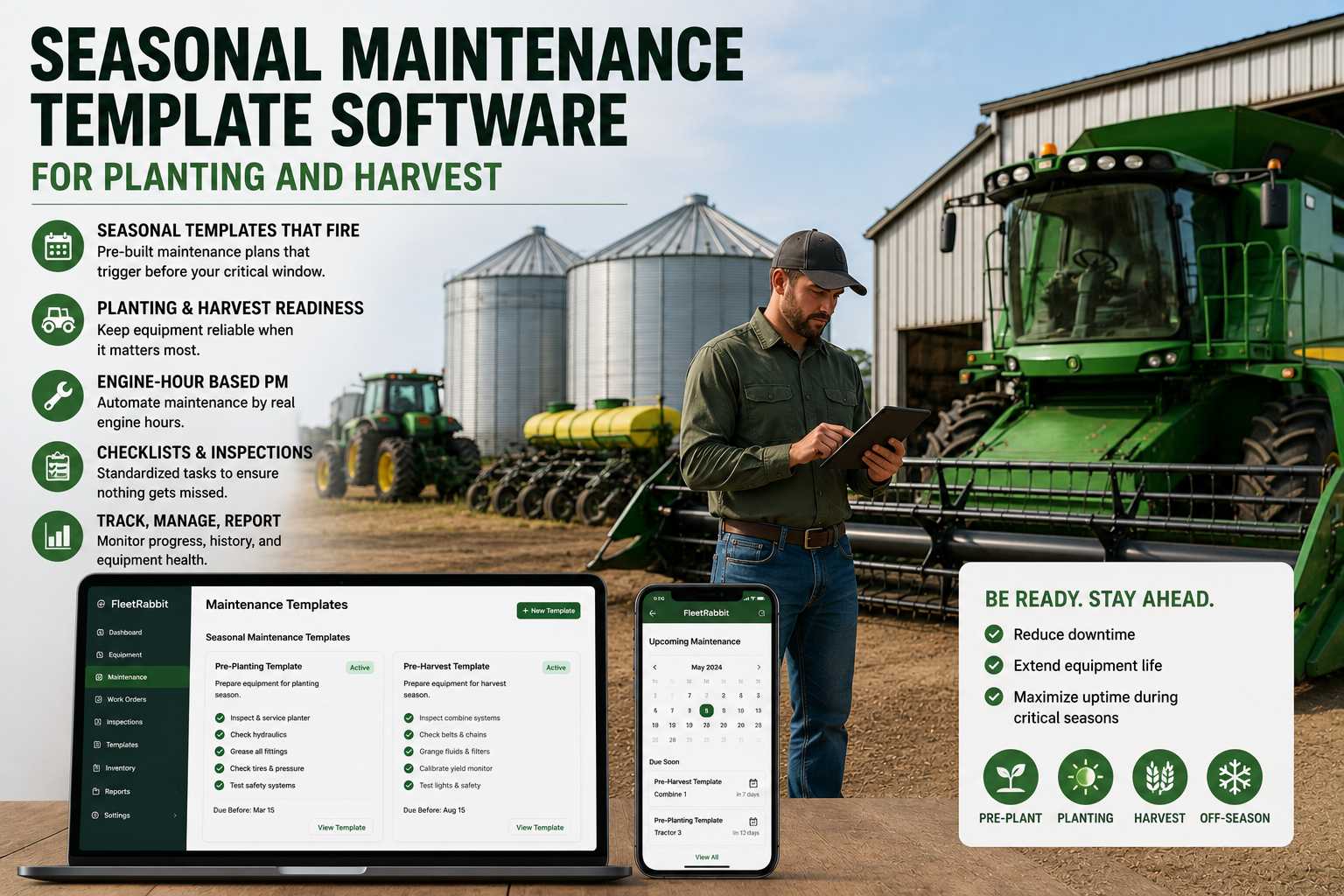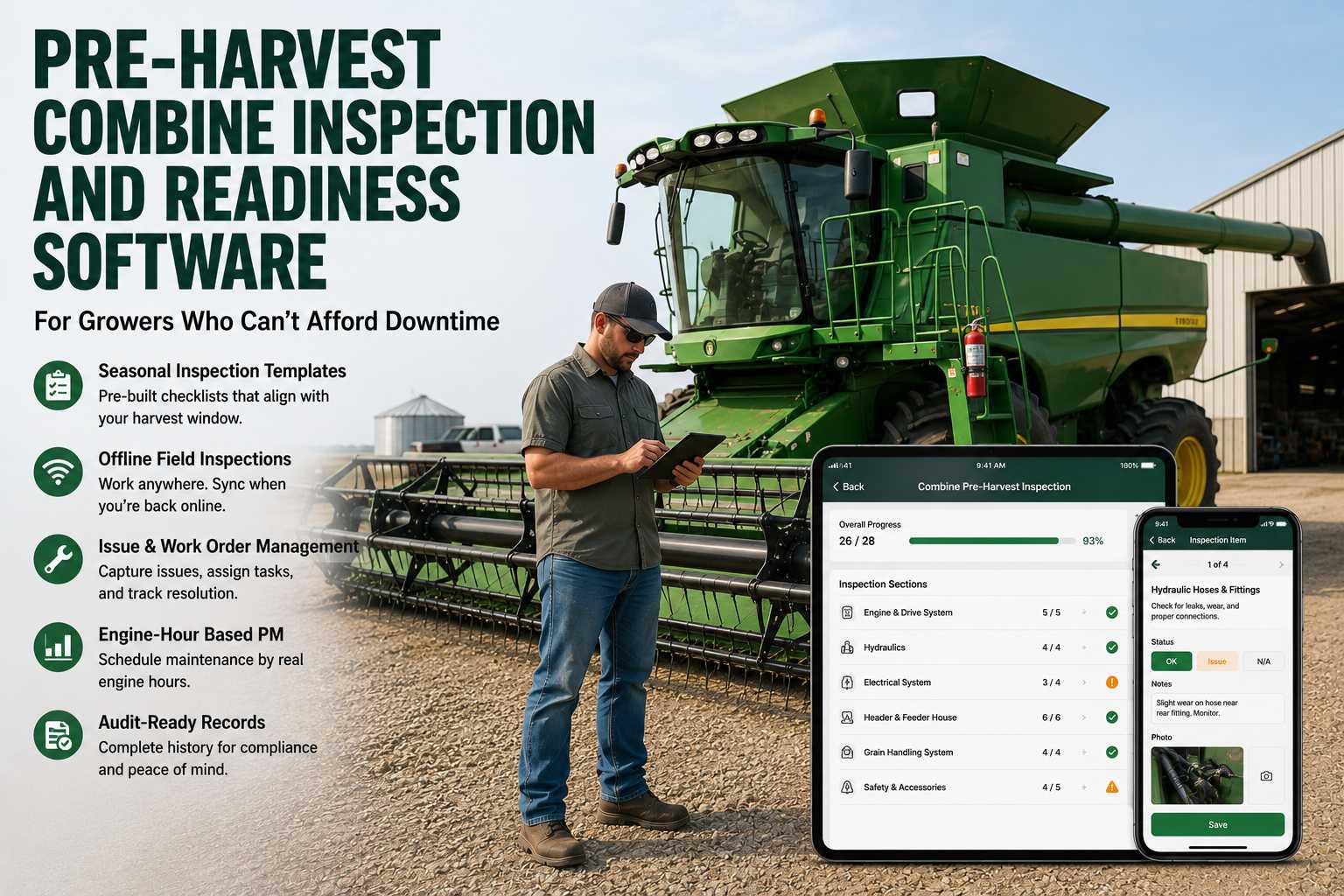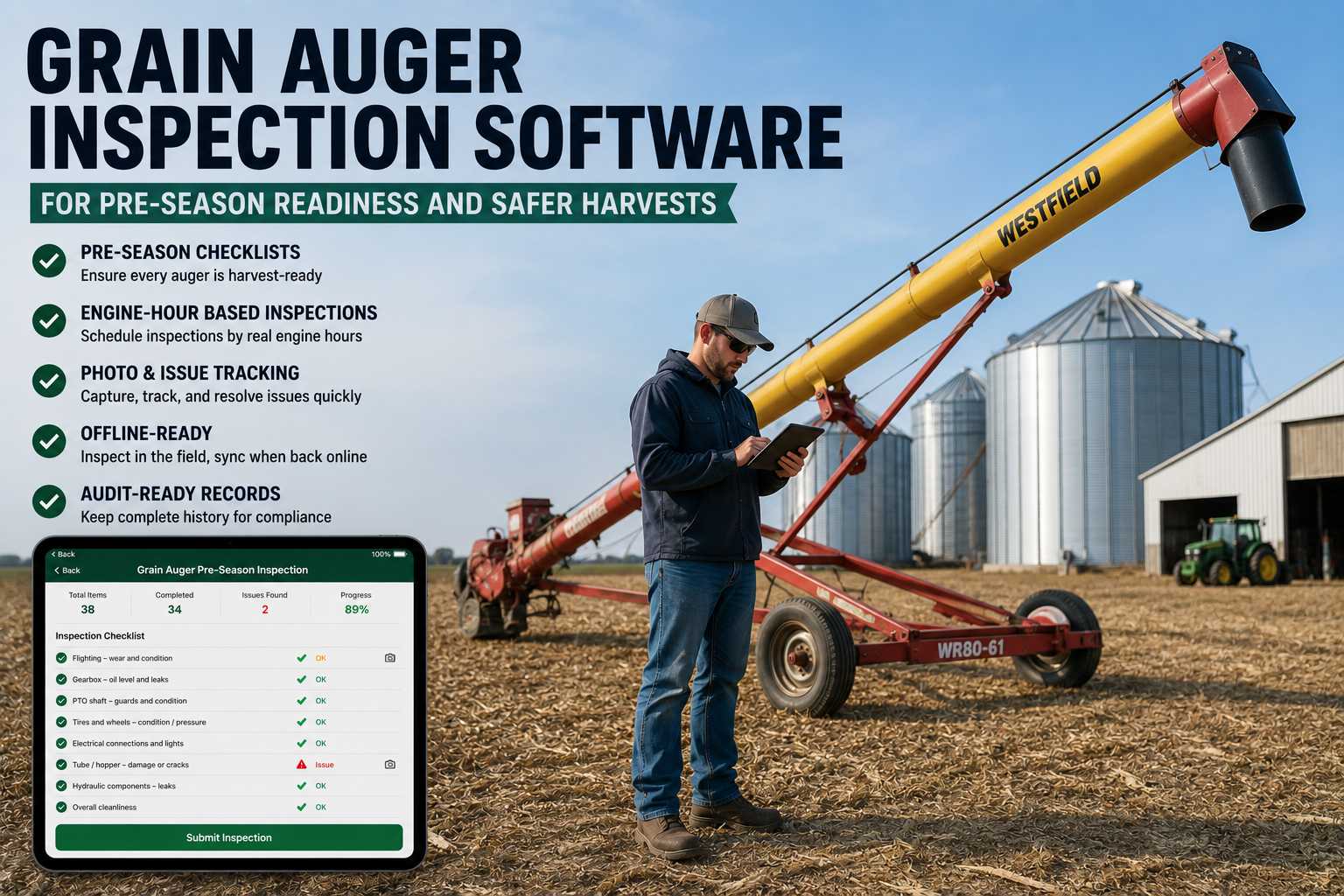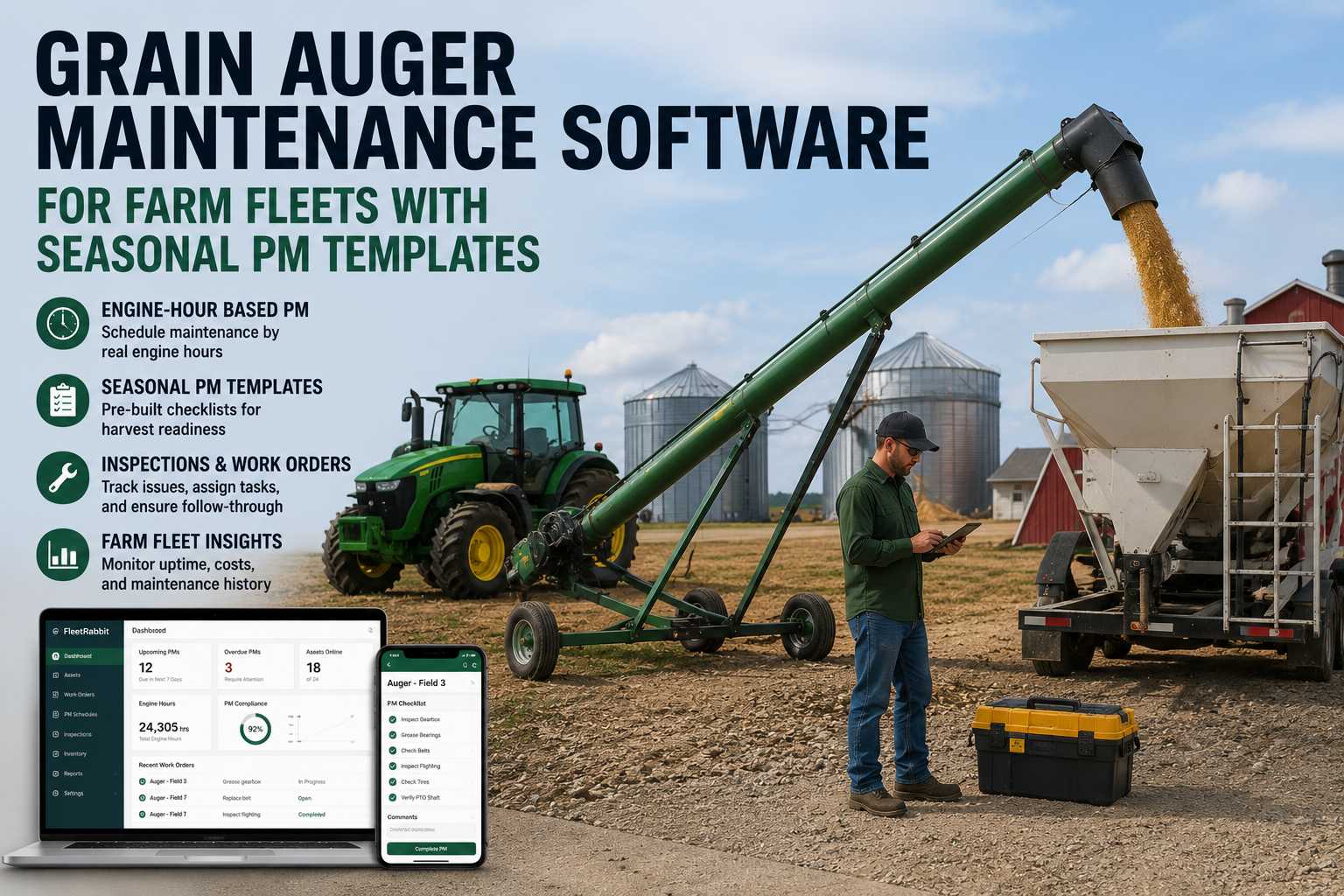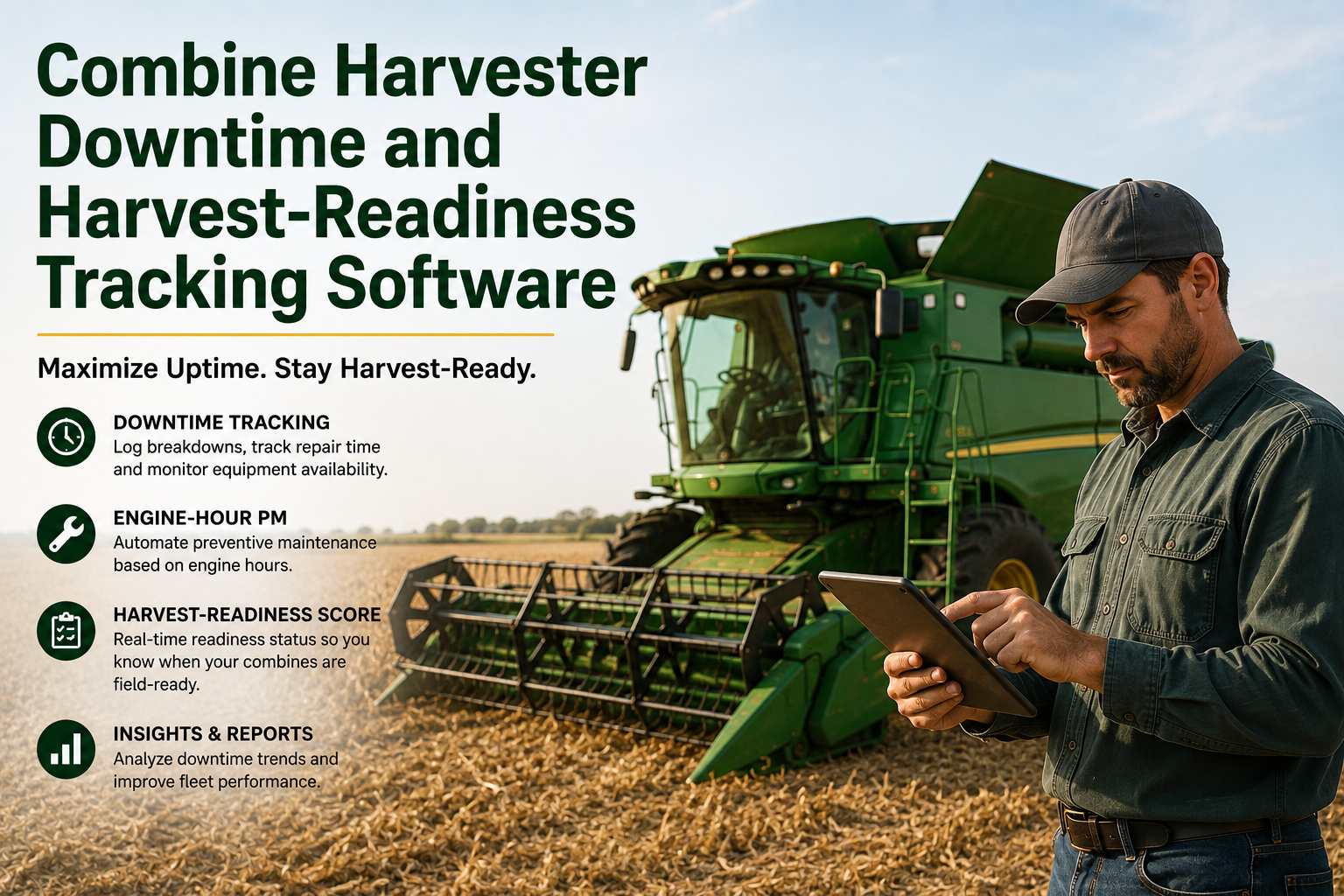
Commercial grain growers, custom harvesting operators, and agricultural fleet supervisors face unforgiving operational realities: keeping high-capacity combine harvesters cutting continuously through tight weather windows without catastrophic in-field stoppages. When machine idle hours, header plug events, unlogged hydraulic leaks, and pre-season de-winterization checklists sit across shed clipboards and paper notebooks, farm operations lose visibility into true root-cause downtime, suffering thousands of dollars in lost crop quality, dockage penalties, and missed delivery contracts. Fleet Rabbit delivers dedicated combine harvester downtime tracking and harvest-readiness software, unifying real-time engine and separator telemetry, automated running-hour PM triggers, and digital pre-harvest inspection workflows into one clean farm platform. Pinpoint bottleneck causes, maximize field cutting uptime, and log downtime events offline across remote rural acreage with zero cellular coverage. Book a Demo to see Fleet Rabbit combine downtime tracking in action.
CLEAN MINIMAL HEROAutomated Combine Downtime & Harvest-Readiness Software
Track mechanical downtime root causes, automate engine and separator-hour maintenance triggers, and capture offline pre-season inspection logs across multi-field farm fleets.
Why Generic Fleet Tools Fail Combine Downtime Management
Standard fleet management software tracks basic highway road mileage and simple engine-on timestamps, failing to differentiate between productive harvesting, transport idling, and catastrophic mechanical breakdown events.
Combines frequently idle at field edges waiting for grain carts or tender trucks; generic GPS trackers misclassify waiting idle as productive runtime, masking true mechanical bottlenecks.
Repeated delays caused by header belt slippage, stone trap cleanouts, or concave binding get logged casually on paper, leaving farm managers without actionable data to overhaul problematic components.
Combines sitting through winter often enter harvest with dry-rotted drive belts, sticking hydraulic valves, or fouled DEF dosers, leading to unexpected electronic derates during cutting.
Harvesting across rural acreage often means zero cellular coverage. Cloud-only tools crash, preventing operators from logging downtime reasons, grease rounds, or repair work orders in the field.
How Fleet Rabbit Tracks Downtime & Ensures Harvest Readiness
Fleet Rabbit synchronizes engine and separator telemetry, digital inspection forms, and offline downtime logging into one unified agricultural operations center. Request a 1-on-1 walkthrough.
Classify field stoppages instantly—separating mechanical failures, header plugs, and grain cart wait times from productive harvesting hours.
Automatically schedule lube rounds, oil changes, and hydraulic filter swaps based on actual machine hours and separator runtime.
Standardized digital forms for concave leveling, sieve gap calibration, stone trap clearance, and rotary radiator screen clean-outs.
Operators log downtime events, complete pre-trips, and capture defect photos offline; data auto-syncs securely when connectivity returns.
Failed inspection items instantly generate prioritized repair tickets with attached photos routed directly to farm mechanics and service trucks.
Track grease schedules, knife guards, reel wear, and gearbox service records for corn headers, draper platforms, and grain carts.
Agricultural Equipment Safety & Environmental Standards
Fleet Rabbit’s combine maintenance and inspection workflows are structured to meet statutory safety standards across major farming regions.
Combine Harvester Downtime Software Comparison
A focused capability comparison for agricultural fleet managers evaluating combine downtime tracking, seasonal readiness, and offline functionality. Competitor data sourced from public records as of 2026. Request a technical comparison.
| Capability | Fleet Rabbit | Fleetio | Samsara | Generic Spreadsheets |
|---|---|---|---|---|
| Pricing (per asset) | $5/month | $4–10/month | $27–60/month | Manual overhead |
| Separator vs. Idle Downtime Tracking | Native & automated | Not available | Not available | Manual entry only |
| Engine & Separator-Hour PM Triggers | Native & automated | Requires custom setup | Requires custom setup | Manual entry only |
| Pre-Built Harvest Readiness Checklists | Pre-built & specialized | Generic vehicle only | Generic vehicle only | Not available |
| Full Offline Mobile Sync | Full offline mode | Limited | Limited | Paper only |
| Free Trial | 14 days, up to 3 assets | 14 days | Demo only | None |
| Contract Terms | Monthly or annual | Annual billing discount | 3-year minimum | None |
5-Step Implementation Roadmap
Fleet Rabbit provides an accelerated deployment process engineered for farm operations, taking your combines and headers from initial setup to automated downtime tracking in two weeks.
2-Week Deployment Plan & Results
Modernize combine downtime tracking and seasonal harvest preparation with zero disruption to active field cutting schedules. Request an onboarding plan.
- Audit paper maintenance books, engine/separator hour meters, and header specifications
- Set up automated PM intervals for grease points, oil, and filter swaps
- Assign user permission levels for farm operators, service mechanics, and operations managers
- Conduct quick 15-minute operator training on logging field downtime and offline pre-trips
- Test automated defect routing on simulated concave wear and belt tension defect reports
- Activate central live readiness board and equipment service ledgers
Real-World Operational Results
Proven outcomes reported by commercial grain operations and custom harvesting contractors. Request the full case study.
A commercial grain farm experienced repeated harvest stalls from unlogged feeder house chain wear and elevator plugging. Fleet Rabbit implemented separator-hour PM triggers and 1-tap downtime logging, cutting mechanical field delays by 48% and saving over $58,000 in prevented harvest losses.
A custom harvesting contractor had no accurate way to track why combines were stopped across scattered customer acreage. Fleet Rabbit's offline mobile downtime codes revealed that 35% of delays were grain cart wait times rather than machine faults, allowing dispatchers to rebalance tender logistics and boost daily cutting output by 22%.
What Farm Operations Managers Say
"When rain is in the forecast, every hour a combine sits parked in the field costs us real money. Fleet Rabbit showed us exactly why machines were stopping—whether it was a worn belt, a clogged stone trap, or waiting on grain carts—and gave our shop automated alerts so maintenance gets done before breakdowns occur."