roi-of-voice-ai-in-fleet-maintenance-what-to-expect

ROI of Voice AI in Fleet Maintenance: What Shops Should Expect in the First 90 Days

By Alex Rowan on October 24, 2026

Voice AI moves shop documentation from typing to speaking, so the return depends on how many minutes it takes off each work order and each driver vehicle inspection report, and how many of those you handle. No independent study gives you that number, so this page gives a way to measure it in your own shop over 90 days. It covers what the published benchmarks say, where they conflict, what the FMCSA eDVIR rule does and does not require and a formula you can fill in. Schedule a call to plan a 90-day voice documentation pilot.

VOICE AI ROI · WORK ORDERS · DVIR
Measure the Minutes Before You Believe the Payback Claims
A 90-day plan for finding out what speaking instead of typing actually saves in your shop.
Mar 23, 2026effective date of the FMCSA final rule on electronic DVIRs
90 dayspilot window to measure time saved on your own work orders

What the Published Numbers Say About Documentation Time in Fleet Shops, and Why They Disagree

One source puts paperwork at 3 to 6 percent of a shift and a fleet software vendor says 15 to 25 percent of technician hours

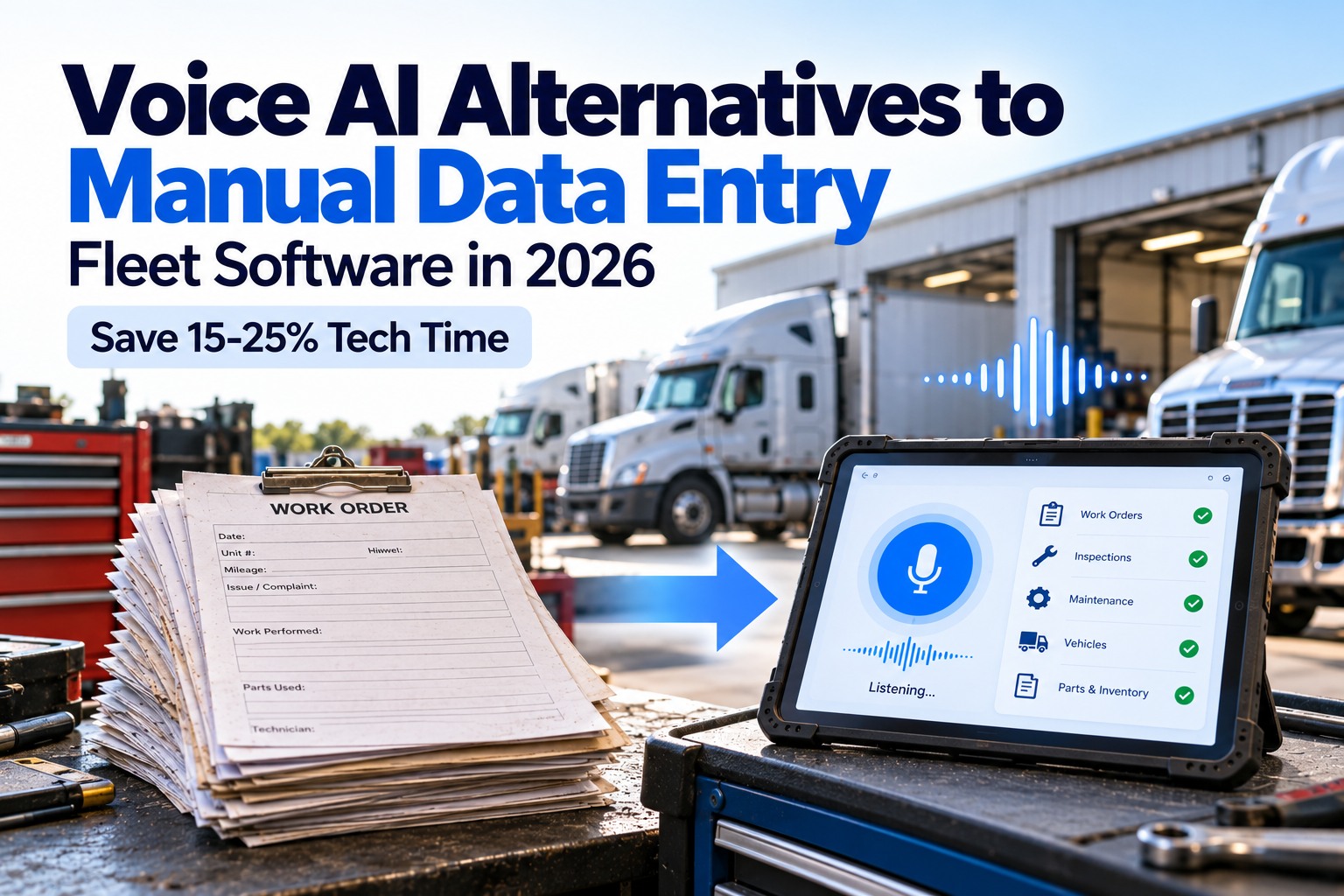
Reliabilityweb's Ricky Smith says typical industrial maintenance wrench time runs 25 to 35 percent of a shift and world class is above 55 percent. His illustrative breakdown puts administrative work and paperwork at 3 to 6 percent. FleetRabbit's voice article claims 15 to 25 percent of technician hours go to documentation, and its other article claims about 30 minutes or more saved per technician per day by speaking records. None of these figures names a study.

SHARE OF TIME ON DOCUMENTATION, AS CLAIMED. NEITHER IS A MEASURED FLEET SURVEY
Admin and paperwork, wrench-time article

3% to 6%
Documentation, FleetRabbit article

15% to 25%

0%
5%
10%
15%
20%
25%
30%

The gap is a warning, not a range. The 3 to 6 percent figure is an illustration from an industrial facility, not a heavy-duty shop. The 15 to 25 percent figure comes from a vendor selling voice software. Your shop's real share could sit outside both, which is why the first step in this plan is to time it.

A 90-Day Plan to Measure Voice AI Return in One Shop Before You Roll It Out

Time the current process, pilot with one crew, time it again and decide from your own hours

WEEK 0
Baseline
Time 20 work orders and 20 DVIRs the current way
DAYS 1 TO 30
Pilot
One shop or one crew speaks its notes
DAYS 31 TO 60
Compare
Time the same tasks again, check record quality
DAYS 61 TO 90
Decide
Count hours saved, subtract cost, roll out or stop

Time end-to-end, from the moment the technician stops working to the moment the record is complete and correct, because a fast but wrong record only moves the cost to later. FleetRabbit's own article describes voice-to-work-order in under 60 seconds and calls digital forms "minutes of tapping", but gives no measured figure for either, so do not use its numbers as a baseline.

Want help setting up the baseline timing? Schedule a call and we will walk through a pilot on your work orders.
Free for up to 3 vehicles while you test.

The ROI Formula for Voice Documentation: Minutes Saved per Work Order Times Volume Times Labor Cost

Fill in your own minutes, work orders and wage, then subtract the software cost

STEP 1
Hours saved a month = minutes saved per record x records per month / 60
STEP 2
Value of hours = hours saved x technician cost per hour
STEP 3
Net monthly return = value of hours - software cost, $5 per vehicle per month after the first 3 vehicles

As an illustration of the arithmetic only, take 400 work orders a month and a $32 hourly technician cost, which is the Fullbay survey median reported by Fleet Equipment. The minutes saved are assumptions, not findings. Use the same method for DVIRs with your own count.

ILLUSTRATIVE MONTHLY VALUE OF TIME SAVED. 400 WORK ORDERS, $32 AN HOUR. OUR ARITHMETIC, BEFORE SOFTWARE COST
2 minutes saved per work order

$427
5 minutes saved per work order

$1,067
10 minutes saved per work order

$2,133

$0
$600
$1,200
$1,800
$2,400

Time saved only becomes money if the hours go to billable repair or the shop avoids overtime or hires. Count it as value when you can name where the hours went.

What the FMCSA Electronic DVIR Rule Does, and What It Does Not Require

The rule makes clear that a DVIR may be completed electronically, and the page FMCSA publishes describes no mandate

ItemWhat the rule doesWhere it comes from
ActionFinal rule, published Feb 19, 2026, effective Mar 23, 2026FMCSA, document 2026-03264
PurposeMakes explicit that a DVIR may be completed electronicallyFMCSA, in response to a comment from National Tank Truck Carriers
MandateNot described as a requirement; FMCSA says it wants to encourage cost-saving electronic methodsFMCSA summary
Retention, signatures, no-defect reports3-month minimum retention and up to three signatures per defect, as one vendor describes 49 CFR 396.11 and 396.13FleetRabbit article, not checked against the CFR

The FMCSA summary says electronic completion was already allowed and the rule adds explicit language to make that clear. That makes the rule a reason to review your process, not a deadline that forces a purchase. The effective date is also now in the past. Confirm retention and signature requirements in 49 CFR Part 396 itself.
Voice AI Pilot Checklist: What to Settle Before the First Spoken Work Order

Tick each item so the 90 days produce numbers you can trust and a clear decision

90-day pilot
Pilot Voice Documentation for Work Orders and DVIRs in FleetRabbit: Measure Time Saved on Your Own Fleet
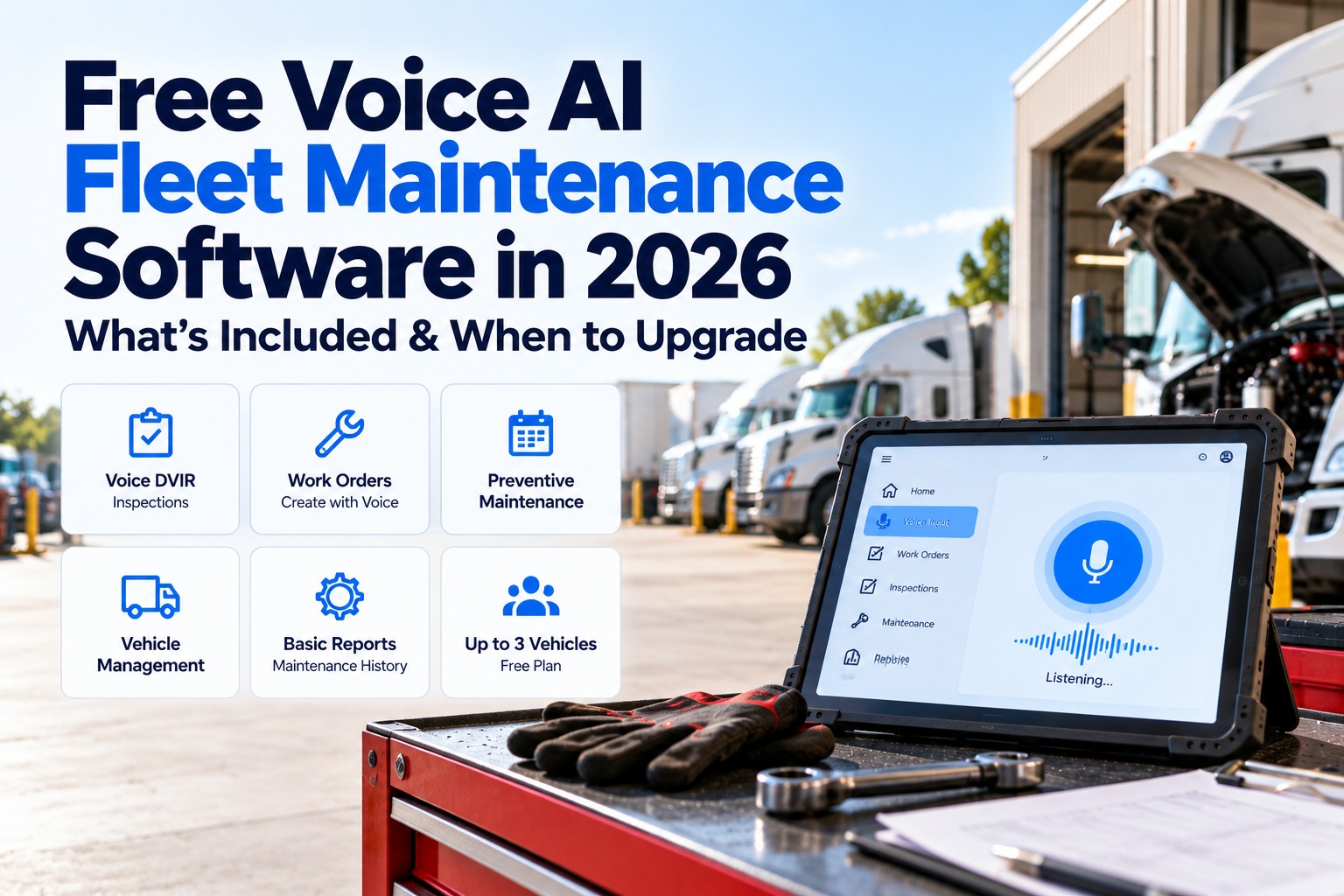
FleetRabbit keeps work orders, inspections and service history for every vehicle in one record, so you can compare documentation time and repair cost per vehicle before and after a pilot. Free for up to 3 vehicles, then $5 per vehicle per month.
Voice work-order notes
DVIR and inspection records
Cost per vehicle
Free for 3 vehicles

Voice AI ROI in Fleet Maintenance FAQs: Time Saved, Payback, DVIR Rules and Accuracy

Short answers on what to expect from voice documentation in the first 90 days

How much time does voice AI save per work order?
No independent figure exists. Vendor pages claim savings, such as about 30 minutes per technician per day, without naming a study. Time your own work orders before and after a pilot.
How long until voice AI pays back?
It depends on your record volume, technician cost and minutes saved. Use the formula above with your own numbers, and subtract the software cost.
Does the FMCSA eDVIR rule require electronic DVIRs?
The FMCSA page describes a final rule that makes explicit that a DVIR may be completed electronically and says it wants to encourage electronic methods. It describes no mandate.
When did the eDVIR rule take effect?
March 23, 2026, after publication on February 19, 2026.
Is voice transcription accurate in a noisy shop?
One FleetRabbit page claims 94 to 96 percent accuracy at 85 dB with no independent test, and recommends testing on your own shop audio.
What does FleetRabbit cost?
Free for up to three vehicles, then $5 per vehicle per month. Start free with 3 vehicles.
Run the 90-Day Test, Then Let Your Own Hours Decide
Time the baseline, pilot with one crew and count what you actually saved.
Free tier for up to 3 vehicles · No credit card required · Records stored per vehicle

October 24, 2026By Alex Rowan
All Blogs

Share This Story, Choose Your Platform!

From our blog

Get Fleet Rabbit App
#1 Truck Fleet Management Software

Download Our App
Scroll