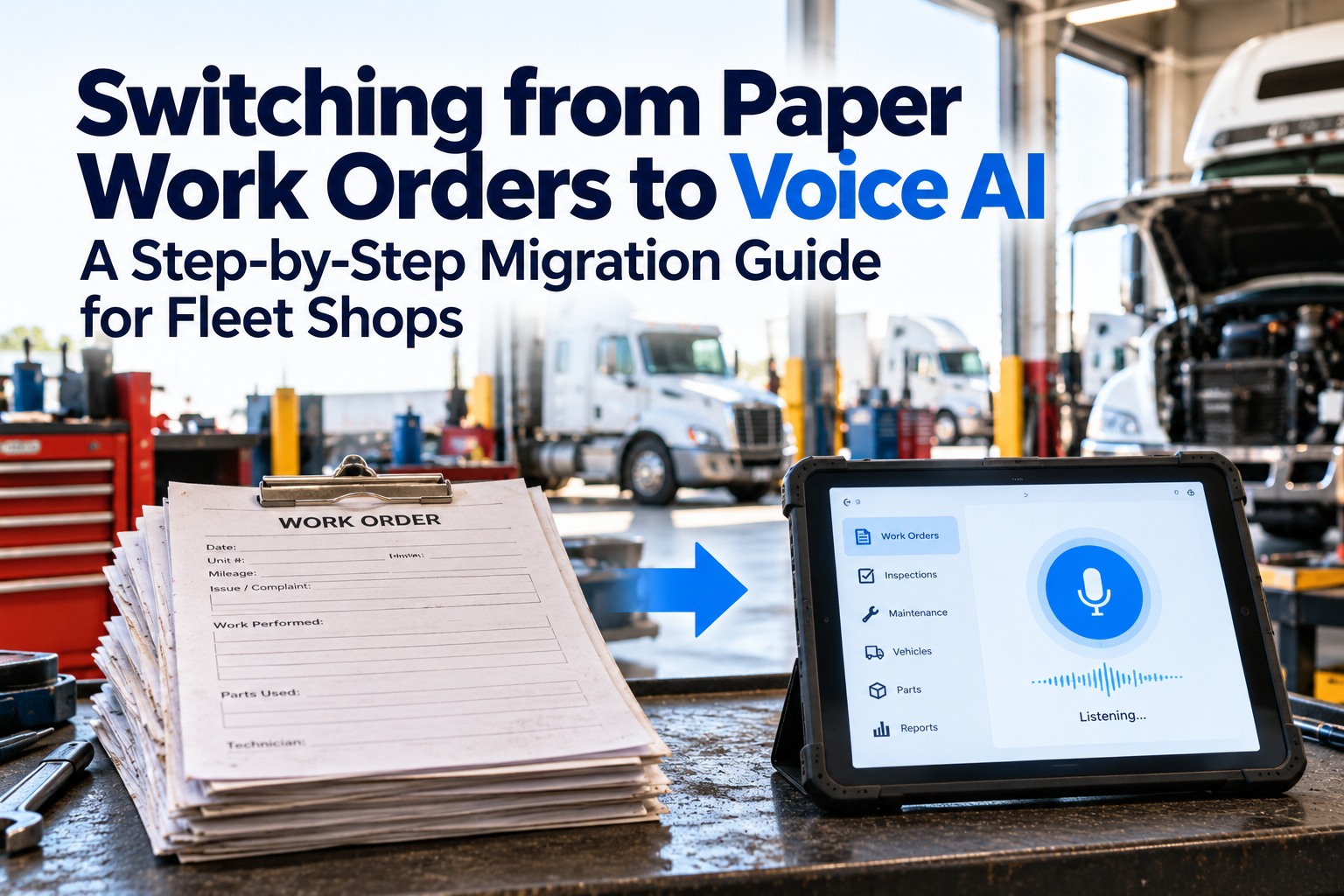
Moving a shop off paper work orders and whiteboards is mostly a people project: you are changing how technicians and drivers record what they find. Voice capture is meant to make that change easier, because speaking is closer to how people already talk about a repair than typing on a phone. This page sets out a four-phase migration, a technician adoption plan, the reasons shops stall and a checklist for cutover day. Schedule a call to plan your paper-to-voice migration.
Why Shops Stay on Paper and What the Switch Actually Changes About Each Step of the Job
Paper works until someone needs the history, the audit record or a clear note, and that is where digital records earn their keep
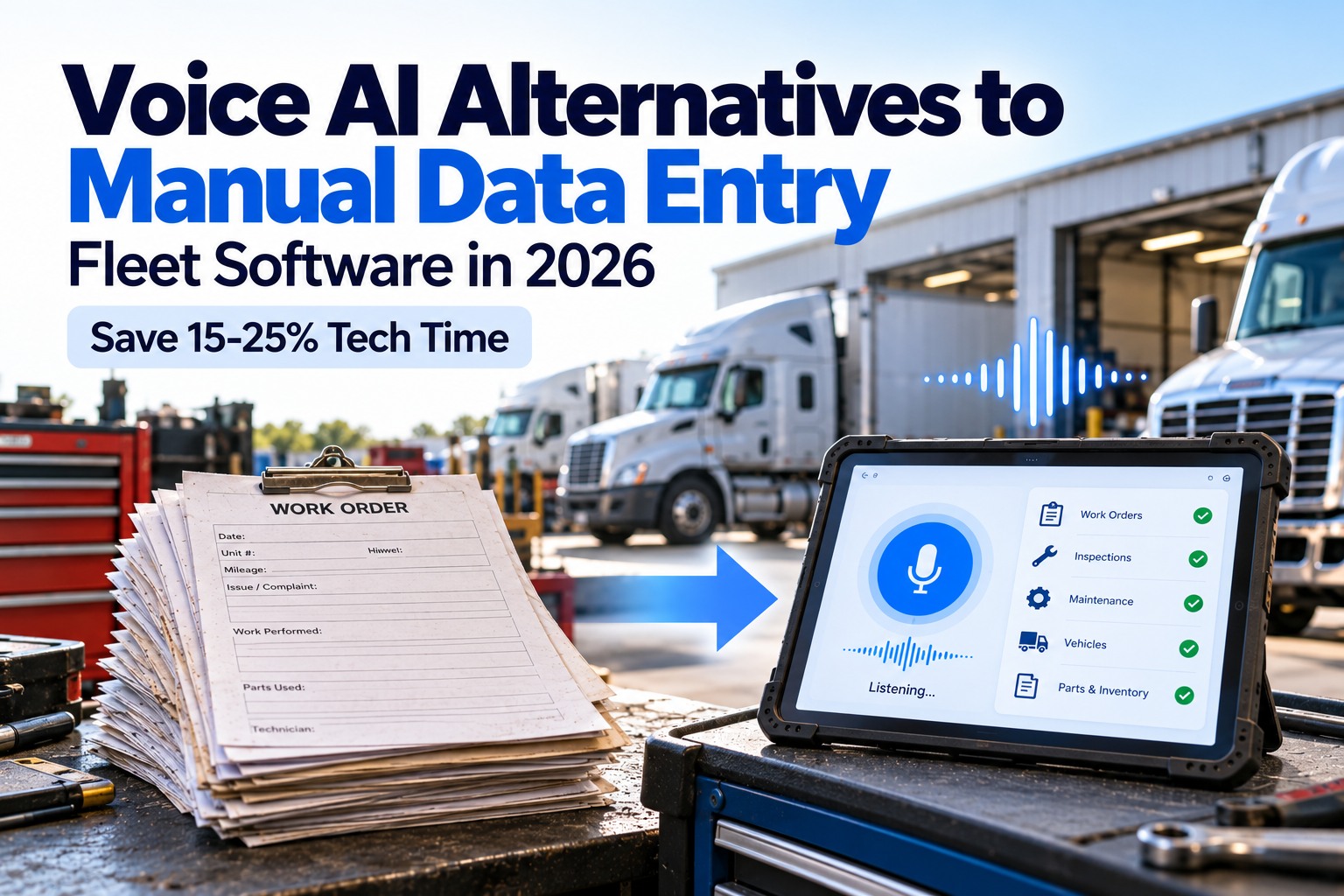
Fullbay's blog lists the usual paper problems: forms that run out, handwritten orders that must be retyped, rushed shorthand that causes misunderstandings, and repair history that is slow to find. Fullbay sells digital service-order software and cites no figures for any of this, so read it as a description of the pain, not a measurement.
| Step in the job | Paper or whiteboard | Voice and digital record |
|---|---|---|
| Capture the defect | Written by hand, often in shorthand | Spoken, then sorted into fields for review |
| Get it to the shop queue | Walked over or retyped | Saved to the vehicle record and routed |
| Find the history | Dig through files | Open by vehicle, date or work-order type |
| Prove it for an audit | Search paper folders | Retrieve the record and its timestamp |
FMCSA's February 2026 final rule, effective March 23, 2026, makes explicit that a DVIR may be completed electronically and says the agency wants to encourage electronic methods. FMCSA's summary describes no mandate, so paper DVIRs are not made illegal by it. Check 49 CFR Part 396 for retention and signature rules before you retire paper.
A Four-Phase Migration Plan for Moving a Fleet Shop from Paper Work Orders to Voice and Digital Records
Baseline first, clean the vehicle list and templates, pilot with one group and cut over on a set date
The phases follow an OxMaint roadmap for fleet maintenance, which is vendor content, and its practical points are widely applicable. It sets exit tests for each phase and warns against copying the paper process unchanged, making too many fields mandatory, training once at launch and running old and new systems in parallel with no cutover date.
Map the process from request to closed work order, pick 3 to 5 goals, name an owner and record baselines
Create the vehicle list, standard PM templates, inspection checklists and failure codes
Run live work orders and DVIRs with one shop or group, train on real jobs, review weekly
Roll out shop by shop, set a cutover date and retire paper
Technician Adoption Timeline: Pilot, Parallel Run and the Day You Retire Paper
Start with a few respected technicians, keep paper running beside the new tool and cut over only once use holds
OxMaint's technician adoption plan gives a 30-day sequence, shown below. It starts with three to five open-minded technicians, rolls out to everyone while paper runs in parallel, coaches each holdout individually, and retires paper once adoption holds at 90 percent or more for two weeks. The page cites no study for its adoption percentages or time-saved figures, so we do not use them.
What Voice Adds to the Migration, and the Claims to Test Before You Rely on Them
Voice can lower the effort of logging a defect, but accuracy in your shop noise is something only a test on your own trucks can show
FleetRabbit's articles describe a technician speaking the problem, cause, parts and labor, with speech turned into text and sorted into fields, and a confirmation step that flags missing required fields. The articles claim a work order in under 60 seconds and accuracy of 94 to 96 percent at 85 dB. Neither claim names an independent test, so run your own: have technicians dictate twenty real notes in the bay and check each record for errors.
How Big Is the Voice Recognition Market, and Why It Does Not Settle Whether Voice Suits Your Shop
Market forecasts cover phones, speakers, cars and call centres alike, so they show vendor interest and not fleet results
Mordor Intelligence's voice recognition report page lists about $18.39 billion in 2025, about $22.51 billion in 2026 and about $61.78 billion by 2031, a growth rate of roughly 22.38 percent. Your meta description says $22.49 billion for 2026, which differs slightly from the figure on the page we read, so confirm which edition you are citing. The market spans devices, authentication, transcription and virtual assistants across eight sectors, not fleet maintenance.