A fleet of three to twenty-five trucks usually has no maintenance clerk, no safety department and no admin staff. The owner or one dispatcher handles inspections, service dates and repair records between loads and calls. This page looks at what small operators actually have to keep track of, what voice-enabled software can do about it, what it costs and what to ask before you pick a tool. Schedule a call to see how voice DVIRs and PM reminders would work for your trucks.
Small Trucking Companies Are Most of the Industry, and Most Software Is Built for Someone Else
Nine in ten carriers run ten trucks or fewer, so a no-admin setup is the normal case, not the edge case
The American Trucking Associations says the US Department of Transportation counted almost 580,000 active motor carriers registered with FMCSA that own or lease at least one tractor as of June 2025. About 91.5 percent run ten or fewer trucks and 99.3 percent run a hundred or fewer. The page does not break out carriers with six or fewer trucks, and we have not checked how it defines active carriers.
What a Small Fleet Owner Has to Track Without a Maintenance Department
Four recurring jobs take most of the time, and each one is easy to let slip when the phone is ringing
An OxMaint small-fleet guide, which is vendor content, says even with software the owner still enters mileage and last-service dates, reviews alerts and manages work orders, and drivers complete digital inspections each trip. Software shifts the work, it does not remove it, which is why capture speed matters.
FMCSA's February 2026 final rule, effective March 23, 2026, makes explicit that a DVIR may be completed electronically and says the agency wants to encourage electronic methods. FMCSA's summary describes no mandate. Check retention and signature rules in 49 CFR Part 396.
What Voice Capture Can and Cannot Do for a Small Fleet DVIR and PM Workflow
Speaking a defect instead of typing it saves effort on the road and in the yard, but no independent test shows by how much
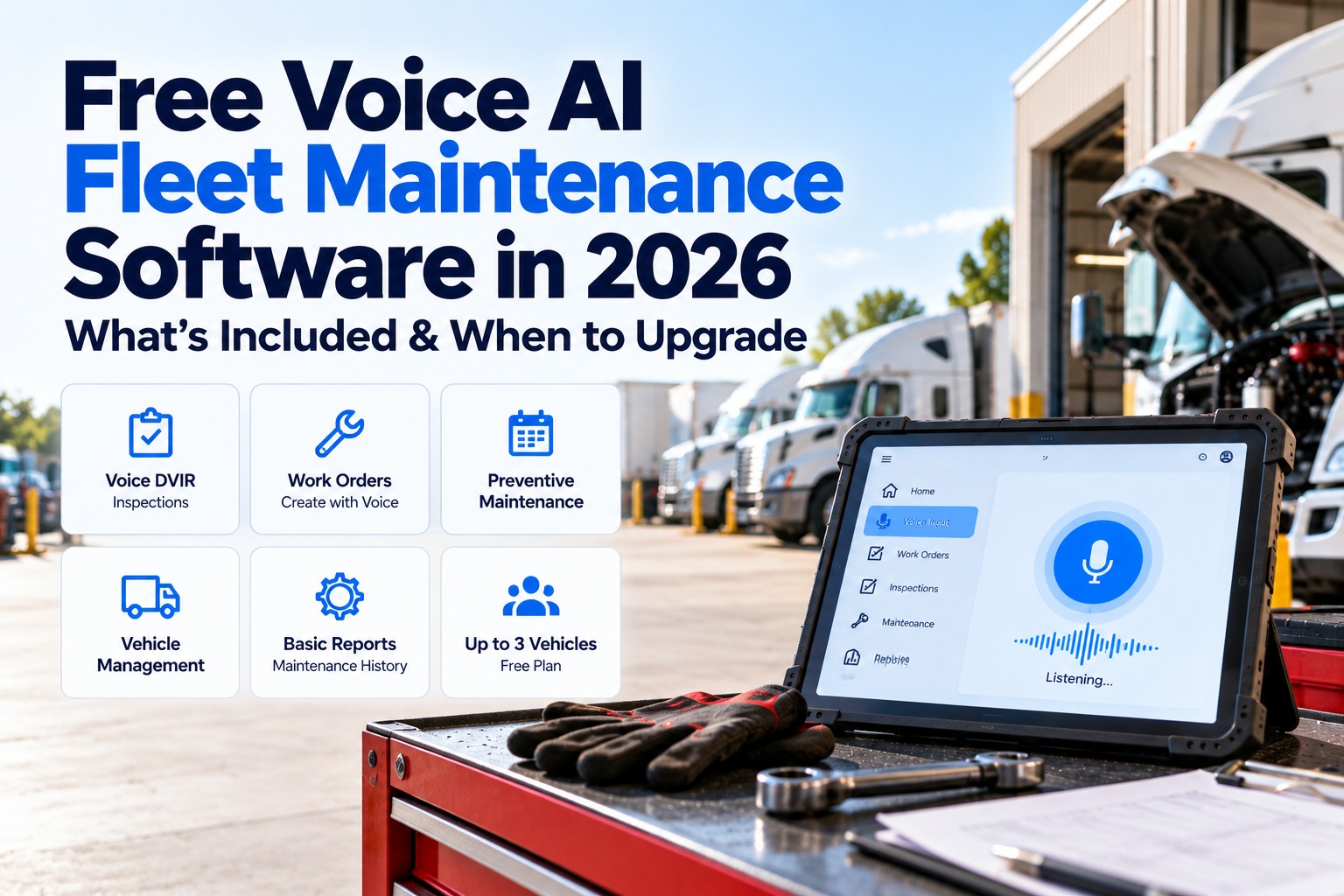
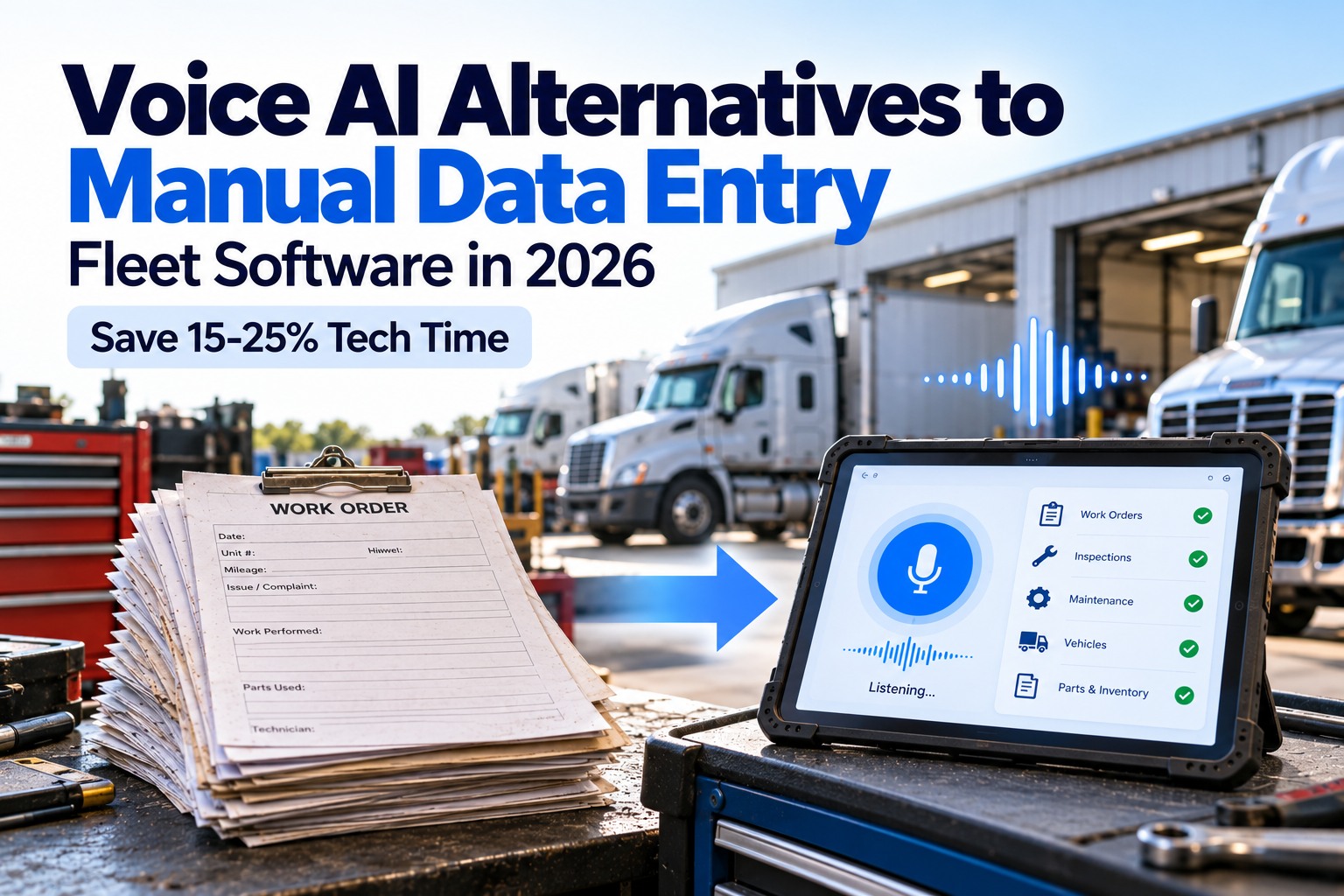
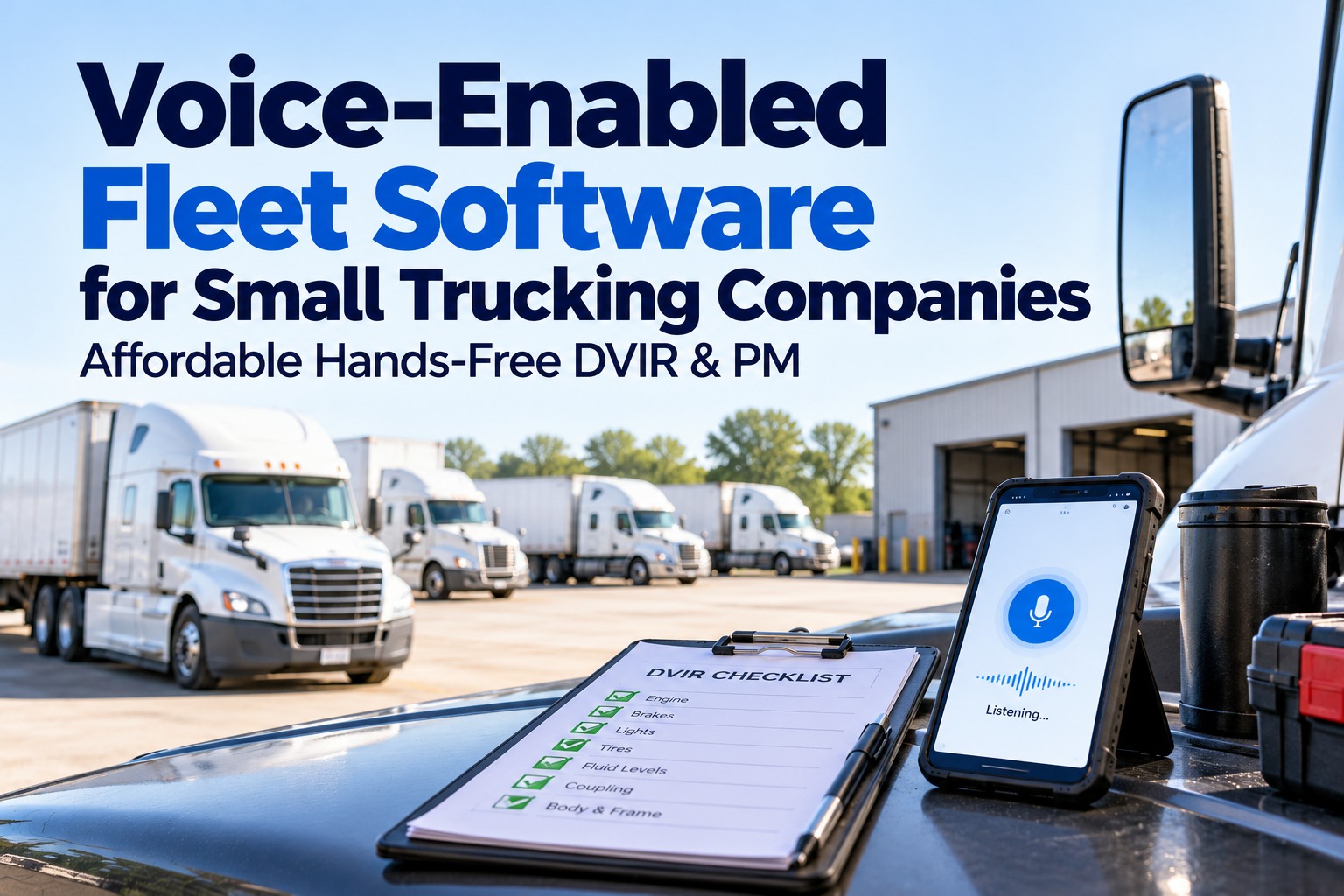
FleetRabbit's own articles describe speech turned into text and sorted into work-order and DVIR fields, using phones and Bluetooth headsets with no extra hardware, and recommend testing on your own shop audio before buying. The articles claim accuracy of 94 to 96 percent at 85 dB, about 30 minutes saved per technician per day and a voice work order in under 60 seconds, and none of these claims names an independent test. Treat them as vendor claims and try the tool on your own trucks and yard noise before relying on them.
What Small Fleet Maintenance Software Costs per Vehicle, Compared on Published Prices
Per-vehicle pricing keeps cost proportional to your fleet, but minimums and hardware change the real number
| Option | Price as published | Notes |
|---|---|---|
| FleetRabbit | Free for up to 3 vehicles, then $5 per vehicle per month | Pricing stated by FleetRabbit |
| AUTOsist | From $5 per vehicle per month billed annually or $6 billed monthly, with a $59 monthly minimum | Software Advice listing, updated Mar 11, 2026; 14-day free trial |
| GPS hardware, any vendor | $0 to $120 per vehicle depending on device and contract | OxMaint article, unsourced |
The table lists the prices we could confirm from a source that is not the vendor itself. OxMaint's article also lists competitor prices, which we left out because it gives no source, date or method for them. At FleetRabbit's published price, a 10-truck fleet pays $35 a month and a 25-truck fleet pays $110, from our arithmetic of the first three vehicles being free and $5 for each additional one.
Why the Voice AI Market Forecast in the Search Results Tells You Little About Fit for a 10-Truck Fleet
A forecast of a $2.54 billion market growing to $35.24 billion measures voice agents in general, not fleet software
CloudTalk's roundup cites Grand View Research for an AI voice agent market of about $2.54 billion in 2025 growing to about $35.24 billion by 2033, a 39 percent annual growth rate. The roundup is inconsistent on the base year, calling it 2025 in one place and 2026 in another. Inbound voice agents such as receptionists, support lines and booking made up 52.1 percent of 2025 revenue, so the market is not a fleet maintenance market. Other firms' forecasts for neighbouring voice categories differ widely in scope. The number shows that vendors are investing in voice, and it says nothing about whether a tool suits your trucks.