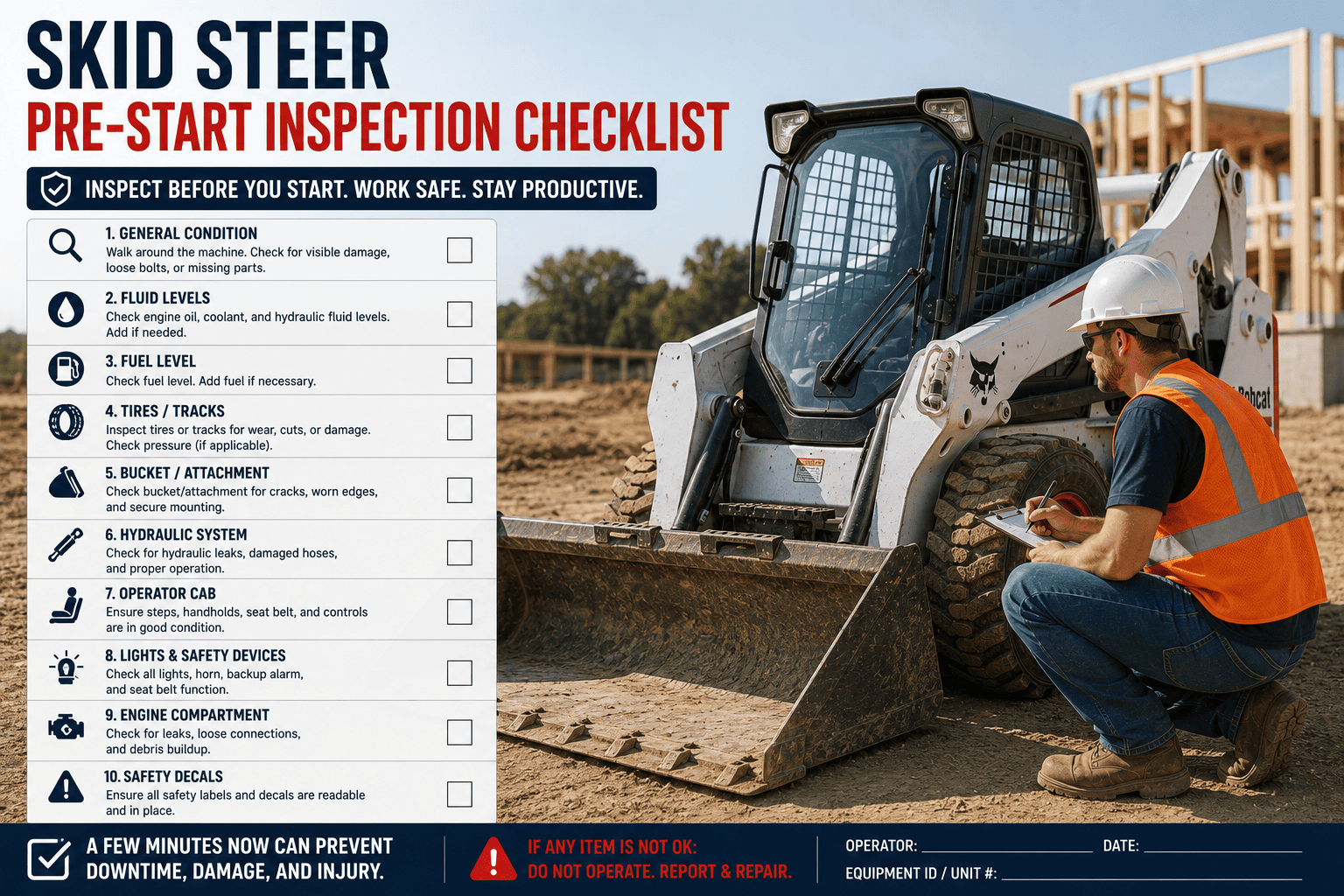
An operator climbs into a skid steer, buckles the seat belt, and turns the key without a second thought. Thirty seconds later the lift arms jerk because a hydraulic hose was already weeping, or the quick-attach doesn't fully lock because nobody checked the pins. Skid steers are compact, fast, and deceptively powerful, which is exactly why rollovers, crushed-by incidents, and hydraulic failures rank among the most common causes of injury around them. A proper skid steer pre-start inspection checklist is the two or three minutes that stand between a normal shift and a serious incident.
A skid steer pre-start inspection checklist covers the operator station and safety interlocks, hydraulic system, tires or tracks, the quick-attach coupler, and a final engine and function test, completed in the same order every shift. OSHA expects this check before each shift, and daily inspection habits are estimated to catch the large majority of developing issues before they cause a failure or a safety incident on site.
Why a Pre-Start Check Matters More on a Skid Steer Than Almost Any Other Machine
Skid steers work in tighter quarters, at closer range to people, and with more frequent direction changes than almost any other piece of equipment on a jobsite. That combination puts extra stress on hydraulics, tires or tracks, and the quick-attach coupler every single day. A hose that's been rubbing against a bracket for two weeks doesn't announce itself until it lets go mid-lift, and a coupler pin that isn't fully seated doesn't announce itself until an attachment drops.
The Difference Between a Daily Inspection and a Pre-Start Check
A full daily inspection is the deeper 10 to 15 minute check done once before first use, covering fluid levels, a detailed walk-around, and operational tests. A pre-start check is the quicker 2 to 3 minute safety verification an operator runs every time they take the controls, focused on the items that change shift to shift: controls, visibility, interlocks, and attachment security. Both matter, but the pre-start check is the one that has to happen without fail, every time, before the machine moves.
Why Skipping It Is Riskier Than It Feels
Skipping a pre-start check feels harmless because most shifts, nothing goes wrong. That's exactly the problem. The one shift where a lap bar interlock has been quietly failing, or a coupler pin isn't fully engaged, looks identical to every uneventful shift right up until the machine is already moving.
The Five Zones of a Proper Skid Steer Pre-Start Check
Running the same sequence every time, starting at the operator platform and moving around the machine in one direction, is what keeps a pre-start check fast and complete instead of rushed and partial.
Operator Station & Interlocks
ROPS/FOPS structure undamaged, seat belt and lap bar restraint functioning, door latched and sealed, and the operator-presence interlock confirmed so the machine will not move with the bar up.
Hydraulics
Checked cold before the system pressurizes, since leaks show more clearly at this point. Look at hoses, fittings, and cylinders for cracks, wet spots, or bulges, never by hand.
Tires or Tracks
Tire pressure, sidewall damage, and missing lugs on wheeled units. Track tension, sprockets, idlers, and embedded debris on tracked units.
Quick-Attach Coupler
Pins fully engaged, locking mechanism secure, no stress fractures at the coupler frame, and auxiliary hydraulics connected and tested before lifting a load.
Zone Five: Engine Start and Function Test
With the walk-around complete, the last zone is starting the machine and confirming everything responds the way it should. Test the horn, all lights, the backup alarm, wiper, and travel and lift controls, and confirm the parking brake holds before the skid steer leaves its parked position.
Turn a Paper Checklist Into a Digital Operator Report
FleetRabbit standardizes pre-start inspections across every operator and every machine, then stores each report digitally with photos and timestamps ready for audit. Sign up to set up your first skid steer inspection workflow in minutes, or book a demo to see it running on a live checklist first.
What Happens When an Item Fails the Check
A checklist only protects anyone if a failed item actually stops the machine from being used. Critical defects, a hydraulic leak, ROPS damage, a coupler fault, or a failed interlock, should tag the equipment as do-not-operate immediately, with the issue routed to maintenance before the shift continues.
Documenting the Finding, Not Just Noticing It
A checklist tells an operator what to look at. A report is what happens to what they find. Writing down a defect, attaching a photo, and routing it to a work order is what turns a quiet observation into an actual fix, instead of a problem that gets mentioned once on the radio and forgotten by lunch.
Paper Checklists vs. Digital Inspection Records
Both formats can technically get an operator through the same checklist. What differs is what happens to the information afterward, and whether a supervisor can actually confirm the inspection took place.
| Inspection Format | How Findings Are Captured | Supervisor Visibility | Audit Readiness |
|---|---|---|---|
| Paper checklist | Handwritten notes, easy to skip a line or leave blank under time pressure | Delayed, sits in the cab or a binder until someone collects it | Slow, requires manually pulling and organizing old sheets |
| Digital operator report | Structured checklist with required photos on flagged items | Immediate, completion status visible the moment it's submitted | Fast, full history exports in seconds |
Building a Skid Steer Inspection Habit That Actually Sticks
The best checklist in the world doesn't help if operators treat it as a formality. A few practices make it stick across a crew instead of fading after the first busy week.
Same Sequence, Every Time
Starting at the same point and moving around the machine in the same direction, every shift, on every skid steer in the fleet, is what keeps the check fast enough that operators don't feel pressure to shortcut it.
Make Completion Visible to Supervisors
When a supervisor can see at a glance which machines have a completed inspection for the day and which don't, accountability stops depending on memory or trust and starts depending on a simple, visible record.
Getting Your Fleet Onto a Standardized Checklist
Rolling out a consistent pre-start check across mixed equipment, wheeled skid steers, compact track loaders, and different brands side by side, doesn't have to mean building a new process from scratch. A digital checklist can be configured once and applied across every machine and every operator, with completion tracked automatically instead of chased down after the fact. If you'd like to see how that setup looks before rolling it out to your crew, booking a demo is the fastest way to judge the fit.
Frequently Asked Questions
Make Every Pre-Start Check Count
A skipped inspection looks harmless right up until it isn't. FleetRabbit standardizes skid steer pre-start checklists across your whole fleet and keeps a digital, audit-ready record of every inspection. Sign up for a free trial or book your demo today.