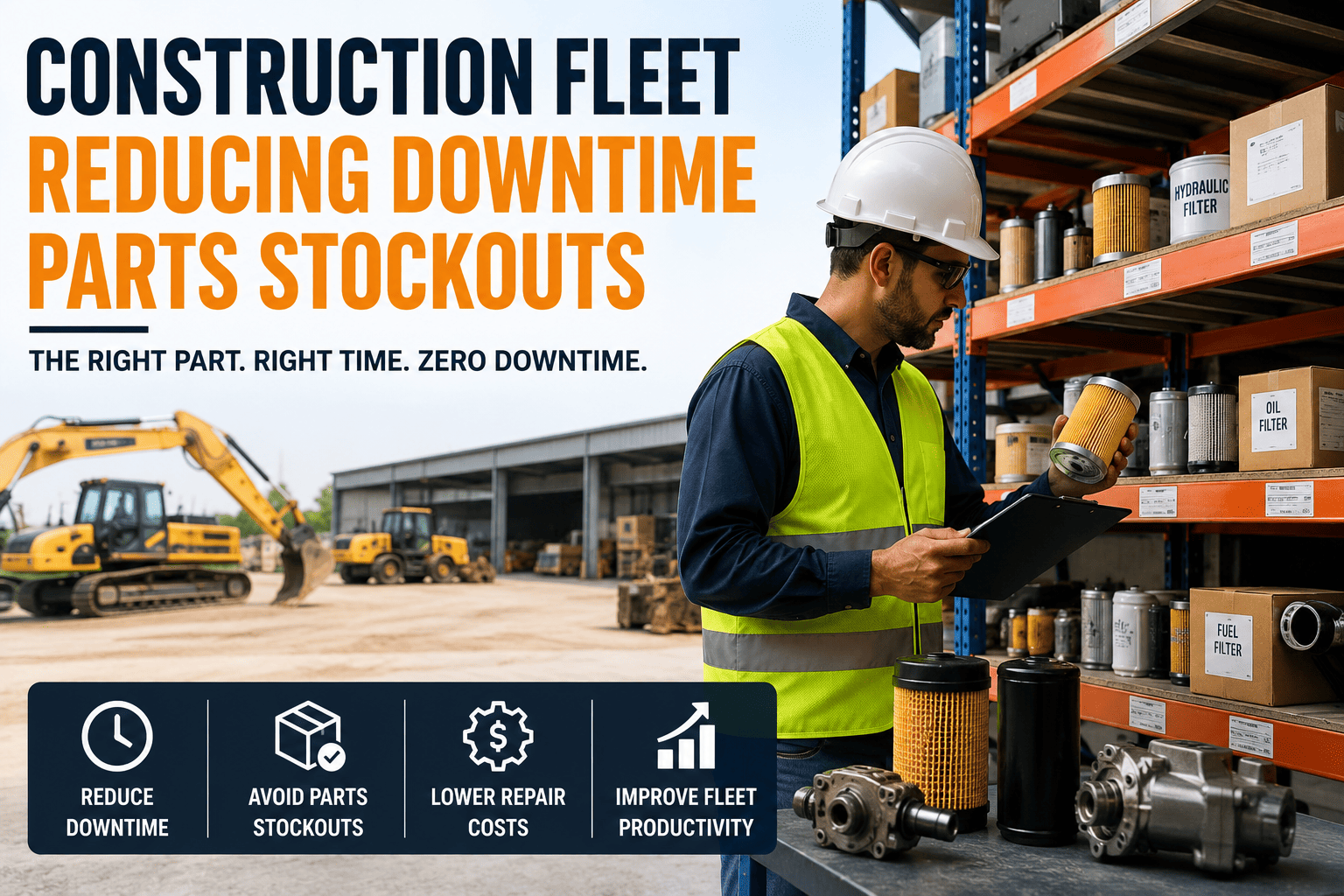
A hydraulic hose fails on an excavator mid-shift. The technician pulls the part number, walks to the parts room, and finds an empty shelf. Now the machine waits, the crew waits, and the schedule slips, not because the repair was hard, but because nobody had the part on hand. This is one of the most common and most preventable causes of construction downtime, and it happens far more often than most fleet managers realize. The breakdown was never the real problem. The empty shelf was.
Roughly 23 percent of unplanned equipment downtime traces back to a missing spare part rather than a diagnosis or labor delay. Fleets still relying on manual parts tracking see 40 percent higher failure rates than digitally managed fleets, while those connecting maintenance history to inventory levels cut parts-related downtime by 50 to 75 percent. For a 50-machine fleet, that gap alone is worth 100,000 to 200,000 dollars a year in avoidable losses.
Anatomy Of A Stockout: How One Missing Part Becomes A Lost Day
A stockout rarely looks dramatic in the moment. It is a shelf that is quietly empty until the exact minute you need what was on it. Here is how that single gap turns into a full day of lost productivity.
The Difference Between A Repair Problem And A Stocking Problem
It is easy to blame downtime like this on the breakdown itself, but the actual failure happened earlier, when nobody flagged that a fast-moving part was running low. That is a stocking problem, not a mechanical one, and it is solvable with the right visibility into what you actually have on hand.
FleetRabbit links repair records to inventory levels automatically, flagging exactly which parts are likely to run out before a technician ever needs them. Sign up free and see your fleet's parts risk today.
The Parts That Cause The Most Downtime When They Run Out
Most fleets discover that only 15 to 20 percent of their total parts inventory is genuinely critical, meaning it has a real failure history, a long supplier lead time, or the power to stop a machine completely if it is missing. Those are the parts worth stocking ahead of need, even if the rest of your inventory runs closer to just-in-time.
| Part Category | Why It Causes Downtime | Stocking Guidance |
|---|---|---|
| Hydraulic Hoses & Fittings | High failure frequency, machine cannot operate without them | Keep multiple sizes on hand across all active machine types |
| Filters (Oil, Fuel, Hydraulic) | Routine consumable, but missing one stalls scheduled maintenance | Stock 30 to 60 days of supply based on service intervals |
| Belts & Seal Kits | Predictable wear items with real lead times from suppliers | Keep at least one unit per critical machine type |
| Bucket Teeth & Track Pads | Wear directly affects productivity, not just uptime | Track consumption trends and reorder before the last set wears out |
Building A Smarter Parts Strategy
Preventing stockouts is not about stocking everything. It is about knowing which parts actually put a machine at risk, and catching low stock before it becomes a problem instead of after.
Set Min And Max Levels Based On Real Usage
A reorder point tells you when to buy more, and safety stock protects you from a shipping delay or an unexpected spike in usage. Both should be based on how a part is actually consumed, not a guess made once and never revisited.
Use ABC Analysis To Prioritize What Matters
Not every part deserves the same attention. Ranking inventory by consumption value and criticality helps you stock the parts that stop a machine cold, without tying up cash in slow-moving items that rarely run out.
Why This Balance Matters
Carrying costs from excess stock, tied-up capital, and slow-moving inventory commonly consume 20 to 30 percent of total inventory value every year. Overstocking is its own quiet expense, even without a single stockout ever happening.
Let Maintenance History Predict What You Will Need Next
Repair records reveal which components fail repeatedly on specific machines. Reading that history ahead of time lets you flag likely part needs before the next service appointment, instead of discovering the gap the moment a technician reaches for an empty shelf.
What Digitally Managed Parts Inventory Actually Delivers
The fleets that see numbers like these are not the ones stocking more parts, they are the ones with better visibility into which parts they actually need and when. If you want to see where your own inventory is exposed to a stockout, you can book a demo and walk through your current parts and maintenance data together.
FleetRabbit connects your maintenance history to your parts inventory, flagging what is running low before it ever costs you a repair day. Try it free on your fleet today, no credit card required.