Most contractors do not choose reactive maintenance on purpose, it just becomes the default when nobody is tracking engine hours or scheduling service ahead of time. A cracked hose gets caught only after it fails on site, and the repair invoice is the smallest part of what that costs. The right maintenance software does not just digitize a paper log, it changes when repairs happen, catching problems on a schedule instead of in the middle of a job.
The best construction equipment maintenance software combines automated preventive scheduling triggered by engine hours, OEM fault code monitoring, mobile work orders that function offline, and cost-per-hour analytics by machine. Contractors relying on manual tracking see 40 percent higher failure rates and spend 4 to 5 times more on reactive repairs than planned maintenance, while structured preventive programs typically cut maintenance costs by 12 to 18 percent within the first year.
The Real Cost Difference Between Reactive And Planned Maintenance
Reactive maintenance feels cheaper because it requires no setup, no schedule, and no software. The repair invoice, though, is only the visible part. Emergency labor runs at overtime rates, parts get sourced at a rush premium, and the machine is unavailable exactly when a project needs it most. The U.S. Department of Energy has documented reactive repairs costing 3 to 5 times more than the same work done on a planned schedule once every cost is counted, not just the invoice.
Where Your Fleet Sits On The Maintenance Maturity Curve
Most fleets fall somewhere between fully reactive and fully planned, and the software you choose should be built to move you up this curve, not just document where you already are.
Reactive
4-5x higher repair cost
Repairs happen after failure. No schedule, no software, and no warning before a machine goes down.
Preventive
12-18% cost reduction
Service triggered by engine hours or calendar intervals, catching most issues before they become failures.
Predictive
30-50% less unplanned downtime
Sensor and fault code data flags developing issues weeks before they would otherwise cause a breakdown.
Software built for construction fleets should support the jump from Stage 1 to Stage 2 immediately, then give you the data foundation to move toward Stage 3 as your program matures.
Why Manual Tracking Costs More Than It Looks
What Construction-Specific Software Needs That General CMMS Does Not
A maintenance system built for a factory floor assumes fixed assets, reliable internet, and mileage-based tracking. None of that matches a construction site. Equipment moves between locations, connectivity is inconsistent at best, and service intervals are almost always tracked by engine hours rather than miles. Software built specifically for construction fleets accounts for all three from the start.
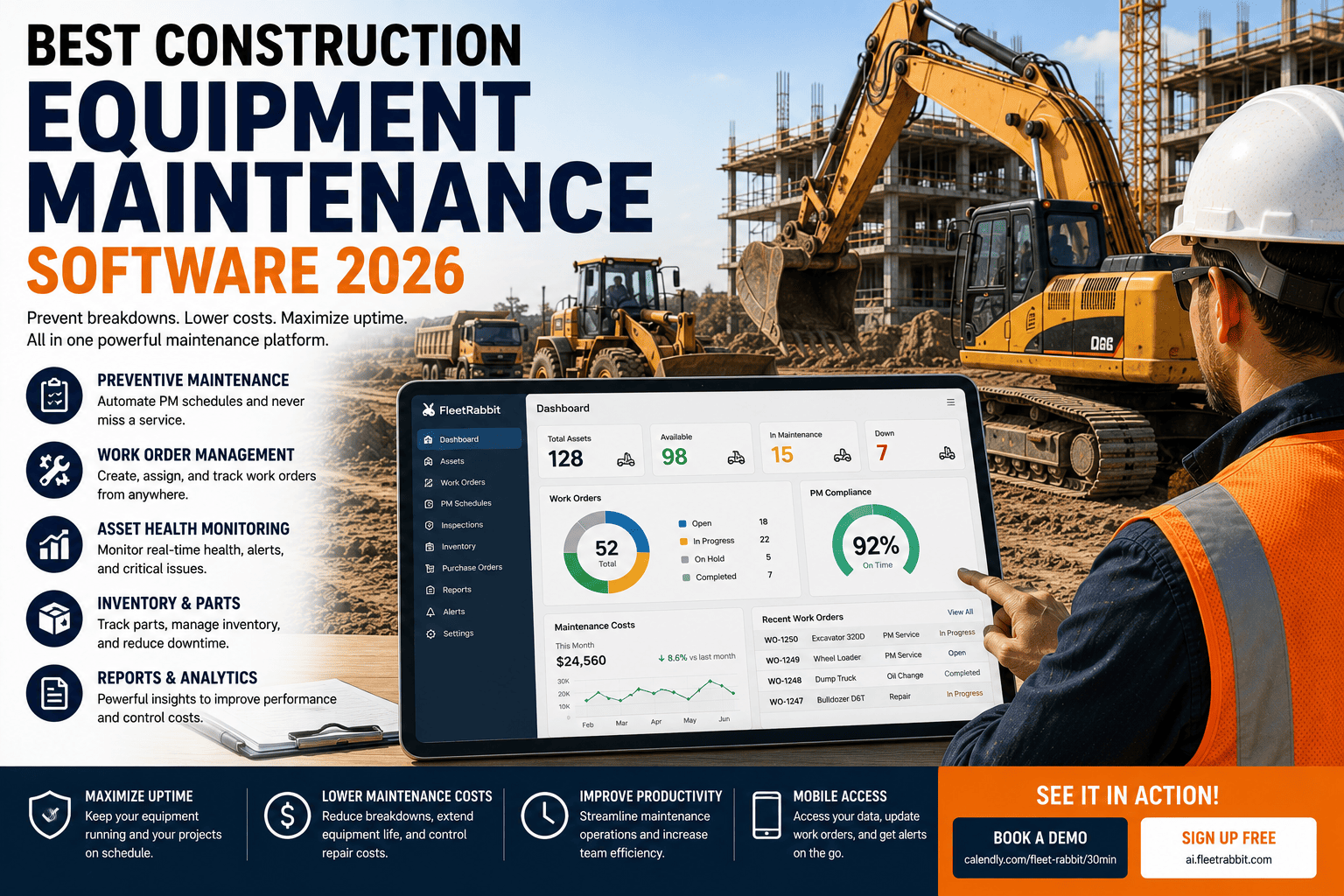
FleetRabbit schedules maintenance from real engine hours, pulls OEM fault codes automatically, and works fully offline in the field. Sign up and set up your first preventive schedule today.
A Quick Checklist For Choosing Maintenance Software
Manual Logs Versus A Real Maintenance System
Spreadsheets And Paper Logs
Service dates tracked by memory or a whiteboard, no fault code visibility, and no way to see which machines are quietly costing more than the rest of the fleet.
FleetRabbit Maintenance Platform
Engine-hour triggered schedules, automatic fault code alerts, offline work orders, and cost-per-hour reporting built specifically for construction equipment.
Why Adoption Is The Real Test
The most feature-rich platform is worthless if the crew stops using it after the first busy week. A construction maintenance system earns its keep by being fast enough in the field that logging a repair takes less time than writing it on paper, which is the difference between data that is current and a system nobody trusts. To see how this feels in practice, you can book a demo and log a sample work order yourself.
Frequently Asked Questions
Reactive repairs will always cost more than planned ones, the only question is how much of that cost your fleet is still absorbing. FleetRabbit brings engine-hour scheduling, fault code monitoring, and offline work orders together in one platform built for construction.