A dump truck doing site work can rack up 500 engine hours in sixty days, which is roughly the wear of 25,000 road miles. If your tracking only watches the odometer, that truck will blow through every real service interval while the spreadsheet says it's fine. This is the exact gap that quietly drains small contractors every season.
Untracked construction equipment costs small contractors an estimated 75,000 to 150,000 dollars a year through missed maintenance, idle machines, compliance violations, and emergency rentals. Most of that loss is invisible until a project timeline slips. This guide covers what construction fleet software actually needs to do for a small contractor, the capabilities worth paying for, and how to avoid buying more platform than a lean crew will ever use.
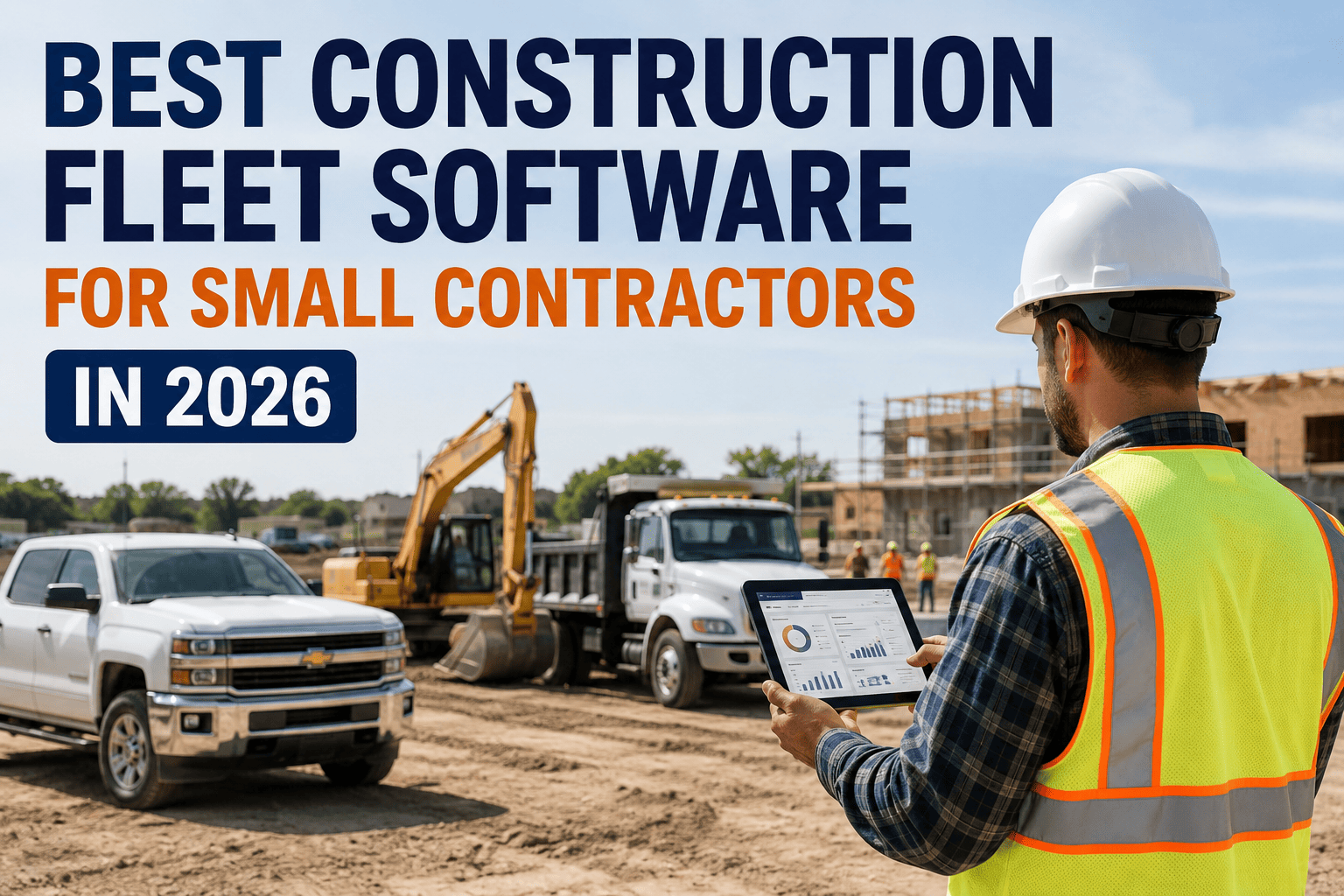
The best construction fleet software for small contractors tracks maintenance by engine hours instead of mileage, handles powered vehicles and non-powered equipment on one screen, automates OSHA inspection and certification documentation, and works offline on job sites with no signal. FleetRabbit delivers all four in one platform and helps contractors prevent up to 78 percent of equipment breakdowns through predictive maintenance alerts.
Why Generic Fleet Software Doesn't Fit a Small Contractor
Most fleet platforms were built for one of two worlds: long-haul trucking or service vans on fixed routes. Construction doesn't look like either one, and a small crew feels the mismatch faster than a large fleet does.
What a Missed Maintenance Interval Actually Costs
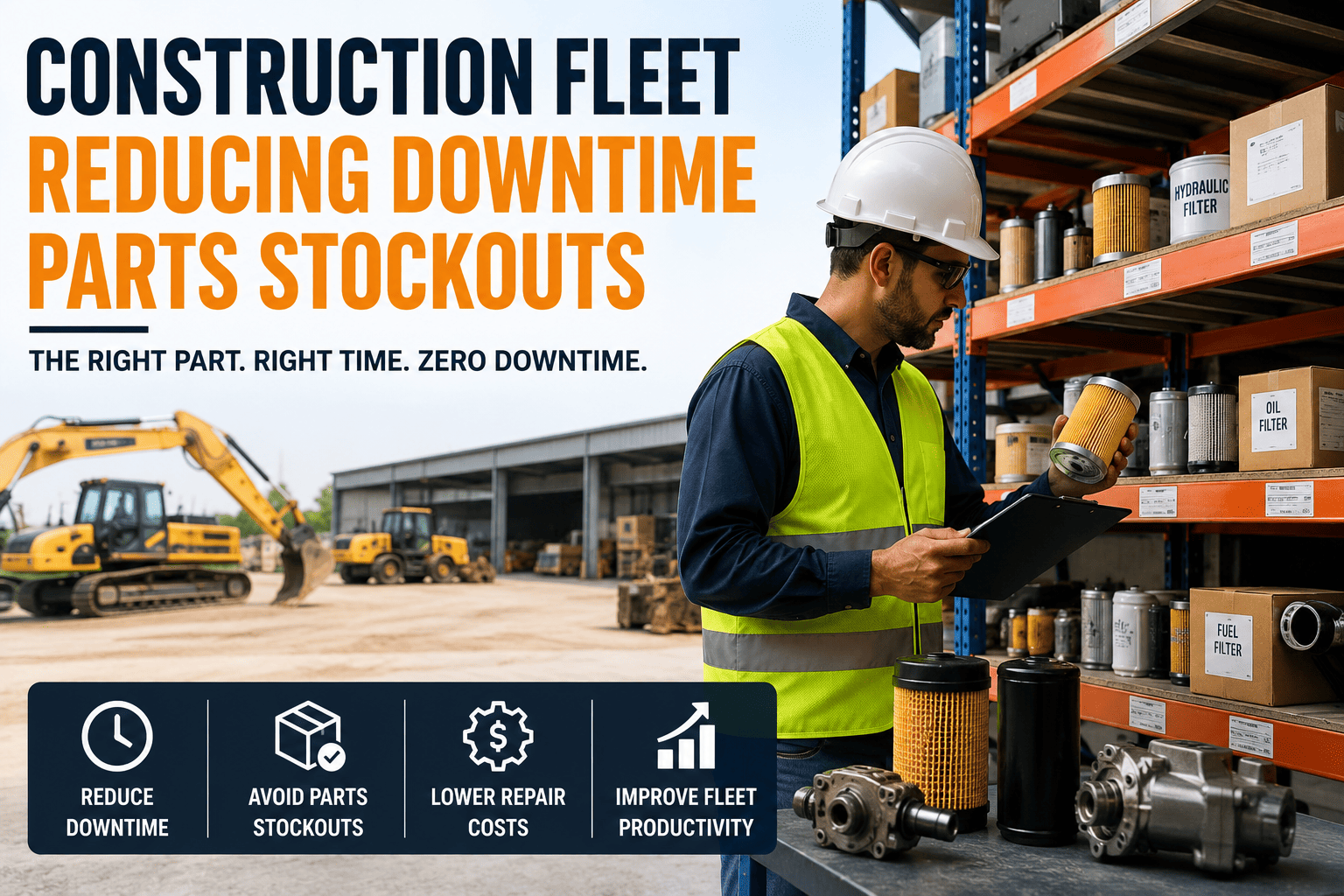
By the time a foreman reports that an excavator won't start, the underlying issue has often progressed from a 300 dollar filter replacement into a 12,000 dollar hydraulic system failure, with the project timeline slipping three to five days behind. Idle asset time adds its own drain, typically costing 150 to 400 dollars a day in depreciation and lost opportunity for every machine sitting unused on a job site.
FleetRabbit tracks powered vehicles and heavy equipment together, schedules maintenance by real engine hours, and keeps working when a job site has no signal.
What a Small Contractor's Fleet Software Actually Needs
Enterprise platforms built for 100-plus asset operations come loaded with job costing modules, custom reporting layers, and dispatch tools a five-truck crew will never touch. A small contractor needs a shorter, sharper list done well.
| Capability | Why It Matters | What To Look For |
|---|---|---|
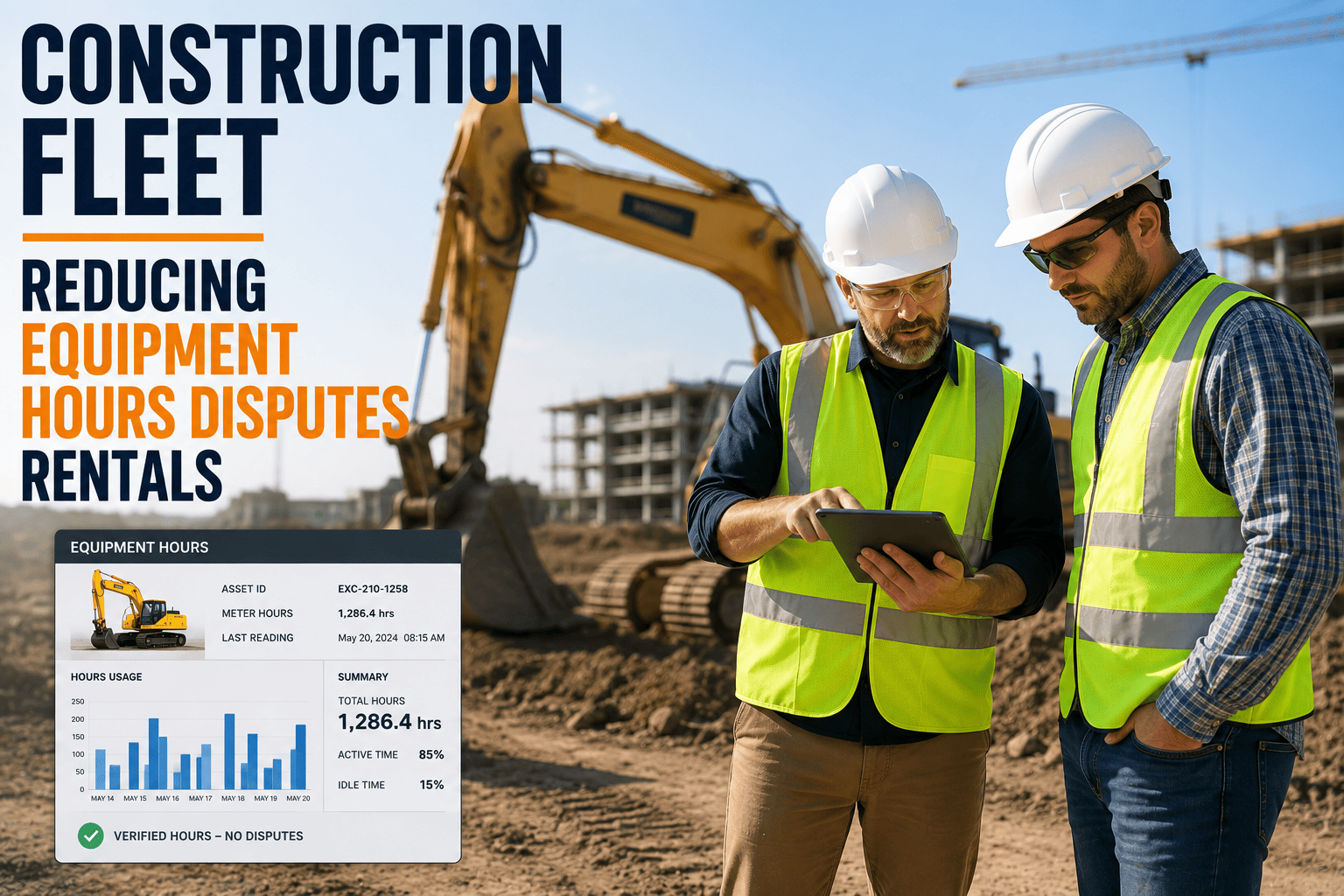
| Engine-Hour Maintenance | Catches wear on excavators and loaders that a mileage-based schedule would completely miss | Automatic PM triggers at 250, 500, 1,000, and 2,000-hour intervals synced from telematics |
| Mixed-Fleet Tracking | Puts trucks, mixers, and non-powered equipment on one live map instead of two disconnected tools | A single dashboard that handles both DOT-regulated vehicles and heavy equipment |
| Offline-Capable Inspections | Keeps pre-shift checks running on remote sites where cell coverage is unreliable or nonexistent | Digital checklists that record locally and sync the moment signal returns |
| OSHA Documentation | Turns inspection and certification records into an audit-ready trail instead of a filing cabinet | Automated reminders for certifications and inspection logs tied to specific equipment types |
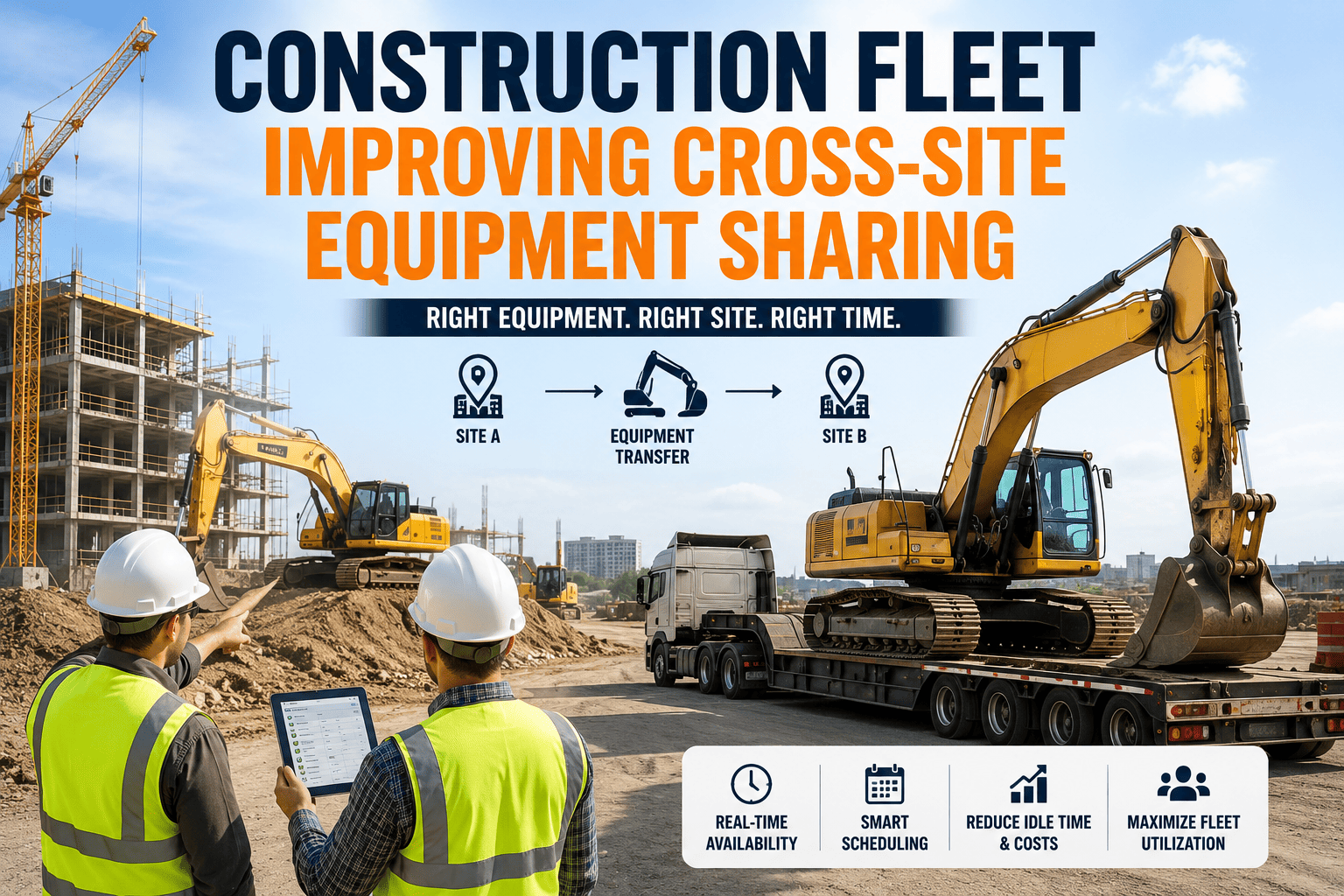
| Real-Time Availability | Answers "is the excavator free for Monday's job" without a round of phone calls | Live status by asset showing deployed, available, in maintenance, or in transit |
The Ten-Asset Rule of Thumb
Spreadsheets tend to hold up fine below ten to fifteen pieces of equipment. Past that point, tracking errors start causing missed maintenance intervals, and nobody can answer where a specific machine is in real time. That's usually the moment a costly failure or a piece of missing equipment becomes the tipping point toward dedicated software.
OSHA Compliance Without the Guesswork
Construction equipment inspection requirements fall under specific OSHA standards, including competent-person inspections, general equipment safety rules, earthmoving equipment standards, and a three-tier inspection program for cranes. Paper forms get lost and spreadsheets fall out of date, and neither one helps when an auditor actually shows up.
Digital Checklists Replace the Filing Cabinet
Operators complete pre-shift inspections on a phone, records sync automatically, defects route straight to a work order, and overdue inspections get flagged before they turn into a citation. This is also where the OSHA requirement and the maintenance schedule quietly reinforce each other, since a defect caught during inspection becomes a work order before it becomes a breakdown.
Where Most Contractors Are Starting From
A large share of contractors currently operate without any formal technology roadmap for their equipment, which means the honest first step isn't picking software. It's an audit of what's actually being tracked today and what's falling through the cracks.
Comparing Your Options as a Small Contractor
Small contractors generally land on one of three paths. Knowing the tradeoffs before evaluating vendors saves weeks of demo calls that don't fit.
| Option | Best Fit | The Tradeoff |
|---|---|---|
| Enterprise Fleet Platform | General contractors running 80 or more vehicles and equipment across many active sites | Long onboarding, job-costing modules a small crew won't use, and pricing built for a much larger operation |
| Spreadsheets And Paper Logs | Fleets under roughly ten pieces of equipment with a single job site at a time | Tracking errors, missed engine-hour intervals, and no real defense in an OSHA audit |
| Purpose-Built Contractor Platform | Small to mid-size contractors with a mixed fleet of ten to sixty assets | Fewer enterprise dispatch features, in exchange for fast setup and pricing that matches the crew size |
Why Contractors Choose FleetRabbit
FleetRabbit centralizes GPS tracking, predictive maintenance alerts, digital inspection workflows, OSHA compliance documentation, and utilization analytics in one platform built around mixed construction fleets. Contractors using it report preventing up to 78 percent of equipment breakdowns through predictive alerts, cutting idle asset time by 34 percent, and maintaining full certification compliance across every job site.
See It Against Your Own Equipment List
Contractors who want to see engine-hour scheduling and offline inspections running against their actual truck and equipment list can book a demo, or sign up to start a free trial directly.
FleetRabbit gives small contractors real-time visibility, OSHA-ready documentation, and predictive maintenance without the enterprise price tag. Most crews are fully set up within days.
Stop discovering equipment problems after a project timeline has already slipped. FleetRabbit centralizes GPS tracking, predictive maintenance, and OSHA documentation for contractors of every size. Start your free trial today, no credit card required.