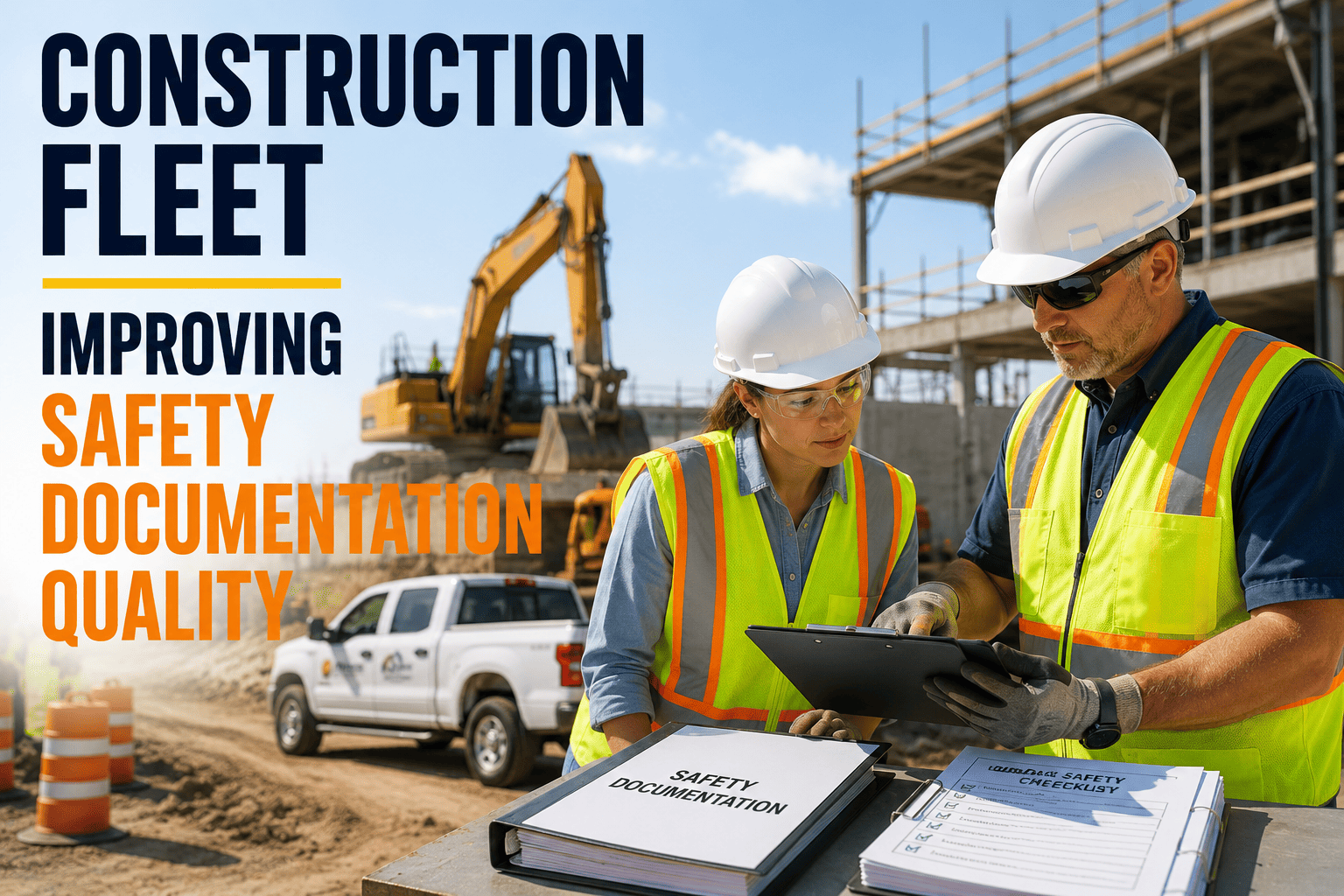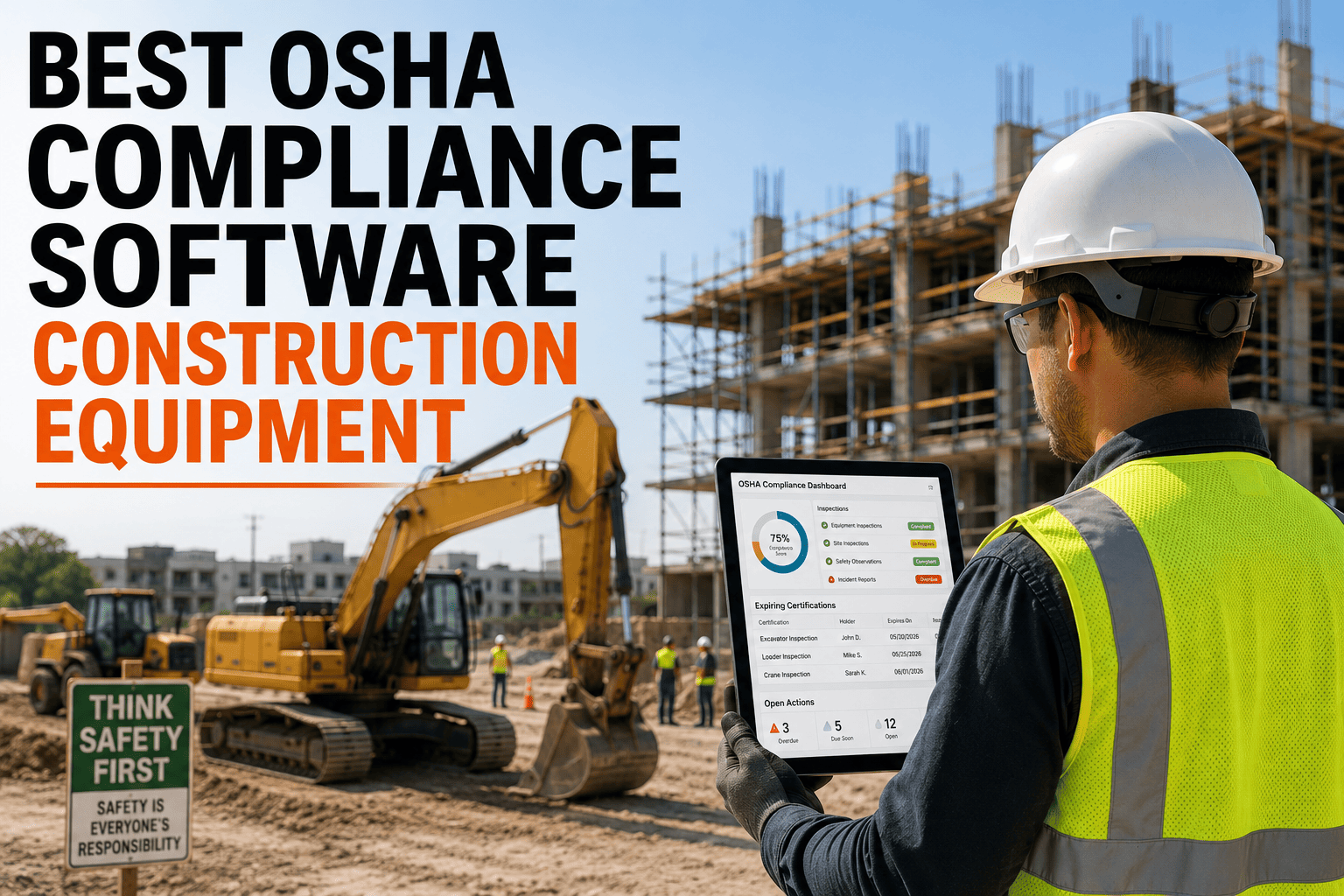
An OSHA inspector shows up unannounced, asks for the last competent-person inspection on your excavator, and your safety coordinator starts digging through a filing cabinet while the crew stands around waiting. That scramble is exactly the moment that turns a routine visit into a citation. Willful violations now run well into six figures, and construction accounts for a disproportionate share of workplace fatalities every year. The contractors who avoid that scramble are not the ones with the most paperwork, they are the ones who moved compliance off paper entirely.
OSHA compliance software for construction equipment fleets digitizes pre-operation inspections, tracks operator certifications, logs defects and corrective actions, and generates audit-ready reports on demand. Digital platforms consistently cut OSHA citations by cutting out the paper trail entirely. FleetRabbit connects inspections, maintenance, and certification tracking into one dashboard so you can pull proof of compliance in seconds, not hours.
Why Paper Compliance Fails Construction Fleets
Construction sites are not factories. Crews rotate weekly, equipment moves between sites, subcontractors bring their own workers and their own certifications, and a large share of the workday happens somewhere with no reliable signal. A clipboard system that worked for one site quietly falls apart the moment a fleet spans multiple active projects. Forms get left in a truck cab, inspections get backfilled from memory at the end of the day, and by the time an OSHA officer asks a direct question, nobody can produce a clean answer fast enough.
The numbers back this up. Firms that switch from paper-based safety processes to a digital platform report dramatically fewer OSHA citations, and organizations using structured compliance software reduce incident rates meaningfully within the first year of adoption. The difference is not the paperwork itself, it is whether that paperwork can be trusted, retrieved instantly, and tied directly to the equipment and the person responsible for it.
What OSHA Actually Expects From Equipment Fleets
OSHA's construction standards under 29 CFR 1926 require documented competent-person inspections, safe operating condition for all equipment, and specific programs for high-risk categories like cranes, which fall under a dedicated multi-tier inspection requirement. Operators must be properly trained and certified for the equipment they run, and employers must be able to show, not just claim, that hazards were recognized and controlled.
The Equipment Compliance Chain
A strong compliance program connects four things in sequence: the pre-operation inspection, any defect found during that inspection, the work order created to fix it, and the maintenance record proving it was resolved before the machine went back into service. Break that chain anywhere and you no longer have proof, you have a story.
Digital pre-op inspections, defect-to-work-order tracking, and certification alerts, all tied to your actual equipment and organized in one place. Pull any inspection record in seconds instead of hours.
Core Features Every Fleet Compliance Platform Needs
Not every safety app built for offices translates cleanly to a job site full of moving equipment. When evaluating a platform, check it against the capabilities that actually hold up during an audit or an incident review.
| Feature | What It Does | Why It Matters For Compliance |
|---|---|---|
| Mobile Pre-Op Inspections | Equipment-specific digital checklists completed before every shift | Creates a timestamped record proving equipment was checked before use, not just serviced eventually |
| Photo and Signature Capture | Attaches visual proof and a digital signature to every inspection | Turns a checkbox form into evidence an auditor cannot dispute |
| Defect to Work Order Flow | Automatically opens a work order the moment an inspection flags an issue | Proves unsafe equipment was pulled from service and corrected, the exact chain OSHA looks for |
| Operator Certification Tracking | Stores every card, license, and training record with expiry alerts | Prevents an uncertified operator from running equipment they are not qualified for |
| Offline Field Access | Lets crews complete inspections without cell signal, syncing once connected | Keeps compliance consistent on remote sites where connectivity regularly drops |
| Audit-Ready Reporting | Exports clean, timestamped inspection and maintenance history on demand | Cuts document retrieval from hours of searching to under a minute |
Crane, Forklift, and Heavy Equipment: Different Rules, One System
Not all equipment is regulated the same way. A crane requires a three-tier inspection program under OSHA's Subpart CC, a forklift operator needs distinct certification under separate standards, and general earthmoving equipment falls under its own inspection expectations. Treating every machine with one generic checklist is one of the fastest ways to create a compliance gap without realizing it.
Site-Specific Requirements Still Apply
Equipment moving between job sites also needs to reflect site-specific rules, from fall protection zones to local permit requirements, which is why a compliance platform built for construction needs to track requirements by site as well as by machine.
Building an Audit-Ready Compliance Workflow
Getting audit-ready is not a one-time project, it is a workflow that runs quietly in the background every single day. Pre-op inspections happen every shift. Defects route straight to a work order instead of a verbal note to a foreman. Certification expirations trigger alerts thirty, sixty, and ninety days out instead of surfacing the day someone asks. And when an inspector or an insurance auditor requests records, the answer is a search, not a scavenger hunt.
Turning Compliance Into a Competitive Advantage
General contractors increasingly prequalify subcontractors through platforms that check documented safety performance before awarding work. A fleet with clean, digital compliance records is not just avoiding fines, it is winning bids that competitors with a filing cabinet full of paper cannot even qualify for.
FleetRabbit connects inspections, certifications, and maintenance records for every machine in your fleet, so you always know what is compliant, what needs attention, and what is one signature away from an audit-ready report.
Frequently Asked Questions
Bringing It All Together
Compliance stops being stressful the day it stops being a scramble. A platform that turns every inspection into timestamped proof, routes every defect straight into a work order, and tracks every certification before it lapses does more than protect you from fines, it builds a safety record you can actually point to when it matters. The contractors staying ahead of OSHA in 2026 are not the ones filling out the most paperwork, they are the ones who trusted a system to do it correctly every single time.
FleetRabbit brings digital inspections, operator certifications, and defect tracking into one platform built for construction equipment fleets. Start protecting your crew and your compliance record today, no credit card required.