Somewhere between "I have no idea what happened on that site yesterday" and "I'm tracking your every move" sits the place most construction leaders actually want to be. Lean too far one way and equipment goes missing, defects go unreported, and nobody owns the outcome. Lean too far the other way and good operators start looking for a job somewhere they're trusted to do their work. Real accountability lives in the middle, and it looks nothing like either extreme.
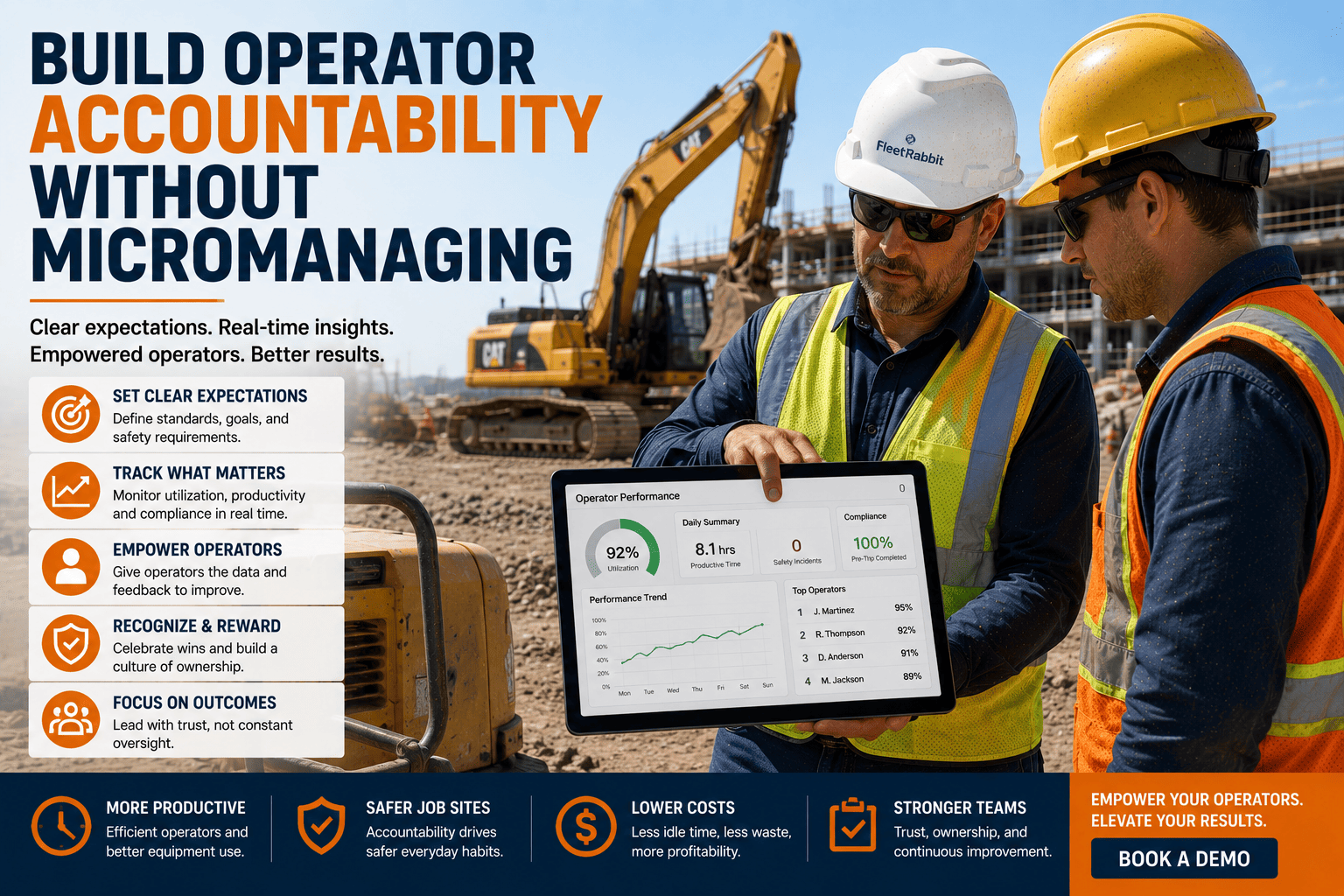
Accountability and micromanagement are often confused, but they run on opposite fuel. Micromanagement controls every detail of how work gets done and signals distrust. Accountability sets clear expectations, shares transparent data, and trusts the operator to own the outcome. FleetRabbit gives crews the same equipment data managers see, so accountability comes from shared visibility, not constant oversight.
Micromanagement and Accountability Are Not the Same Thing
The two get mistaken for each other constantly, mostly because both involve watching what happens on the job. But the intent behind the watching, and what happens with the information afterward, is where they completely diverge.
- Controls every detail of how the work gets done
- Signals "I don't trust you to get this right"
- Focuses on process, not outcomes
- Data used to catch mistakes after the fact
- Sets clear expectations, trusts the operator with the how
- Signals "I trust you, and I'll verify"
- Focuses on results and shared outcomes
- Data used to coach and support, not punish
Why the Confusion Costs You Good Operators
When crews sense they are being watched rather than trusted, engagement drops and problems get reported later rather than sooner. When they understand exactly what is expected and see the same data leadership sees, ownership tends to grow instead.
FleetRabbit shares equipment condition, inspection history, and assignment data with the people actually running the machines. Sign up for free and see how transparency builds accountability instead of resentment.
What Real Accountability Looks Like on a Jobsite
A well-built accountability system benefits operators as much as it benefits the fleet. It rarely feels like surveillance when the structure behind it is built correctly.
Building the System in Practice
Start With Written Expectations, Not Assumptions
Define what good operation looks like for each piece of equipment before you ever start measuring against it. Vague expectations are what turn any tracking system into something that feels like surveillance.
Let Operators See Their Own Data First
Give operators access to their own assignment history, inspection records, and performance trends before a manager brings it up. Seeing your own numbers first feels very different from having them presented to you as a surprise.
Review Patterns Together, Not Just Incidents
A single flagged event rarely tells the full story. Reviewing trends over weeks, in a normal conversation rather than a disciplinary one, is what turns data into coaching instead of a paper trail for punishment.
Signs You May Have Crossed Into Micromanaging
The line between healthy oversight and micromanagement is not always obvious in the moment. A few honest signals tend to show up first.
| Warning Sign | What It Usually Means |
|---|---|
| Operators stop reporting minor issues | They expect the report to trigger blame rather than support |
| Every decision waits for manager approval | Expectations were never made clear, so nobody wants to decide alone |
| Data is only shared after something goes wrong | Tracking feels like evidence collection instead of a shared tool |
| Feedback only happens during discipline | Coaching moments are being skipped until a formal review is unavoidable |
Walk through how FleetRabbit surfaces equipment data to operators and managers alike, turning oversight into a shared responsibility. Book a demo to see it built around your own crews.
Frequently Asked Questions
Accountability was never about watching people more closely, it is about giving everyone the same clear picture and trusting them to act on it. Sign up for free to see how shared equipment data builds trust instead of tension, or book a demo to design an accountability system your crews will actually respect.
FleetRabbit gives operators and managers the same equipment data, turning oversight into shared ownership instead of constant watching. Accountability grows from clarity and trust, not control.