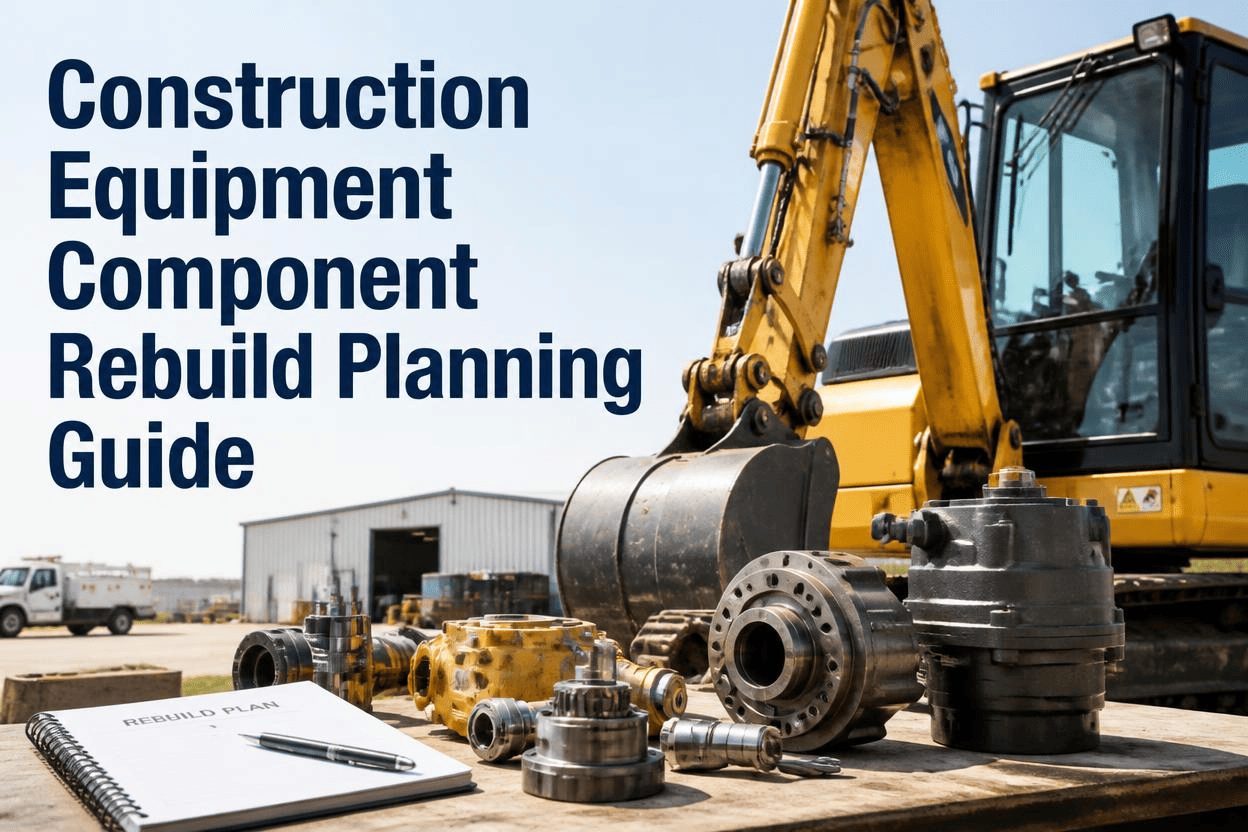
Every major component on a piece of construction equipment has a second life in it, if you plan for it early enough. An engine, a hydraulic pump, a transmission, an entire undercarriage, all of them can be rebuilt to close to new condition for a fraction of what a new machine costs. The problem is that most fleets don't plan for a rebuild, they react to a failure, and by the time an engine seizes or a transmission grinds to a stop, the decision has already been made for them at the worst possible moment and often the worst possible price. Component rebuild planning flips that timeline, using engine hours and maintenance history to schedule the work before the failure happens, not after.
Component rebuild planning means tracking engine hours, wear indicators, and maintenance history on major systems like the engine, hydraulics, transmission, and undercarriage so a rebuild can be scheduled during planned downtime instead of triggered by an emergency failure. A rebuild typically restores 70 to 80 percent of a machine's original performance and lifespan for less than half the cost of a new unit, but only when it's planned ahead of catastrophic component failure rather than after it.
What Component Rebuild Planning Actually Means
Rebuild planning is the discipline of deciding, ahead of failure, which major component on which machine will need a rebuild, roughly when, and what it will cost, so the work can be scheduled instead of forced. This is different from a repair, which fixes only the specific part that broke, and different from a full machine rebuild, which restores nearly every major system down to the frame. A component rebuild sits in between, targeting one system, most often the engine, hydraulics, transmission, or undercarriage, and bringing it back to near-original condition without touching everything else on the machine.
Why Reactive Rebuilds Cost More
A rebuild triggered by catastrophic failure usually means the machine is already down, parts get ordered on an expedited basis, and the shop has to work around whatever schedule opening it can find. A planned rebuild lets you inspect the core in advance, select the right parts and upgrades, and book the work during a period when the machine's downtime actually costs you the least.
The Rebuild, Repair, or Replace Decision
Not every worn component is a rebuild candidate, and not every aging machine should be replaced. The decision usually comes down to a handful of factors that are worth checking in order before committing to any option.
| Factor | Favors Repair | Favors Rebuild | Favors Replacement |
|---|---|---|---|
| Cost vs. Value | Repair cost is a small fraction of machine value | Rebuild cost is under half of replacement value | Repeated repairs already exceed half the machine's value |
| Component Condition | Only one part has failed, everything else is sound | Frame, boom, and body show minimal fatigue | Core structural components are compromised |
| Total Hours | Low-hour machine with an isolated issue | Moderate to high hours, well-maintained history | Beyond 12,000 to 15,000 hours without a prior rebuild |
| Planned Future Use | Machine needed back in service immediately | Machine still fits current job requirements | Operational needs have changed or outgrown the machine |
FleetRabbit logs engine, hydraulic, and transmission hours per machine so you can see a rebuild coming months in advance instead of finding out the hard way. Sign up to start tracking your fleet's component life today.
When to Rebuild Each Major Component
Engine
An engine overhaul refreshes pistons, liners, injectors, and bearings while keeping the block, and works well for a well-maintained engine with moderate hours. A full engine rebuild goes further, and tends to make sense on higher-hour engines where a simple overhaul won't restore enough performance to justify the downtime.
Hydraulic System
Replacing worn pumps, seals, and control valves restores full cycle speed and lifting power, and is often one of the more cost-effective rebuilds since hydraulic components wear predictably and rarely require touching the rest of the machine.
Transmission and Powertrain
Lower-hour transmissions with internal wear like worn clutch packs or damaged planetary gears generally make good rebuild candidates, especially when paired with a machine that still has several years of expected service ahead of it.
Undercarriage
Tracks, rollers, and idlers can be rebuilt as a set to prevent uneven wear from continuing to drag down the rest of the chassis, and is often bundled with other component work since undercarriage condition affects the value case for rebuilding everything else.
Building a Rebuild Planning Timeline
Step 1: Set Hour-Based Trigger Points
Every major component has a rough hour range where rebuild consideration should start, based on manufacturer guidance and your own fleet's history. Setting these triggers in advance turns rebuild planning into a scheduled review instead of a surprise conversation.
What to Review at Each Trigger
Current hours against the component's expected service life, recent oil sample or fluid analysis trends, and any recurring repair costs on that specific system over the last year.
Step 2: Get an Inspection Before You Decide
A proper inspection, including oil analysis and a review of maintenance history, tells you whether the core is genuinely a good rebuild candidate or whether wear has already spread further than expected. Skipping this step is how rebuild budgets balloon mid-project.
Step 3: Schedule Around Your Slow Season
Booking a rebuild during a seasonal lull instead of peak demand minimizes the real cost of the machine being out of service. A phased approach, tackling one component this year and another next year, can spread the budget impact further if cash flow is a constraint.
Planning the Phase Order
Prioritize the component closest to failure first, then schedule the next based on remaining budget and how much downtime the fleet can absorb in a given quarter.
How Technology Helps You Plan Rebuilds Instead of Reacting to Failures
Manufacturer hour meters tell you total machine hours, but rebuild planning depends on knowing how hard each individual component has actually worked, which fluid samples are trending in the wrong direction, and which repair costs on a specific system are quietly climbing month over month. Connected fleet software pulls this data together automatically, flagging a component approaching its typical rebuild window well before it fails, so the decision gets made on a maintenance calendar instead of on the side of a job site.
Key Takeaways on Component Rebuild Planning
A rebuild only delivers its full value when it's planned, not forced. Tracking hours and wear trends at the component level, applying a clear cost threshold against replacement value, and scheduling the work during your slower season are what separate a rebuild that saves real money from an emergency teardown that costs nearly as much as starting over. The engines, hydraulics, transmissions, and undercarriages already in your fleet have more life left in them than most schedules give them credit for, as long as the planning starts early enough to use it.
FleetRabbit tracks component hours and wear trends across every machine, so you can plan rebuilds on your schedule instead of the machine's. Sign up for a free trial or book a demo to see your fleet's rebuild timeline mapped out.