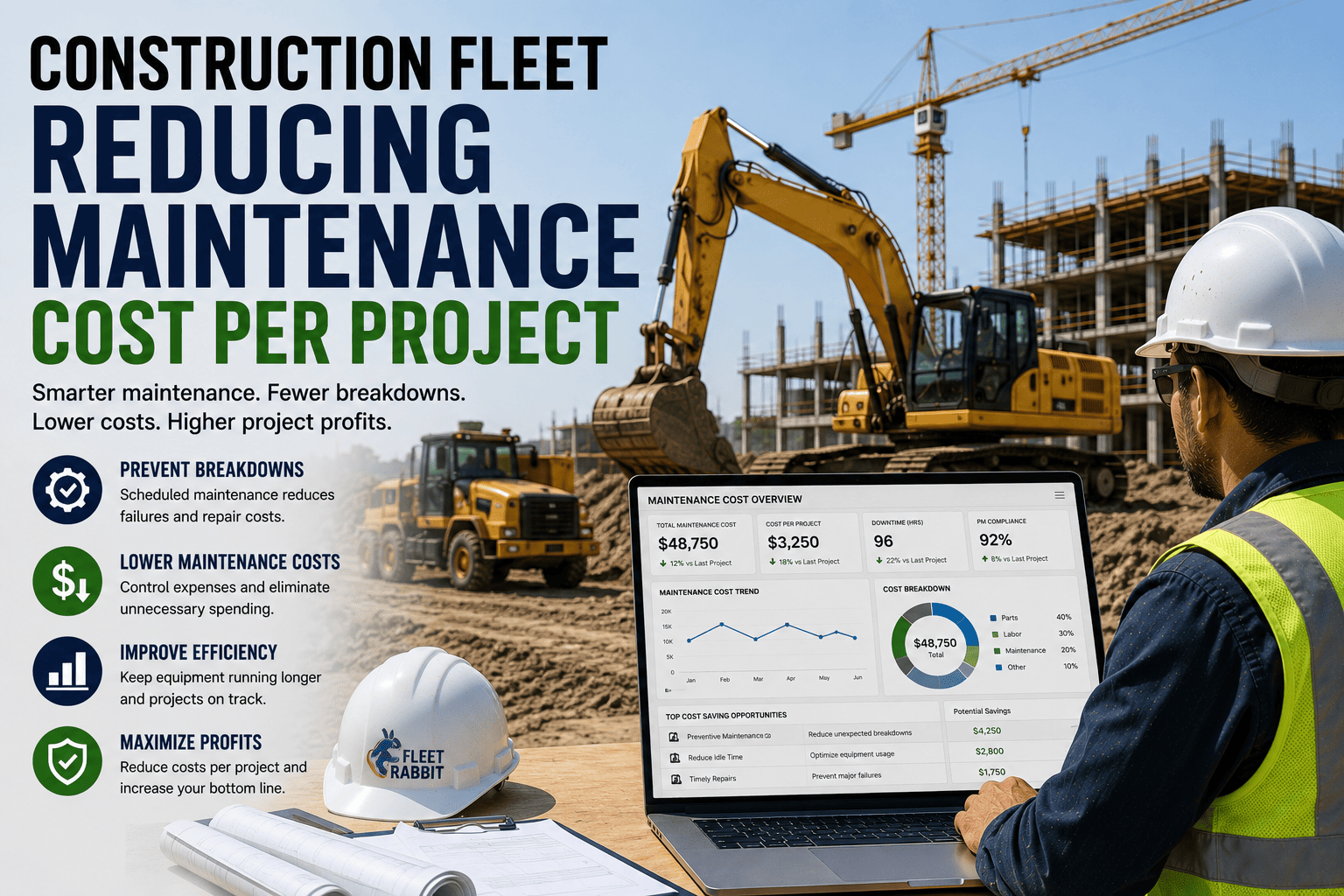
Monthly preventive maintenance is the primary mechanism through which construction fleets convert equipment investment into reliable working hours — and the primary failure point through which they lose that return. An excavator consuming $1,200 in monthly PM service costs delivers 180–220 hours of productive work; the same excavator with missed monthly PM events averages 26% more unplanned downtime within 6 months and generates repair costs 3.4× higher than the skipped service value. This FleetRabbit monthly maintenance checklist covers all eight major equipment systems requiring monthly attention — lubrication, filtration, fluid analysis, undercarriage, hydraulics, electrical, structural, and cab/safety systems — with engine-hour service triggers for each item so fleet managers can schedule PM events based on actual usage rather than calendar dates. Book a demo to see how FleetRabbit automates monthly PM scheduling across your entire fleet.
Construction Equipment Monthly Maintenance Checklist
A comprehensive 8-system, 68-point monthly preventive maintenance checklist for heavy construction equipment — with engine-hour triggers, fluid specification references, and defect disposition guidance for fleet managers and service technicians.
Lubrication System — Monthly Greasing & Oil Service
Lubrication is the single highest-value PM activity for crawler and wheeled heavy equipment. Missed greasing events cause accelerated wear in pins, bushings, and bearing surfaces that cannot be reversed — only replaced. Grease specifications are manufacturer-specific; using incorrect grease in high-load pivot points causes premature bearing failure even when greasing intervals are maintained.
Filtration System — Engine, Hydraulic & Cab Air Filters
Filter service intervals are engine-hour based, not calendar based. In dusty construction environments, air filters in particular may require replacement more frequently than the stated interval — pre-cleaner bowl condition is the practical indicator. All filter replacements must be recorded in FleetRabbit with the filter part number to validate warranty compliance.
FleetRabbit reads engine hours directly from your equipment's telematics — and automatically calculates when each service interval is due for every asset. Fleet managers receive alerts at 80%, 100%, and 110% of each service interval. Service work orders are created automatically and assigned to the available technician, preventing the most common PM failure: service intervals missed because no one was tracking actual operating hours at the asset level.
Fluid Analysis & Coolant System
Fluid analysis is the most cost-effective diagnostic tool in equipment maintenance — identifying wear metal trends, contamination events, and additive depletion before they cause component failure. Coolant system neglect is the leading cause of engine overhaul events in construction equipment, typically manifesting as gradual inhibitor depletion that accelerates liner pitting below the detection threshold of visual inspection alone.
Undercarriage System — Track, Rollers & Sprockets
Undercarriage represents 20–40% of total operating cost for crawler equipment and is the most time-sensitive maintenance category — once undercarriage components pass the 75% wear threshold, wear rate accelerates non-linearly. Monthly measurement and trending is essential for predicting rebuild timing and scheduling it proactively rather than reacting to track failure on-site.
Fleet managers log monthly undercarriage wear measurements in FleetRabbit — and the platform automatically calculates the wear rate trend, projects the 75% wear threshold date, and alerts the fleet manager 60 days before rebuild is required. Planned undercarriage rebuilds cost 40–55% less than emergency track failure events requiring on-site response and programme disruption.
Hydraulic System — Hoses, Cylinders & Pump Performance
Hydraulic system failures generate the highest unplanned downtime events in construction equipment — typically occurring mid-shift on the highest-utilisation machines at the worst possible time. Monthly inspection catches the precursor conditions: hose abrasion developing before burst, cylinder rod pitting before seal failure, and fitting corrosion before catastrophic fitting pull-out.
Electrical System — Battery, Alternator & Harness
Structural System — Frame, Boom & Attachment Points
Cab & Operator Safety Systems
Never Miss a Monthly PM Event — Automate the Scheduling, the Alerts, and the Records
FleetRabbit reads engine hours directly from your equipment, calculates service interval due dates in real time, creates work orders automatically, and stores every completed PM record against the asset permanently — giving fleet managers a complete, auditable maintenance history for every machine in the fleet without paper checklists, manual tracking, or missed service events.