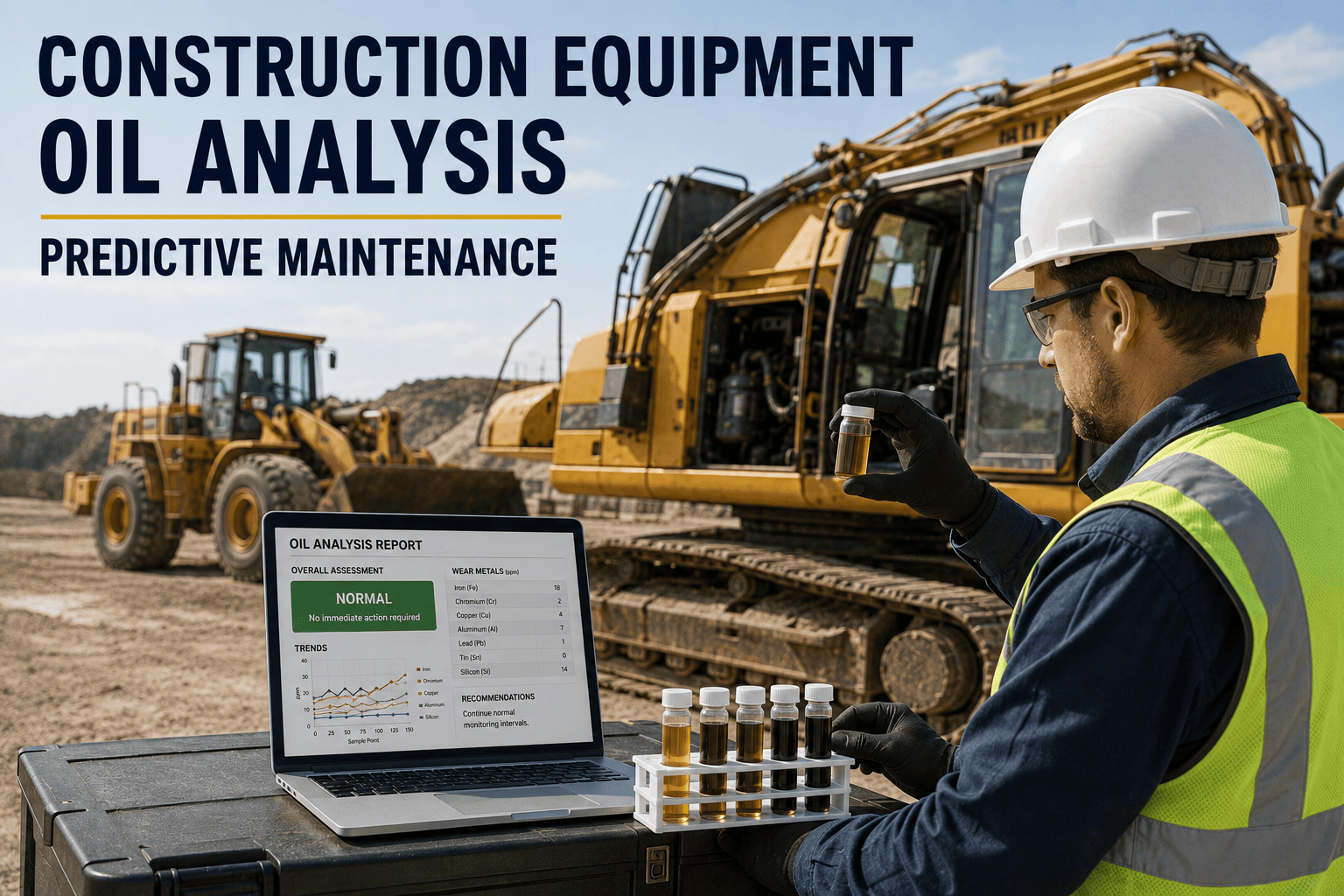
Used oil is not waste, it is a diagnostic fluid. Every gallon circulating through an excavator's engine or a loader's hydraulic system picks up microscopic evidence of what is happening inside, long before that wear ever shows up as a noise, a leak, or a breakdown on site. Oil analysis is simply the practice of reading that evidence before it becomes an expensive surprise.
Construction equipment oil analysis tests a sample for wear metals, contamination, and fluid degradation to reveal internal component condition without opening the machine. It typically detects developing bearing, gear, and hydraulic pump wear weeks before any external symptom appears, letting fleets schedule a repair instead of absorbing an unplanned failure.
What A Sample Actually Reveals
No single test tells the whole story. A proper oil analysis program looks at three distinct categories of information, and it is the combination of all three that turns a lab report into an early warning system rather than just a number on a page.
Wear Metals
Spectral analysis measures the concentration of metal particles the oil has picked up from moving components, reported in parts per million. Iron typically points to cylinder, gear, or shaft wear. Copper often traces back to bronze bearings or bushings. Lead and tin usually indicate wear on babbitt bearings. Aluminum can signal piston or bearing degradation depending on the system.
Contaminants
Contamination testing checks for material that should never be in the oil at all. Water content indicates a seal or breather problem and accelerates rust. Silicon almost always means dirt has been ingested through a compromised air filter, and even microscopic amounts act like a lapping compound that accelerates wear across every internal surface it touches. Fuel dilution points to injector or combustion issues bleeding into the crankcase.
Fluid Properties
This category asks whether the oil itself can still do its job. Viscosity testing checks whether the lubricant still coats components correctly at operating temperature. Total Acid Number tracks oxidation and acid buildup. Additive depletion, measured through elements like zinc, phosphorus, calcium, and magnesium, shows how much protective capacity is left before the oil needs replacing regardless of how the machine itself is performing.
A rising silicon reading paired with a viscosity deviation like this usually means a compromised air filter is letting dirt in while heat has already stressed the oil, a combination that calls for immediate filtration service and an oil change rather than waiting for the next scheduled interval.
FleetRabbit logs every sample against the machine's record, tracks trends across successive tests, and generates a work order the moment a result crosses a threshold. Book a demo to see a sampling workflow in action.
Why A Single Reading Is Never Enough
A one-time oil sample tells you where a machine stands today. It cannot tell you whether that number has been climbing for months or just appeared. That distinction is the entire point of a real oil analysis program.
One Reading
Shows a snapshot in isolation. An iron reading of 45 ppm means very little without knowing what the last three samples looked like.
A Trend Line
A slow, steady climb across samples is normal wear. A sudden exponential jump between two samples is a predictive failure signal that demands attention immediately.
Reading The Patterns Together
The real diagnostic value of oil analysis shows up when results are read as combinations rather than single numbers, since different pairings point to genuinely different root causes.
High silicon with rising wear metals typically means dirt is entering through a compromised air or breather filter and accelerating abrasive wear across every internal surface.
High water content with rising acid number and viscosity change indicates the oil has been heat-stressed and contaminated at the same time, a combination that sharply shortens component life and calls for immediate replacement.
Falling additive levels with stable wear metals usually means the oil itself is nearing the end of its protective life even though the machine underneath it is still healthy.
This is what separates oil analysis from simple oil-change scheduling: it distinguishes an oil problem, a machine problem, and a contamination problem, each of which needs a completely different response.
Building A Sampling Program That Works
1. Register Every Sample Point
Each oil-lubricated system needs a defined sample port, oil type, and system capacity on record, so lab results always link back to the correct machine and component without ambiguity.
2. Sample On A Consistent Schedule
Sampling method and timing matter as much as the test itself. A contaminated or improperly drawn sample produces misleading data that can send a maintenance team chasing the wrong problem entirely.
3. Trend Every Result, Not Just The Latest One
Each new sample should be compared against the machine's own history, not just against a generic threshold, since the rate of change reveals far more than any single reading.
4. Route Findings Into Work Orders Automatically
Results that cross an action threshold should generate a maintenance task immediately rather than sitting in a report that gets reviewed days later. Fleets ready to connect their oil sampling program to automated work orders can sign up and register their first machines the same day.
FleetRabbit ties oil analysis results to each machine's full history, flags patterns across wear metals, contamination, and fluid properties, and alerts your team before a small issue becomes a shop visit.
Frequently Asked Questions
Wear metals, contamination, and fluid properties are already carrying the story of your equipment's condition. FleetRabbit reads that story consistently, trends it over time, and turns it into action before a small issue becomes an unplanned breakdown.