The dispute always starts the same way. A hydraulic hose is leaking, a bucket has a fresh dent, or a machine won't start, and nobody can say for certain which shift it happened on. The outgoing operator swears the machine was fine when they parked it. The incoming operator says the damage was already there when they climbed in. Without a record of what the machine actually looked like at the exact moment it changed hands, both operators are telling the truth as they remember it, and the fleet manager is left with no way to know who's right, or which shift to hold accountable.
Shift handover documentation is a structured record, completed by both the outgoing and incoming operator, that captures a machine's condition, engine hours, reported issues, and inspection results at the exact moment responsibility transfers between shifts. Facilities relying on paper logs or verbal handovers routinely lose critical details in the transfer, since operators tend to skim or miss written entries and verbal briefings are impossible to search or audit later. A digital handover record with timestamps and both operators' sign-off closes that gap, giving fleet managers a traceable answer any time a dispute over equipment condition comes up.
What Actually Happens in the Moment a Machine Changes Hands
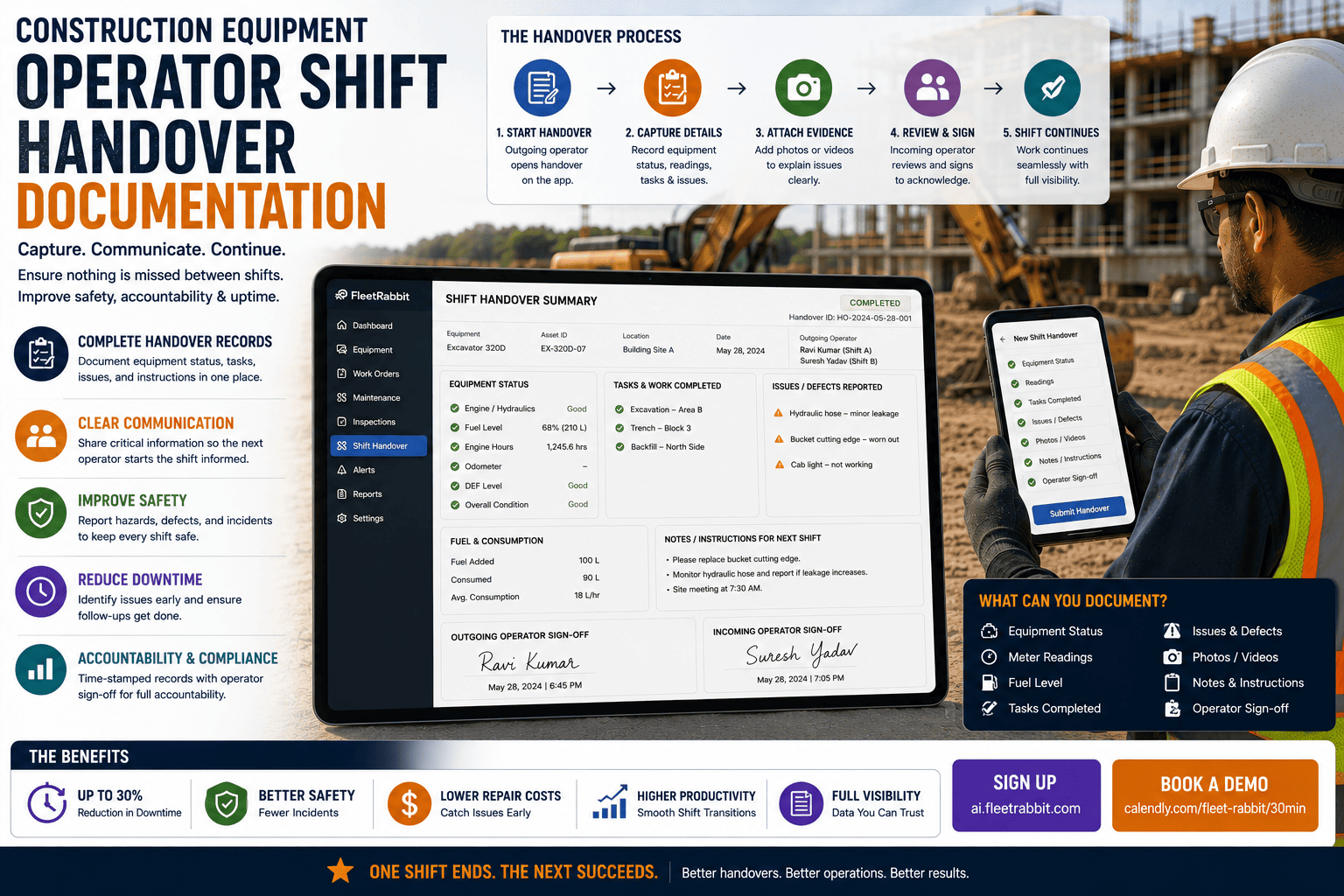
A proper handover isn't a single event, it's a short sequence where two operators independently confirm the same machine, at the same moment, so nothing gets assumed or missed. Seeing that sequence laid out makes it clear why skipping any one step is how disputes and unreported damage slip through.
FleetRabbit captures equipment condition, engine hours, and reported issues at every shift change, with both operators' digital sign-off attached. Sign up free and start your first digital handover today.
Paper Logs vs Digital Handover Records
Most sites already do some version of a handover, whether it's a notebook in the cab or a quick word between operators as one climbs down and the other climbs up. The problem isn't the intent, it's that informal methods can't hold up once a dispute or an audit actually needs an answer.
| What You Need | Paper Log or Verbal Handover | Digital Handover Record |
|---|---|---|
| Searchable history | Requires flipping through pages or relying on memory | Instantly searchable by machine, operator, or date |
| Photo evidence | Rarely attached, hard to file with a paper entry | Attached directly to the handover record in seconds |
| Proof of acceptance | No clear confirmation the incoming operator actually reviewed it | Independent digital sign-off required before work starts |
| Dispute resolution | Comes down to conflicting memories of who said what | Timestamped record shows exact condition at handover |
| Pattern detection | Recurring issues on a machine go unnoticed across shifts | Repeated defects on the same unit surface automatically |
Why the Incoming Operator's Check Matters as Much as the Outgoing Report
It's tempting to treat a handover as complete once the outgoing operator files their report, but that's only half the record. An incoming operator who simply trusts the previous shift's notes without an independent look is skipping the exact check that catches damage the outgoing operator missed, forgot, or didn't think was worth reporting. Requiring both sides to confirm condition separately is what turns a handover from a formality into an actual safeguard.
What Belongs in Every Handover Record
- Engine hours and fuel level at the exact moment of handover, not an estimate from earlier in the shift
- Any new damage or wear noticed during the shift, with a photo attached whenever possible
- Unresolved issues still pending from a maintenance request or prior shift
- Warning lights or unusual sounds the outgoing operator noticed, even if the machine still ran fine
- Both operators' identities and timestamps, so the record shows exactly who was responsible and when
Rolling Out Digital Handovers Without Slowing Down Operators
The biggest risk in switching from a verbal or paper process to a documented one is adding enough friction that operators start skipping it. A handover process should take minutes, not turn into another form nobody wants to fill out.
How FleetRabbit Structures Every Shift Handover
FleetRabbit turns shift handover into a short digital form completed right at the machine, capturing engine hours, condition notes, and photos from the outgoing operator, then requiring the incoming operator to complete an independent acceptance check before the machine goes back into service. Every handover is timestamped and tied to both operators' identities, creating a record that settles disputes in seconds instead of turning into a memory contest between two shifts.
Because handover data lives in the same system as maintenance history, an issue reported during a shift change doesn't disappear into a separate notebook. It flows directly into your maintenance workflow, and recurring complaints about the same machine surface automatically instead of getting treated as one-off reports each time. If you'd like to see how a structured handover process would fit your current shift patterns, you can book a demo and walk through it with our team.
Get structured, photo-backed handover documentation with independent sign-off from every operator on every shift. Create your free account or talk it through with our team first.
Frequently Asked Questions
A shift handover is one of the most repeated moments in construction operations, and one of the easiest to treat as routine until the day it isn't. The dent nobody can explain, the leak nobody caught in time, the issue that got mentioned once and then forgotten, all of these trace back to a handover that didn't get properly documented. A short, structured record with both operators' sign-off doesn't just settle disputes after the fact, it gives every incoming operator a complete picture before they ever climb into the seat.
FleetRabbit documents every shift handover with condition notes, engine hours, photos, and independent sign-off from both operators, so equipment accountability never comes down to memory. Get started free, no credit card required, or book a demo to see it running on your fleet first.