Ask five construction fleet managers when their excavators are due for service, and you will likely get five different answers, most of them guesses. Paper logs get left in truck cabs, spreadsheets go stale within a week, and calendar-based reminders ignore the one number that actually matters on a job site: engine hours. A dozer that ran three double shifts this week is not the same machine as one that sat idle waiting on a permit, yet most fleets service both on the exact same date. That mismatch is where breakdowns are born.
Construction equipment preventive maintenance is organized into tiers: PM-A (fluids, filters, and a full visual inspection, roughly every 250 hours), PM-B (everything in PM-A plus hydraulic, undercarriage, and electrical checks, roughly every 500 hours), and PM-C (a major service covering fluid changes, structural inspection, and component wear measurement, roughly every 1,000 to 1,250 hours). Intervals shift by asset type and by how dusty, wet, or high-load the job site is. FleetRabbit tracks engine hours per machine automatically and triggers each PM tier the moment it is due.
What PM-A, PM-B, and PM-C Actually Mean
Every tiered maintenance program is built the same way: each level contains everything from the level before it, plus a deeper layer of inspection. Think of it as three nested checkups. PM-A is the quick physical. PM-B is the annual bloodwork. PM-C is the full diagnostic workup. Skipping a tier does not save time, it just moves the discovery of a worn part from the shop floor to the middle of a pour.
Daily-Duty Checkup
Engine oil and filter change, fuel and hydraulic filter check, coolant level, grease all points, belt and hose visual inspection, and a full walkaround for leaks, cracks, and loose fasteners. This is the tier that catches the small stuff before it becomes the expensive stuff.
Mid-Cycle Deep Check
Everything in PM-A, plus hydraulic return filter replacement, undercarriage wear measurement, battery load test, air filter service, and a full electrical system check. This tier is where developing hydraulic and undercarriage problems get caught while they are still cheap to fix.
Major Overhaul Service
Everything in PM-A and PM-B, plus hydraulic oil sample analysis, coolant flush, final drive and swing bearing inspection, structural weld check, and full component wear evaluation. This is the tier that determines whether a machine gets years more of reliable service.
Why Engine Hours Beat Calendar Dates on a Job Site
A calendar does not know that your compactor has been running twelve-hour shifts on a quarry site while your backhoe sat parked for three weeks waiting on a change order. Scheduling maintenance by date alone produces exactly the two outcomes you do not want: over-servicing idle equipment, which wastes labor and parts budget, and under-servicing hard-working equipment, which sets up a breakdown right when a project cannot afford one. Engine-hour scheduling fixes both problems by tying service to actual wear, not the number on a wall calendar.
The Real Cost of Getting It Wrong
A single missed service on a hydraulic excavator can escalate into hydraulic pump or final drive damage that costs tens of thousands to repair, plus the project delay that comes with it. Reactive repairs typically run several times more than the same work done on schedule, because emergency parts, expedited labor, and lost project time all stack on top of the base repair cost. A tiered, hour-based PM schedule is the single cheapest insurance policy available to a construction fleet.
What breaks down most often when PM-B and PM-C get skipped
Hydraulic systems, undercarriage components, and final drives account for the bulk of high-cost construction equipment failures, and all three are exactly what PM-B and PM-C are designed to catch early. If your fleet is only ever getting PM-A style oil changes, those deeper failure points are accumulating wear that nobody is watching.
FleetRabbit pulls live engine hours from your telematics feed and triggers the right PM tier for every excavator, loader, and roller in your fleet automatically. No spreadsheets, no missed intervals, no guessing. Sign up free and load your fleet in minutes, or book a demo to see it running on your equipment list.
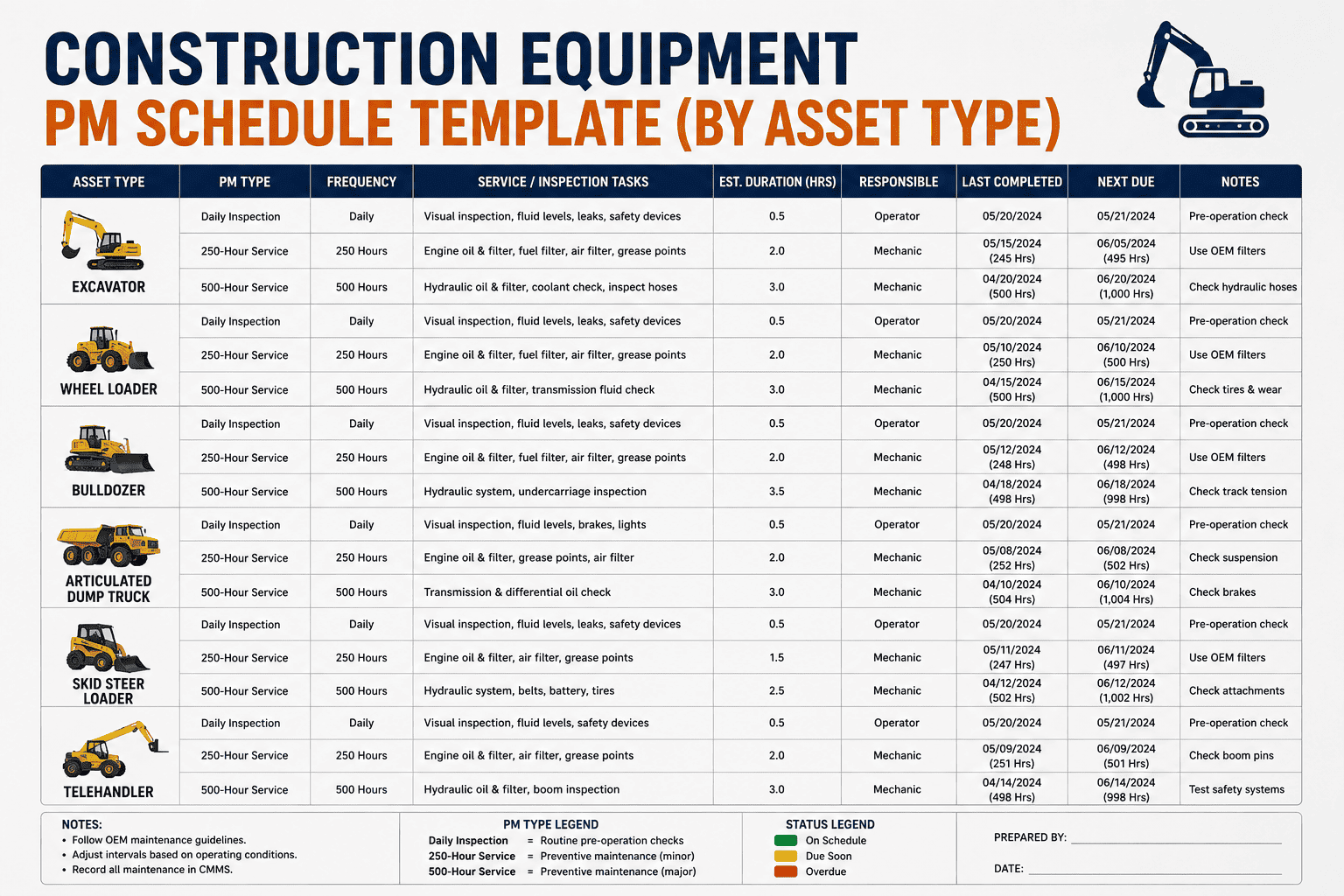
PM Schedule Template by Asset Type
No two machine categories wear the same way. An excavator's undercarriage takes a different beating than a wheel loader's tires, and a roller's vibratory drum needs checks a crane will never require. Use the intervals below as your starting template, then tighten them if your site runs dusty, wet, or high-load conditions.
| Asset Type | PM-A Interval | PM-B Interval | PM-C Interval | Watch Closely |
|---|---|---|---|---|
| Hydraulic Excavator | 250 hrs | 500 hrs | 1,000 hrs | Undercarriage, hydraulic pump, swing bearing |
| Wheel Loader | 250 hrs | 500 hrs | 1,000 hrs | Tires, transmission, articulation joints |
| Bulldozer | 250 hrs | 500 hrs | 1,000 hrs | Undercarriage, track tension, final drives |
| Backhoe Loader | 250 hrs | 500 hrs | 1,000 hrs | Hydraulic hoses, stabilizer legs, brakes |
| Roller and Compactor | 200 hrs | 400 hrs | 800 hrs | Vibratory drum bearings, drum shell wear |
| Mobile Crane | 250 hrs | 500 hrs | 1,250 hrs | Wire rope, boom structure, load pins |
Building Your Own PM Schedule in Four Steps
Inventory Every Machine
List every asset by make, model, and current engine hours. A one-size-fits-all checklist misses the specific wear points that make each equipment category different.
Set Baseline Intervals
Start from OEM-recommended hour intervals for each model, then adjust for your actual duty cycle. Severe service such as quarry work or wet-clay excavation calls for shorter intervals across the board.
Apply Site Multipliers
Dusty sites shorten air filter life. Cold climates call for more frequent battery and hose checks. Build these adjustments into the schedule instead of relying on someone remembering them.
Automate the Triggers
Connect engine-hour tracking to automatic alerts so PM-A, PM-B, and PM-C fire the moment a machine crosses its threshold, regardless of which site it is parked on.
Signs Your Current Schedule Is Already Failing You
A handful of warning signs show up long before a major breakdown does. Machines returning from the shop with the same complaint twice, PM services that keep getting pushed back a week because paperwork is missing, and technicians discovering a worn part that should have been flagged two services earlier are all symptoms of a schedule that exists on paper but is not actually being followed on hours.
The fastest fix is visibility, not more paperwork
Most fleets do not fail at preventive maintenance because nobody knows what to check. They fail because nobody has a single, reliable view of how many hours every machine has logged since its last service. Fix the visibility problem and the schedule takes care of itself.
FleetRabbit loads manufacturer intervals for 200+ OEMs, tracks live engine hours across every job site, and sends tiered alerts before a service window is missed. Start your free trial today, or book a 30-minute demo and we will walk through your equipment list together.
Frequently Asked Questions
A PM schedule only protects your fleet if it actually runs on time, every time, on every machine. FleetRabbit turns the template above into automated, hour-based alerts across your entire equipment list, so nothing slips through on a busy job site.