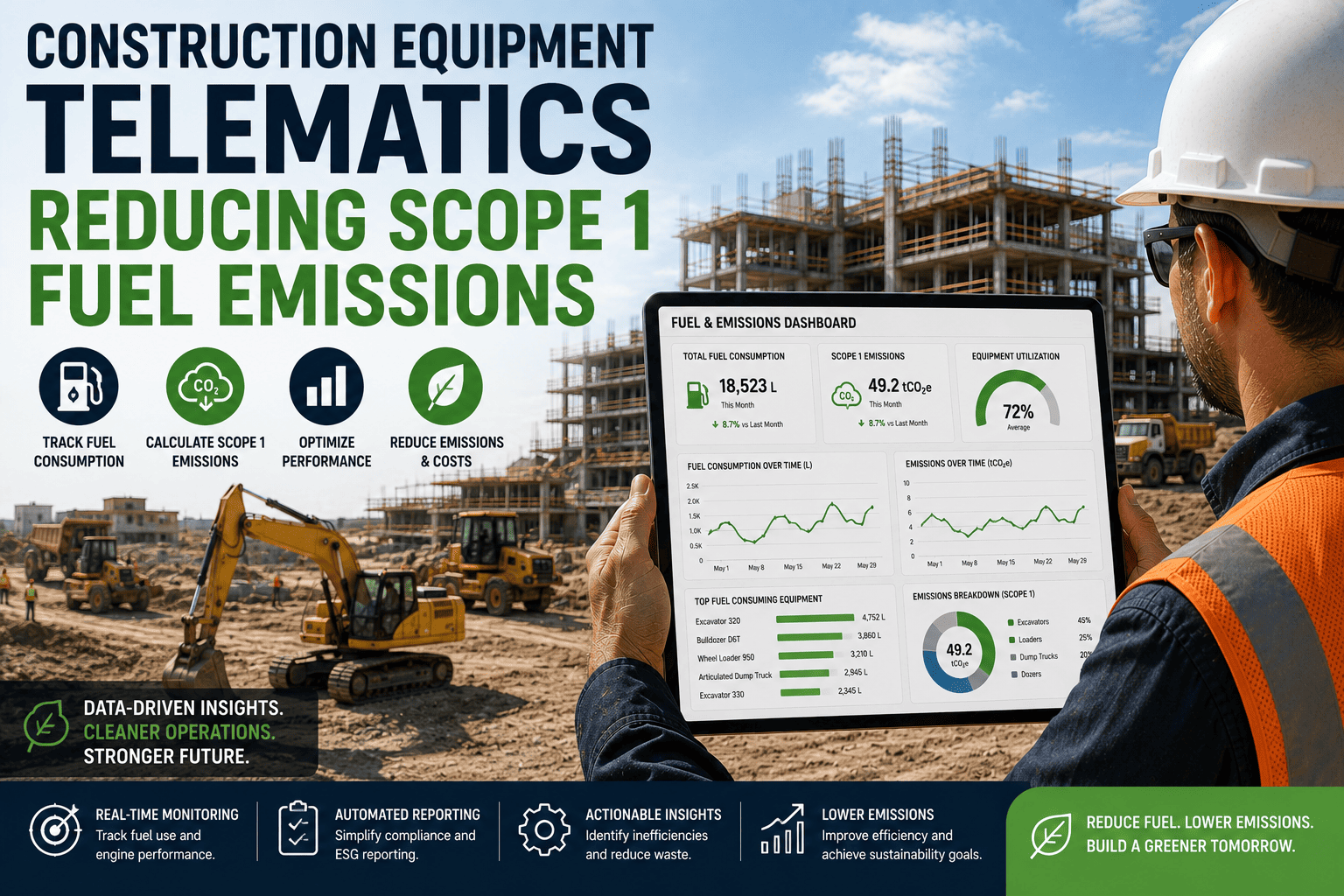
Every excavator, loader, and dozer on a job site is a direct emissions source, and increasingly, contractors are being asked to prove exactly how much fuel each one burns. Scope 1 emissions cover the direct output from equipment your company owns or operates, and for construction fleets, that number is built machine by machine from fuel consumption, idle time, and engine hours. The contractors managing this well are not doing it with spreadsheets, they are pulling it straight from telematics data that was already running in the background.
Construction equipment telematics reduces Scope 1 fuel emissions by continuously tracking fuel burn, idle time, and engine hours per machine, then turning that data into targeted reductions and audit-ready sustainability reports. Large construction fleets typically idle 28 to 38 percent of total engine hours, and fleets that act on telematics data have cut fuel consumption by 13 to 20 percent while producing verified emissions figures for bids and compliance reporting.
What Scope 1 Emissions Mean For A Construction Fleet
Scope 1 covers direct emissions from sources your company owns or controls, which for a construction fleet means every diesel engine running on a job site. Unlike Scope 2 or Scope 3, there is no ambiguity about who is responsible, the fuel burned by your excavator is your number to report. Under reporting frameworks like the CSRD, in-scope contractors now need this data with enough detail to defend it, not estimate it. Increasingly, larger clients with their own reporting obligations ask subcontractors for jobsite-level emissions figures as part of the bidding process itself.
Machine Runs
Engine sensors capture fuel burn, idle time, and load in real time as equipment operates on site.
Telematics Streams Data
Fuel and engine data transmits automatically, with no manual logs or end-of-day paperwork required.
Emissions Are Calculated
Fuel consumption is multiplied by a verified emission factor to produce a defensible CO2 figure per machine and site.
Idle Time Is Where Most Wasted Fuel Hides
Idle time is the single biggest lever most fleets have never pulled. Equipment manufacturers have documented just how large the problem is across the industry, and the numbers are consistently higher than most fleet managers expect.
Every one of those idle hours burns fuel and adds engine wear without producing a single unit of work. It also runs up the exact Scope 1 number your fleet is trying to bring down.
What A Real Idle Reduction Program Looks Like
One mid-sized fleet running 28 machines across five job sites measured a 34 percent fleet-wide idle rate in its first week of telematics data, with individual machines ranging from 18 to 52 percent. Setting a 25 percent target and acting on the data delivered a 26 percent reduction from baseline, translating into roughly $248,000 in annual fuel savings on a 20-machine fleet at current diesel pricing. If you want to see what your own baseline looks like, you can book a demo and review a live idle report.
The Fuel And Emissions Impact, By The Numbers
FleetRabbit tracks fuel consumption, idle time, and engine hours across every machine, then turns that data into fuel savings and audit-ready emissions reporting. Sign up and see your fleet's baseline within the first week.
Without Telematics Versus With Telematics
Fleets tracking fuel manually are working from estimates that fall apart the moment a client or auditor asks for detail. Telematics closes that gap automatically.
Manual Fuel Tracking
Estimated consumption, no per-machine visibility, idle waste invisible until the fuel bill arrives, and emissions figures that cannot be defended in a client audit.
FleetRabbit Telematics
Per-machine fuel and idle data streamed continuously, verified emission factors applied automatically, and a report ready for bids and compliance whenever it is needed.
Why This Also Protects Equipment Life
Reducing idle time is not only a fuel and emissions story. Lower engine hours from cut idle time also reduce service frequency and extend the useful life of the machine, which means the sustainability gain and the maintenance gain come from the same underlying data.
Common Sources Of Avoidable Idle Time
Frequently Asked Questions
Fuel waste and unverified emissions estimates both come from the same blind spot, a lack of per-machine data. FleetRabbit gives your fleet continuous visibility into fuel, idle time, and engine hours, so reducing emissions and proving it become the same task.