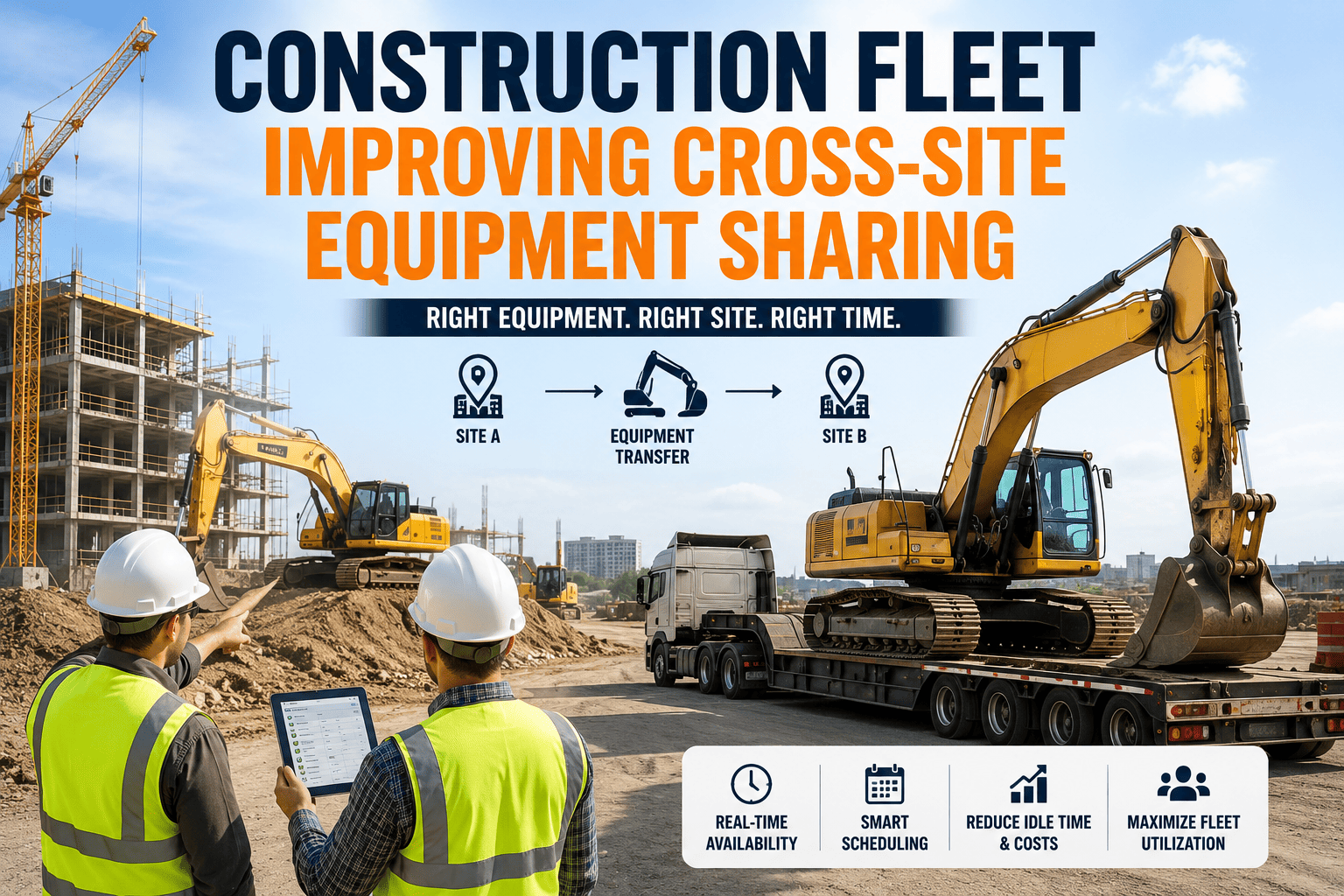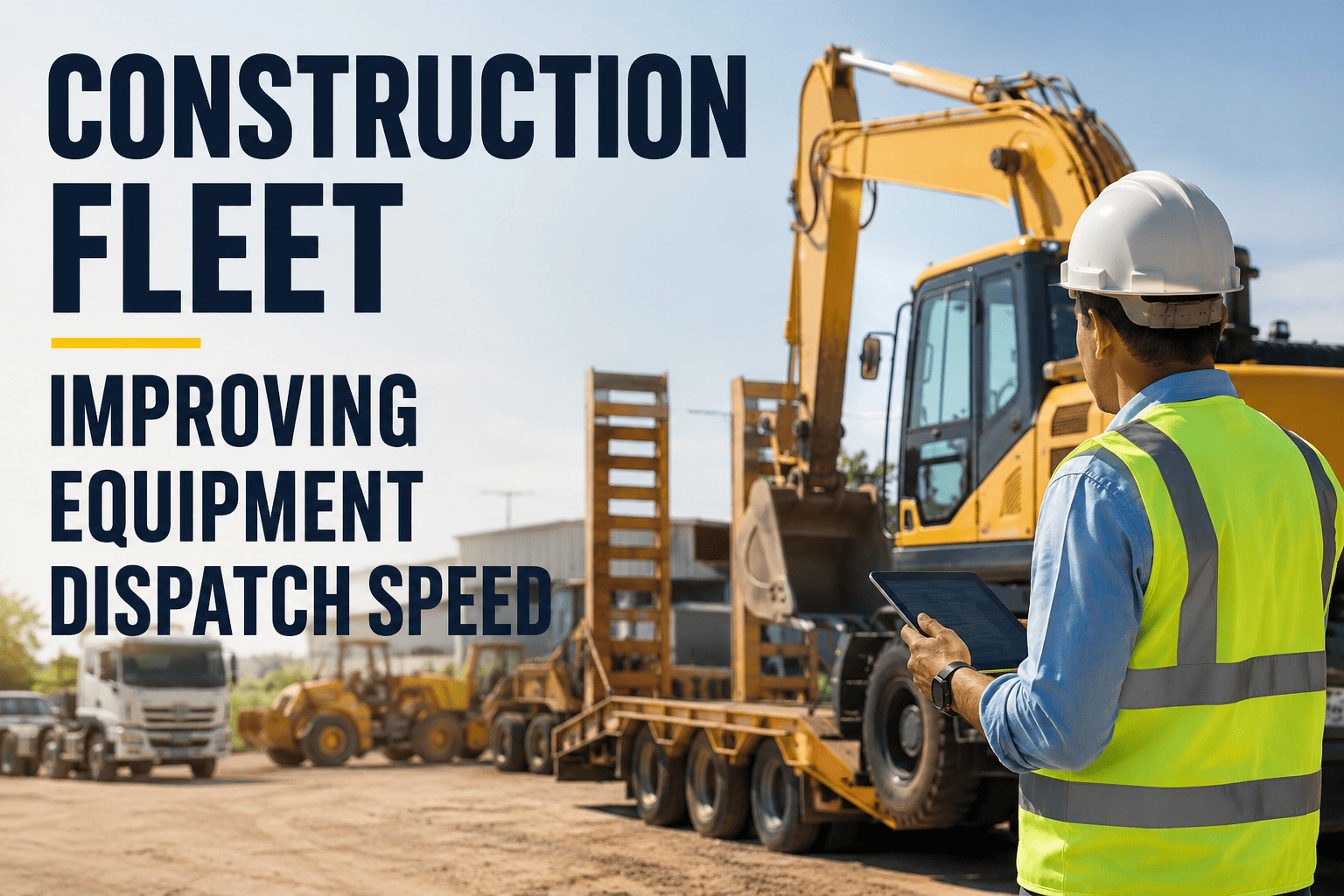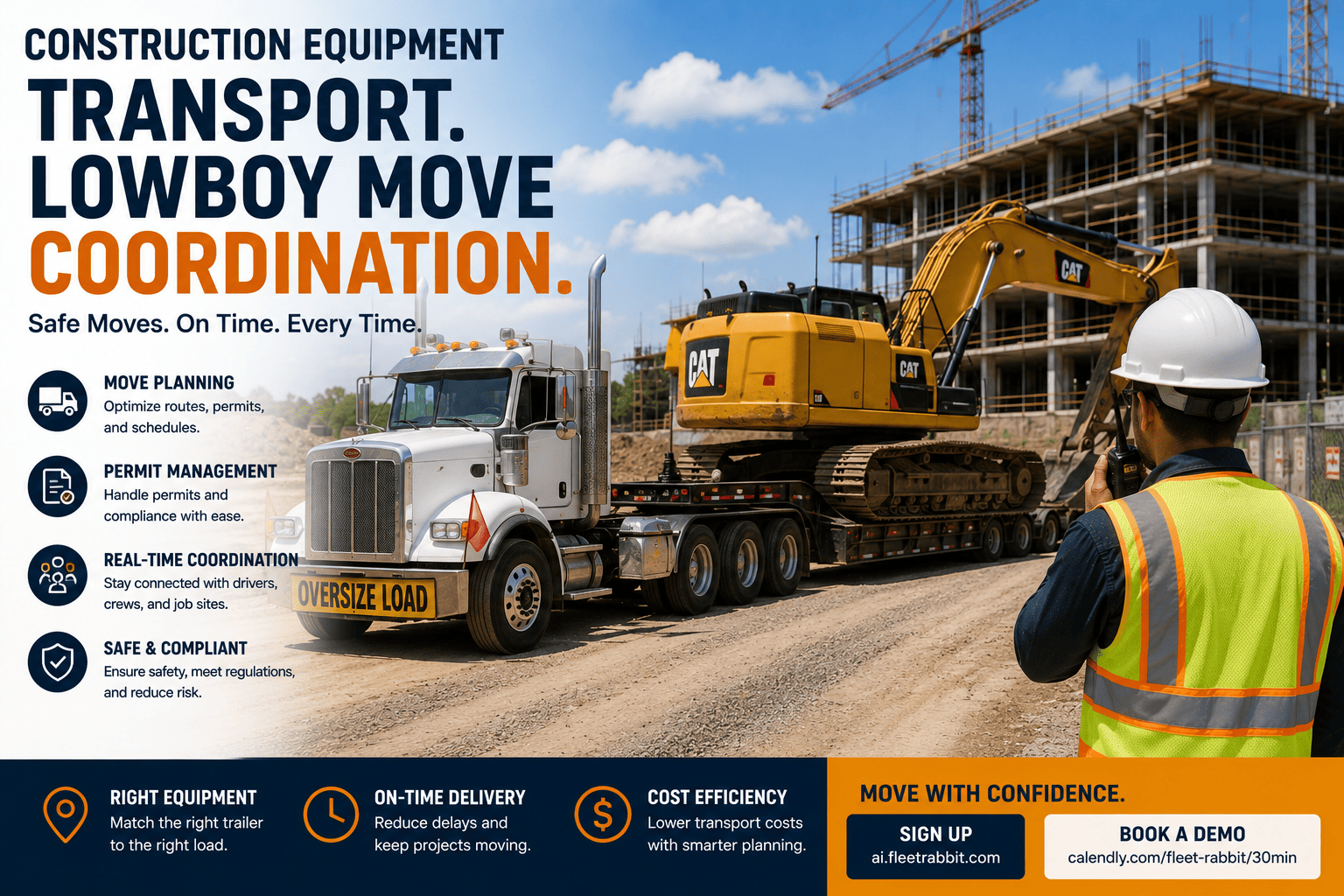
Construction equipment transport coordination means aligning trailer scheduling, permit timing, site readiness, and equipment availability so a lowboy or RGN move happens without costly delays. Misaligned timelines between a carrier, a rigging crew, and a receiving site commonly trigger demurrage charges and idle equipment costs that add up fast. Clear visibility into equipment location and move schedules is what keeps a transport plan from unraveling on the day of the haul.
Why Equipment Transport Coordination Is Harder Than It Looks
Moving a piece of heavy equipment from one site to another involves more moving parts than most people outside logistics realize. The trailer itself has to be the right type for the load, whether that is a standard lowboy, a removable gooseneck trailer for equipment too tall to drive up a rear ramp, or a step deck for machinery that exceeds standard height limits. The route has to account for bridge clearances, weight-restricted roads, and in many states, permits that only allow travel during certain hours of the day. And underneath all of that, someone still has to make sure the equipment is actually where it needs to be, fueled, inspected, and ready to load, when the trailer arrives.
Choosing the Right Trailer for the Move
Trailer selection is where most transport planning starts, and it depends heavily on the equipment being moved. A standard lowboy sits low to the ground and works well for most tracked and wheeled machinery, giving the vertical clearance needed for taller equipment while keeping the load stable. A removable gooseneck trailer detaches at the front and lowers to ground level, creating a gradual ramp for equipment that cannot be driven up a standard rear ramp. Step deck trailers add clearance for machinery that exceeds typical height limits without requiring the more complex gooseneck setup.
| Trailer Type | Best For | Key Consideration |
|---|---|---|
| Standard Lowboy | Excavators, dozers, and most tracked or wheeled construction equipment | Low deck height gives clearance for taller equipment while keeping the load stable |
| Removable Gooseneck (RGN) | Equipment that cannot be driven up a rear ramp or has an unusual center of gravity | Front detaches and lowers to ground level, creating a gradual loading ramp |
| Step Deck | Machinery exceeding standard height limits on a regular flatbed | Adds clearance without the mechanical complexity of a gooseneck setup |
| Flatbed | Smaller equipment and attachments within standard height and weight limits | Loads from multiple sides but offers less clearance than lowboy or step deck options |
Why Permits Take Longer Than People Expect
Any load exceeding standard width, height, or weight limits needs a permit, and permit processing time varies significantly depending on the route and the size of the load. Larger or heavier loads often require route surveys, bridge engineering checks, and coordination with utility companies to raise overhead lines, all of which can take days or, for the largest loads, weeks to arrange. Treating permits as a same-week task is one of the most common planning mistakes on construction fleets moving equipment between sites.
FleetRabbit shows live equipment location and readiness status, so you can confirm a machine is staged and prepped before a lowboy ever leaves the yard. You can start a free trial and see your fleet's transport readiness today.
Building a Transport Plan That Actually Holds Up
The moves that go smoothly share a common trait: someone confirmed every detail well before the trailer showed up, rather than assuming it would all come together on the day. That means locking in exact pickup and delivery locations, confirming the equipment's precise height, width, length, and weight with the carrier, and making sure any crane or rigging support needed for loading is booked and on-site in advance.
The Readiness Checklist Before Any Move
Equipment should be staged in an accessible location rather than blocked behind other machinery. Fluid leaks or loose parts should be inspected and addressed before the trailer arrives, since these can cause problems during transit or delay loading altogether. Any attachments that need to be removed for the move should be handled ahead of time, not discovered as a surprise during loading. And the receiving site needs enough notice to have a safe, clear unloading area ready the moment the trailer arrives.
Where Communication Breaks Down Most Often
Most transport delays trace back to a simple communication gap: the carrier does not know the exact readiness status of the equipment, and the site does not have a clear window for when to expect delivery. When these two sides are only connected through a phone call placed the morning of the move, small surprises turn into hours of lost time. A shared, real-time view of equipment status closes that gap before it becomes a costly one.
FleetRabbit tracks equipment status and location across your fleet, so every transport move starts with a confirmed, ready-to-load asset instead of a guess. Book a demo and see how transport coordination works with live fleet data.
Frequently Asked Questions
Every missed loading window and every idle-time charge traces back to a coordination gap you can close. FleetRabbit gives your team a clear, real-time view of equipment readiness, so lowboy moves happen on schedule instead of on hope.