An incident happens on a Tuesday. The lawsuit shows up eighteen months later. By then, the operator who was driving that day may not remember the details, the maintenance shop may have changed hands, and the only thing standing between your company and a costly judgment is whatever paperwork you can actually produce. For construction fleets, an audit trail isn't a filing cabinet exercise. It's the evidence that speaks for you when memories fade.
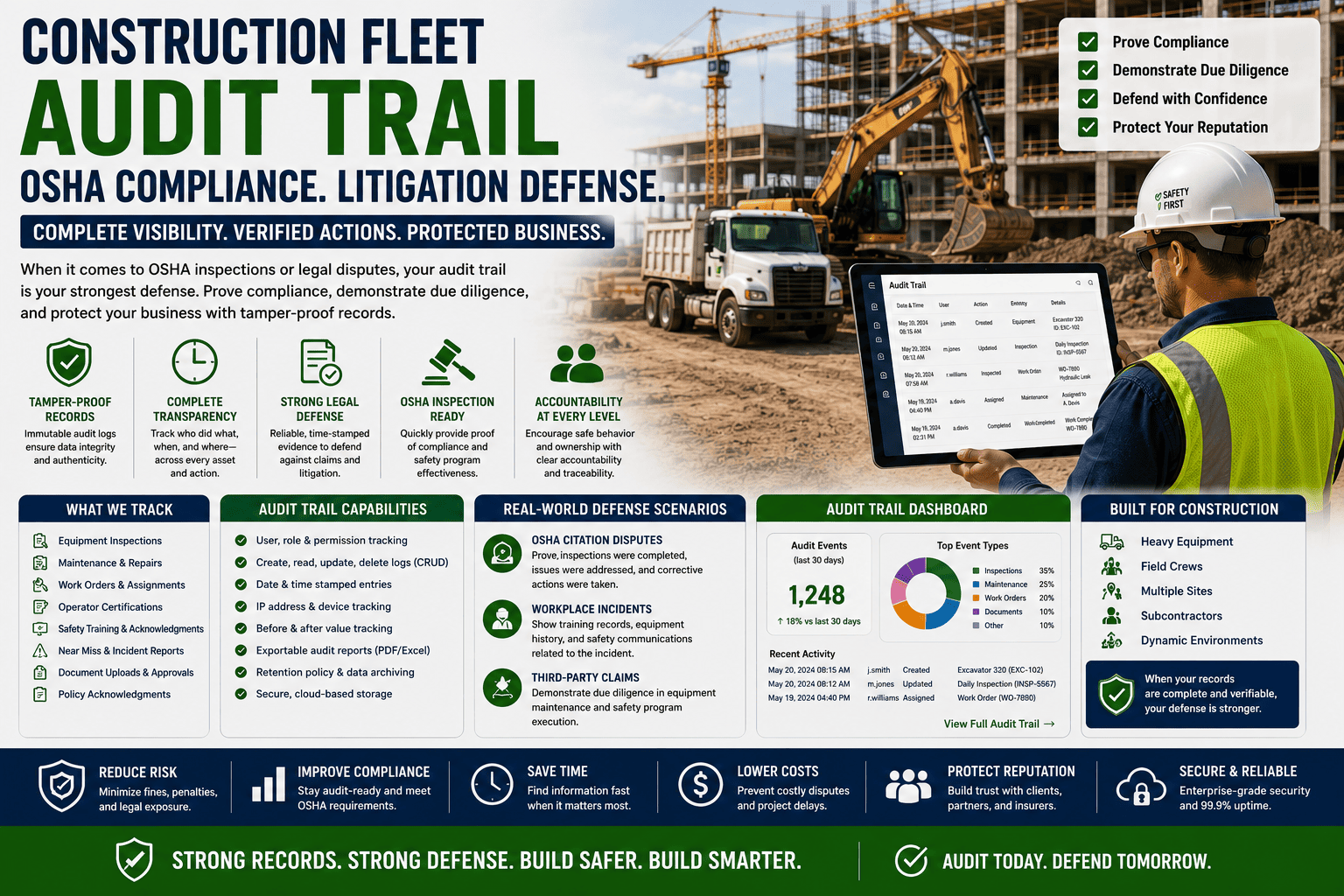
A construction fleet audit trail is the complete, timestamped record of inspections, maintenance, certifications, and training tied to every vehicle and operator. In an OSHA investigation or a lawsuit, this record is what proves the equipment was maintained and the operator was qualified, long after anyone's memory of that specific day has faded. Sign up for FleetRabbit to start building that record automatically, or book a demo to see how it holds up under scrutiny.
What "Audit Trail" Actually Means for a Fleet
The phrase gets used loosely, so it helps to be specific. A fleet audit trail is the full, chronological record tied to a vehicle and the people who operated it: pre-trip inspections, maintenance and repair history, certification and licensing records, training completion, and any incident documentation. Individually, each of these is routine paperwork. Together, they form the evidence package that answers the question every investigator and opposing attorney eventually asks: was this equipment safe to operate, and was the operator qualified to run it.
Why Timing Matters as Much as Content
A record created after the fact carries far less weight than one created in the normal course of business, before anyone knew litigation was coming. This is exactly why OSHA requires recordable incidents to be logged within seven calendar days rather than "eventually." Contemporaneous records, timestamped and generated as part of routine operations, are what hold up. Records reconstructed from memory after an attorney gets involved rarely do.
What a Timeline Looks Like After an Incident
The gap between an incident and the moment your records get tested is usually much longer than fleet managers expect. Understanding that gap is why building the audit trail before anything happens matters so much.
FleetRabbit captures inspections, maintenance, and certifications automatically as they happen, so your audit trail is already complete before a lawyer or investigator ever asks for it. Sign up to start building it today, or book a demo to see how records are organized and retrieved.
The Records That Win or Lose a Case
Not all fleet records carry the same weight when a case is being built. Some directly answer the central question of fault; others provide supporting context. Knowing which is which helps you prioritize what to keep airtight.
| Record Type | What It Proves | Risk If Missing |
|---|---|---|
| Pre-Trip Inspection Logs | Vehicle was checked before operation began | Suggests equipment condition was never verified |
| Maintenance History | Defects were addressed on a documented schedule | Implies known issues went unresolved |
| Operator Certification | The person operating the equipment was qualified | Opens a direct negligent-training argument |
| Annual DOT Inspection | Vehicle met federal safety standards for the year | Automatic compliance failure, independent of the incident |
| Incident and OSHA 300 Log | Timely, consistent reporting practices | Signals a broader recordkeeping and safety culture gap |
Building a Defensible Record System
A defensible audit trail isn't built the week before an audit. It's built by making every routine task generate its own record automatically, so the documentation exists whether or not anyone remembers to create it manually.
Four Habits That Make Records Hold Up
Log every inspection and repair against the specific vehicle ID, not a general fleet note. Timestamp everything at the moment it happens rather than batching entries at the end of the week. Store certifications and training records alongside the vehicle and driver they apply to, so nothing has to be tracked down separately during a request. Keep records accessible well beyond minimum retention periods, since litigation frequently surfaces years after a project wraps.
Where Manual Systems Break Down
Paper logs and spreadsheets fail in the same predictable ways: entries get skipped during busy weeks, files get misplaced when equipment changes job sites, and nobody can prove a record wasn't altered after the fact. A digital system that timestamps entries automatically removes all three failure points at once, which is exactly the kind of consistency an investigator or attorney is looking for.
FleetRabbit was built around this exact problem. Every inspection, repair, and certification is logged against the specific vehicle and timestamped the moment it's entered, creating the kind of contemporaneous record that holds up in an OSHA investigation or a courtroom. Sign up for a free trial to start building your fleet's audit trail, or book a demo to see how records are pulled during a real audit request.
Frequently Asked Questions
FleetRabbit captures every inspection, repair, and certification the moment it happens, creating a timestamped audit trail that protects your company in an OSHA investigation or a courtroom, whenever that day comes.