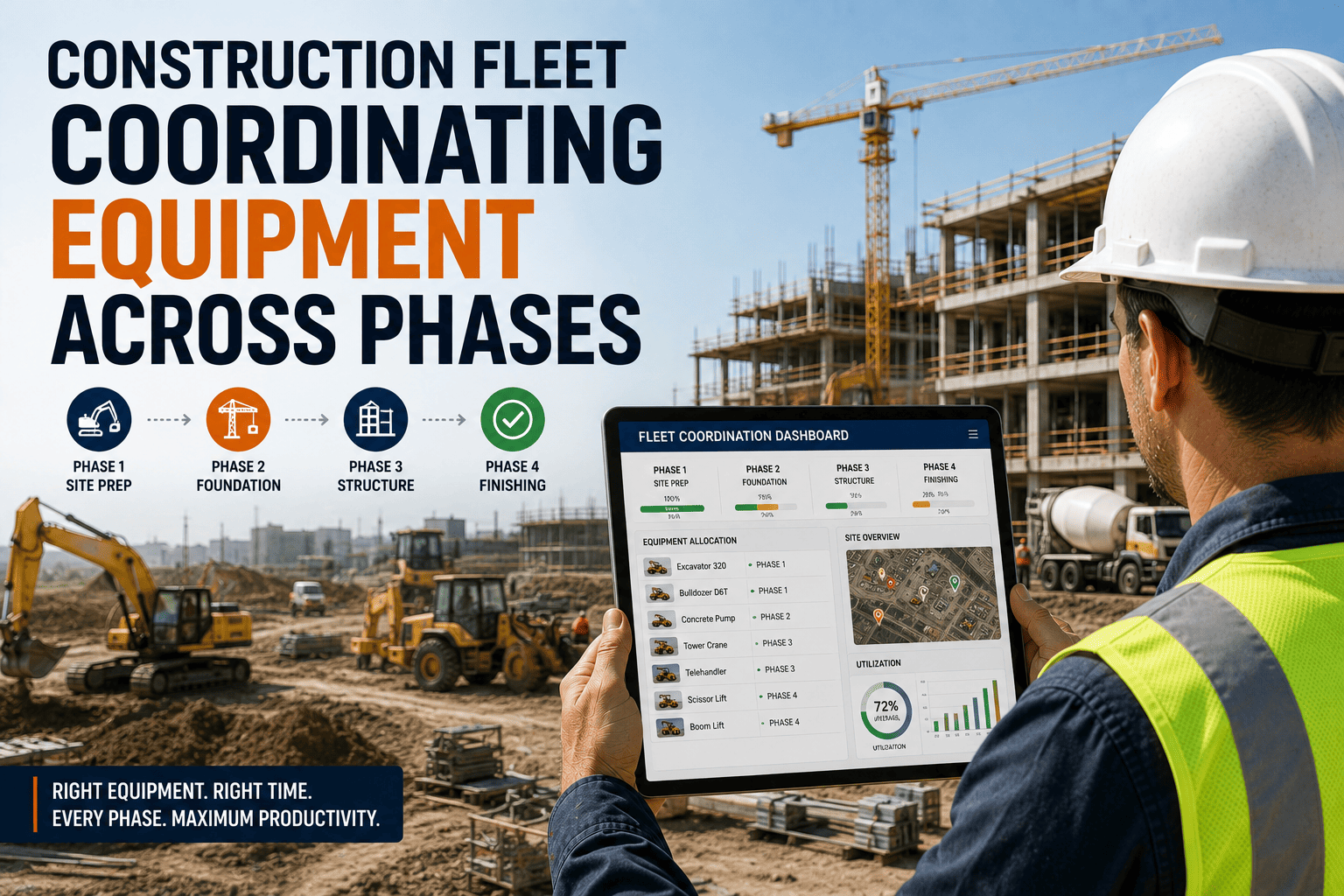
A construction project moves through phases in a predictable order, but the equipment supporting it rarely moves as smoothly. An excavator finishes its work on site prep and sits parked for two weeks before anyone reassigns it. Meanwhile the framing crew a mile away is waiting on a lift that is still en route from a different job. None of this looks like a scheduling failure day to day. It looks like normal construction. But add it up across a fleet and across a year, and phase coordination gaps quietly become one of the largest sources of wasted equipment cost on the books.
Construction fleets average only 55 to 70 percent equipment utilization, meaning up to 40 percent of equipment sits idle at any given time, largely due to poor scheduling and limited visibility across project phases. Each underutilized machine can cost 15,000 to 40,000 dollars a year in depreciation, insurance, and storage. Coordinating equipment handoffs across phases, rather than reacting to each phase as it starts, is one of the fastest ways to close that gap.
What Every Project Phase Actually Demands From Your Fleet
Each stage of a build calls for a different mix of equipment, and the handoff between stages is exactly where scheduling tends to break down.
Site Preparation
Excavators, bulldozers, and compactors clear and grade the site. This equipment needs to be released quickly once grading is complete, not left parked while the next phase gets organized.
Foundation Work
Concrete pumps, trenchers, and backhoes take over. Timing matters here because foundation curing windows leave equipment idle if the next crew is not staged and ready.
Structural and Framing
Cranes, boom lifts, and forklifts move materials and support vertical construction. Demand often spikes suddenly here, and equipment sitting idle on an earlier phase should already be en route.
Finishing and Closeout
Smaller equipment, scissor lifts, and specialty tools take priority as heavy machinery gets released back to the yard or reassigned to the next active project.
The Real Cost of Coordinating Phases Poorly
When equipment scheduling is reactive instead of planned, the cost shows up in two places at once: idle machines burning depreciation on one project, and delayed starts on another waiting for that same equipment to become available.
A 50-machine fleet running at 55 percent utilization is effectively carrying more than twenty idle machine-equivalents in cost every year, without a single asset ever needing to be sold or replaced. Most of that waste is not caused by owning too much equipment. It is caused by not knowing, in real time, which machine is finishing a phase on one job just as another job needs exactly that piece of equipment. Closing that visibility gap is why more contractors are moving equipment scheduling into a system that can track availability and location across every active phase automatically.
FleetRabbit gives you live visibility into equipment location, status, and upcoming phase demand across every project, so the next crew is never waiting on a machine that finished its last job days ago. Start your free trial with 3 vehicles today.
Uncoordinated Scheduling vs. Phase-Aware Scheduling
The equipment itself is not the problem. The way handoffs between phases and projects are planned is what separates a fleet running lean from one quietly bleeding money.
| Scheduling Moment | Uncoordinated Scheduling | Phase-Aware Scheduling |
|---|---|---|
| Site prep finishes early | Excavator sits parked until someone remembers to reassign it | System flags the completed phase and surfaces the next project waiting on that equipment type |
| Framing phase begins | Crane request goes out the day framing starts, causing a multi-day wait | Crane is staged in advance based on the project's known phase timeline |
| Two projects need the same asset type | Project managers call around trying to locate an available machine | Live fleet-wide visibility shows exactly which machine is closest and soonest available |
| Reviewing fleet performance | Utilization is guessed at, usually based on gut feel from the yard | Utilization is measured per machine and per phase, exposing exactly where idle time accumulates |
Building a Phase-Aware Equipment Schedule
Coordinating equipment across phases is less about buying more machines and more about seeing what you already have with enough lead time to act on it.
Real-Time Location and Utilization Data
Telematics data showing engine hours, location, and idle time turns a guess about equipment availability into a fact. Project managers can see exactly which machines are winding down on one job before they need to request a new one for the next.
Why Visibility Changes Behavior on Its Own
Once a project manager can see that a requested excavator is only running four hours out of a ten-hour day on another site, requests for additional equipment slow down naturally. The data replaces the reflex to over-order.
Phase Transition Alerts
Setting expected completion windows for each phase allows the system to flag upcoming equipment releases automatically, giving the next project days of lead time instead of finding out the day a machine is needed.
Cross-Project Equipment Sharing
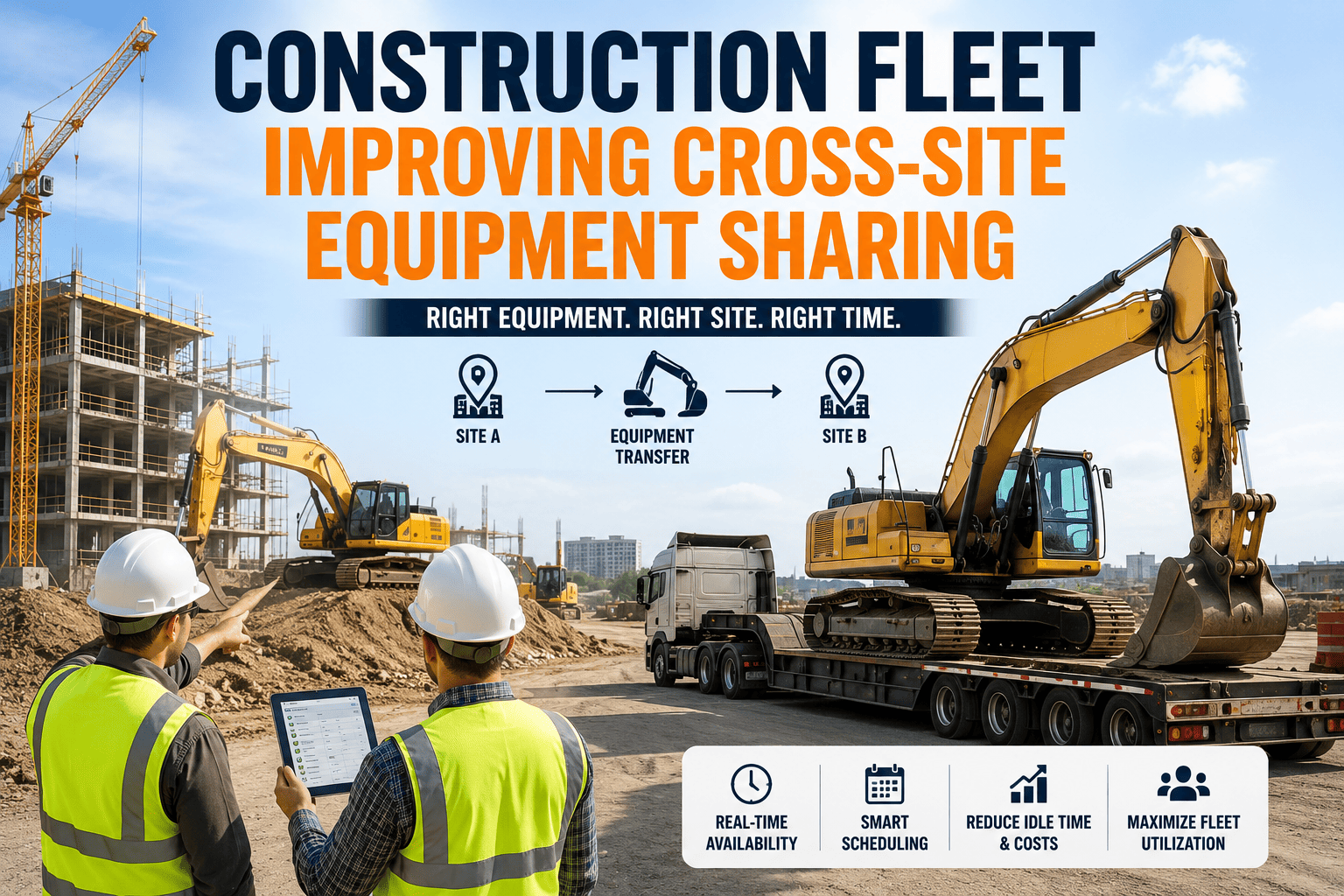
Treating the fleet as a shared pool across every active job, rather than assets locked to a single project, means the closest available machine can move to the next phase that needs it instead of a new rental being ordered by default.
Turning Idle Time Into Planned Time
The goal is not zero idle time, since some buffer protects maintenance windows and prevents overuse. The goal is making idle time a planned, visible part of the schedule instead of an accident nobody noticed until the invoice arrived. Seeing this in action is easiest with a short walkthrough, so feel free to book a demo and bring your own project timeline.
Idle equipment between phases is one of the quietest costs in construction, and one of the easiest to fix once you can see it. FleetRabbit connects utilization data, location, and phase timing into one view, so equipment moves to the next job the moment it is free.