A general contractor asks for your fleet's carbon numbers before awarding the next bid. A CARB inspector asks for your Tier engine records before your equipment can keep working in California. Two different requests, same underlying problem: if your fleet's fuel, idle, and emissions data lives in scattered fuel cards and paper logs, you can't answer either one fast enough.
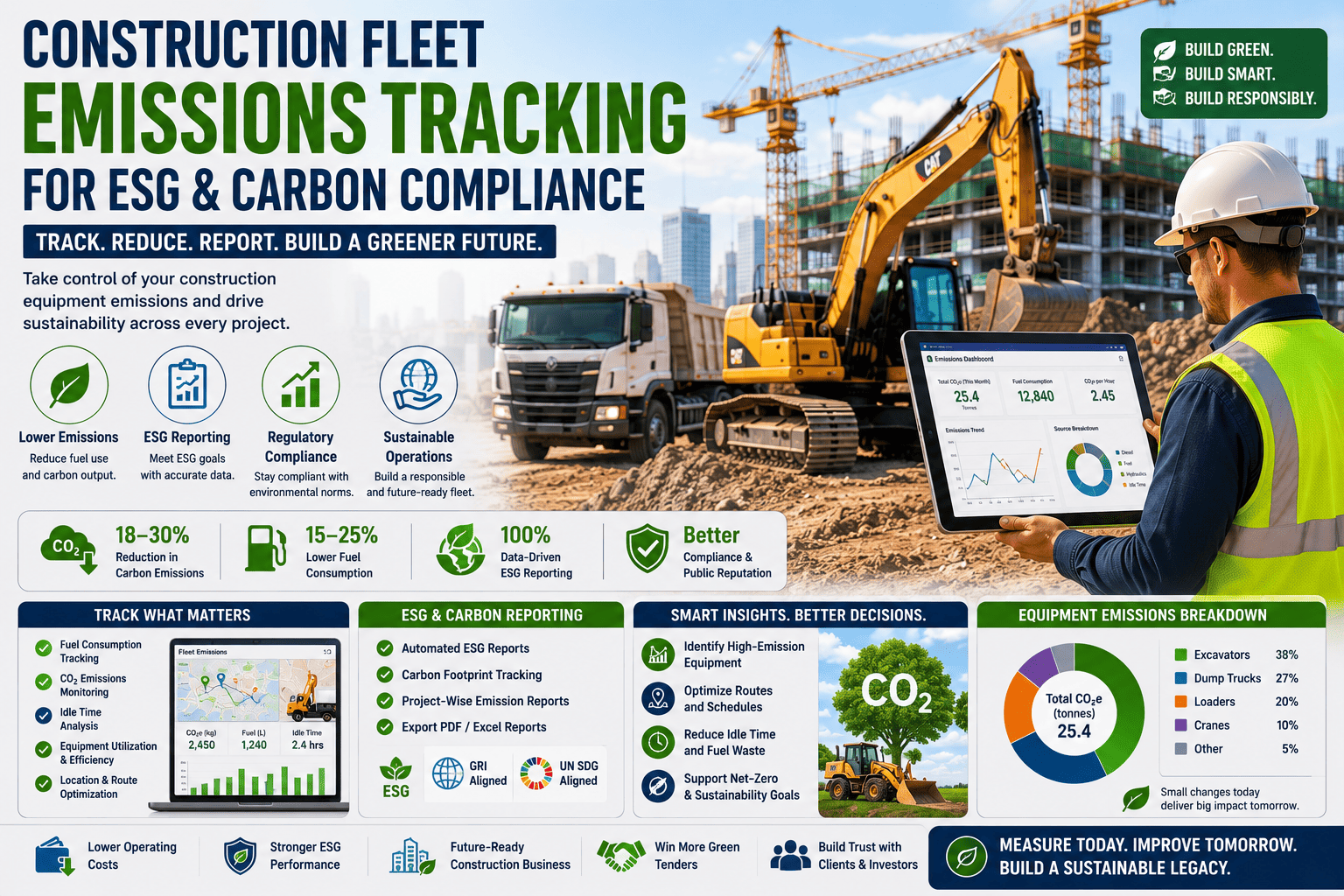
Construction fleets now face emissions pressure from two directions: California's Off-Road Diesel Regulation, which phases out older Tier engines on a strict schedule, and client-driven ESG reporting, which wants auditable fuel and emissions data for every project. Tracking fuel consumption, idle time, and engine tier data in one system satisfies both. Sign up for FleetRabbit to start capturing that data automatically, or book a demo to see how it feeds directly into reporting.
Two Pressures, One Data Problem
Emissions scrutiny on construction fleets isn't coming from a single direction anymore, and that's exactly why it feels harder to manage than it used to. Regulators want proof of compliance with hard phase-out dates. Clients and developers want proof of sustainability progress with no hard deadline at all, just an expectation that you can produce the numbers when asked. Both demands trace back to the same missing piece: consistent, vehicle-level fuel and emissions data.
Regulatory Pressure: CARB
California's In-Use Off-Road Diesel-Fueled Fleets Regulation applies to self-propelled off-road diesel equipment of 25 horsepower or more, including dozers, excavators, cranes, and forklifts. It forces fleets to retire, repower, or retrofit older engines on a fixed timeline, and requires every vehicle to be reported and labeled in CARB's online system. Miss a deadline and your equipment simply can't legally operate in the state.
Market Pressure: ESG
General contractors and developers increasingly build emissions disclosure into their bid requirements, especially on public and institutional projects. There's no single universal deadline here, but the ask keeps showing up: fuel burned, hours idled, and equivalent carbon output by project or by piece of equipment, formatted in a way that plugs into the client's own sustainability report.
CARB's Tier Phase-Out Timeline
The Off-Road Regulation sorts fleets by total combined horsepower and gives each size category its own countdown. Knowing where your fleet falls determines exactly which engines you need to retire, repower, or replace, and by when.
| Fleet Size | Horsepower Range | Tier 0 Phase-Out | Tier 1 Phase-Out |
|---|---|---|---|
| Large Fleet | Over 5,000 hp | January 1, 2024 | January 1, 2026 |
| Medium Fleet | 2,501 – 5,000 hp | January 1, 2026 | January 1, 2028 |
| Small Fleet | Under 2,500 hp | January 1, 2028 | Scheduled later |
These phase-out dates aren't the whole picture. Fleets must also report every applicable vehicle into CARB's DOORS system, keep hour-meter logs current, maintain a written idling policy, and submit annual affirmation paperwork by March 1. Contractors on many projects are now required to verify that subcontracted fleets hold a valid Certificate of Reported Compliance before work even starts, which means a compliance gap doesn't just risk a fine, it can cost you the job.
FleetRabbit logs engine data, fuel consumption, and idle time by vehicle, so you always know where each piece of equipment stands against its phase-out date. Sign up to start tracking today, or book a demo to see the dashboard in action.
What ESG Reporting Actually Asks For
Unlike CARB's fixed checklist, ESG requests vary by client, but nearly every version comes back to the same four data points. Getting these right the first time saves a scramble every time a new bid packet lands on your desk.
Why Idle Time Deserves Its Own Line Item
Idle time is one of the easiest emissions wins available to a construction fleet, because it produces zero output for real fuel cost. A single crane or generator left running through a lunch break or a delivery delay adds up fast across a project timeline, and it's entirely visible once you're actually measuring it. Fleets that start tracking idle hours by vehicle typically find their easiest reduction opportunity within the first reporting cycle.
Turning Fuel Data Into an Auditable Report
Collecting the numbers is only half the job. Regulators and clients both want to trust the source, which means raw fuel card statements and hand-written equipment logs create more doubt than they resolve. An auditable emissions record needs three things: data tied to a specific vehicle and engine, a timestamp for every entry, and a system that a third party can review without your team walking them through it line by line.
A Simple Framework to Start With
Begin by logging fuel purchases and consumption against each vehicle's ID rather than a fleet-wide total. Layer in idle-versus-working hours from telematics or operator logs. Match every vehicle to its engine tier and CARB reporting status so you can see compliance and emissions data side by side. Once that foundation exists, generating a report for a specific project or a specific client's ESG format becomes a filtering exercise instead of a research project.
This is the exact structure FleetRabbit was built around. Fuel, idle time, and engine data are captured automatically by vehicle, so when a client asks for project-level emissions figures or CARB asks for engine tier proof, the answer is already sitting in your dashboard. Sign up for a free trial to connect your fleet, or book a demo to see a sample report built from real fleet data.
Frequently Asked Questions
Stop rebuilding emissions numbers every time a regulator or a client asks. FleetRabbit tracks fuel, idle time, and engine data by vehicle, so every report, audit, and bid request pulls from the same reliable source.