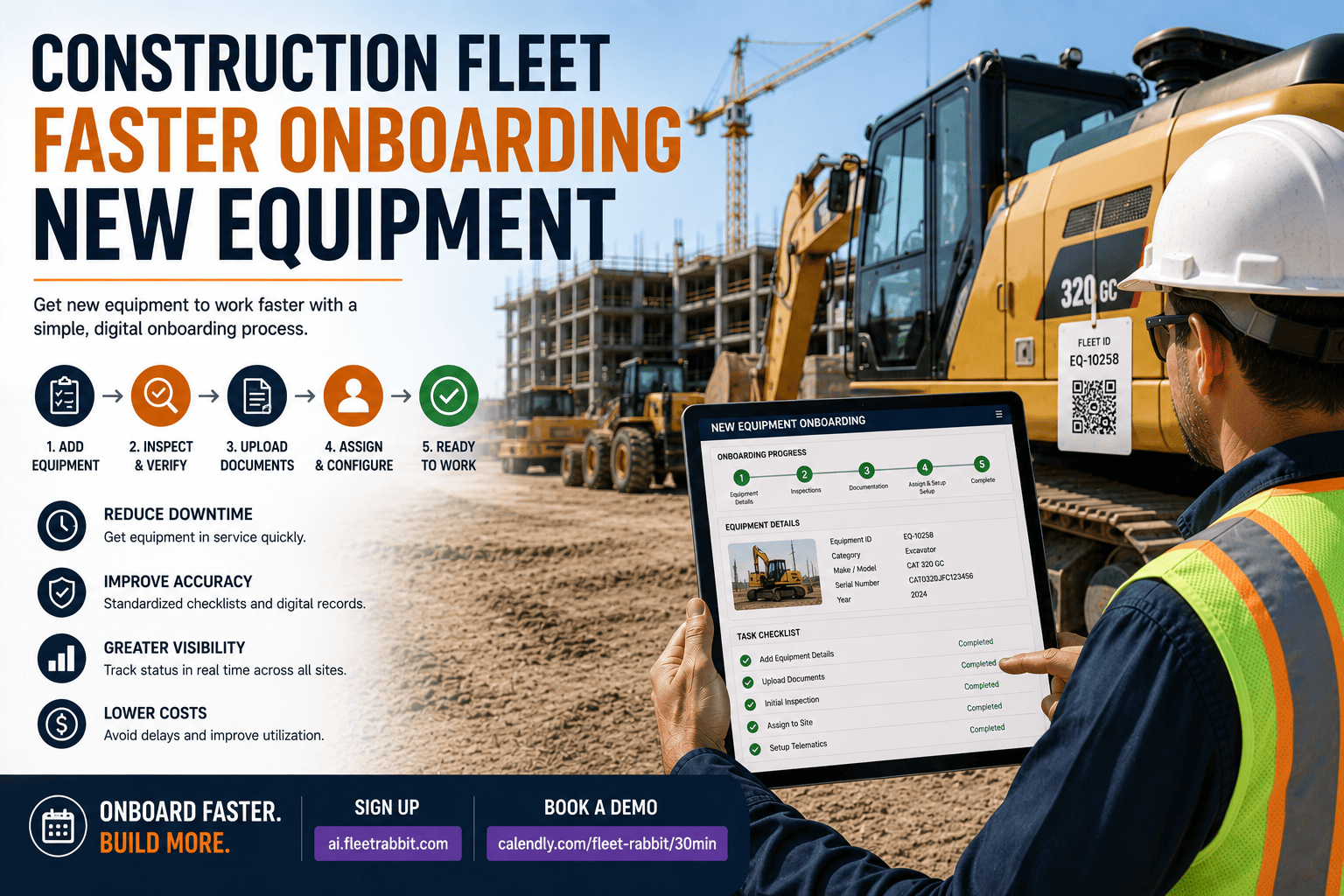
A new excavator rolls off the delivery truck, and the pressure is immediate: get it to the job site and working. But every machine that skips a proper onboarding process becomes a hidden liability the moment it starts running. Untracked hours, missed warranty registration windows, and a maintenance schedule nobody set up all trace back to the same root cause, a rushed intake. Faster onboarding does not mean skipping steps, it means turning a scattered paper process into a digital one your team can finish before the machine ever leaves the yard.
Faster construction equipment onboarding comes from replacing manual paperwork with a digital intake workflow that verifies delivery condition, creates the asset record, registers warranty details, and schedules preventive maintenance in one pass. Fleets using a structured digital process typically cut equipment setup time from hours to well under thirty minutes per unit, while closing the compliance and warranty gaps that manual intake tends to leave behind.
What Happens When Onboarding Gets Rushed
Equipment that enters service without a structured intake accumulates problems quietly. Hours run without a service record, fuel use goes untracked, and nobody notices until a component fails outside a warranty window that was never registered. Fleet teams describe adding several new machines a quarter and spending three to four hours per unit stitching together records across separate systems before a proper onboarding workflow existed.
The Seven Phases Of A Complete Onboarding Workflow
A dependable intake process moves through the same sequence every time, regardless of who is on shift that day. Breaking it into clear phases is what makes it fast, since nothing gets improvised.
Delivery Verification
Confirm the machine, attachments, and paperwork match the purchase or lease order before accepting the asset.
Physical Inspection
Check for factory defects, fluid levels, and safety system function so nothing is accepted with a hidden issue.
Digital Asset Record Creation
Log serial number, model, hour meter reading, and location into a single record the whole team can see.
Warranty Registration
Submit registration immediately so coverage windows are locked in before any component has a chance to fail.
Preventive Maintenance Setup
Configure service intervals from manufacturer specifications so the first scheduled maintenance is planned, not reactive.
Operator Assignment And Training
Confirm the assigned operator is credentialed and briefed on this specific machine before it goes to the site.
Final Sign-Off
Release the machine into active service only once every prior phase is documented and complete.
What This Looks Like In Practice
Fleet teams that digitize this sequence report bringing per-unit setup time down from three or four hours to about twenty five minutes, with the asset record, PM schedule, and documentation all live before the machine leaves the intake bay. If you want to see this workflow applied to your own fleet, you can book a demo and walk through it with a real piece of equipment.
Manual Intake Versus Digital Onboarding
The difference between a paper-based intake and a digital one is not just speed, it is what happens months later when someone needs a record that was never properly created.
Manual, Paper-Based Intake
Hours logged by hand on separate forms, warranty paperwork mailed or filed loosely, PM schedules set from memory, and records that live in different systems nobody fully trusts.
FleetRabbit Digital Onboarding
One workflow captures inspection, asset record, warranty registration, and PM schedule together, visible instantly to dispatch, maintenance, and site management.
FleetRabbit turns delivery inspection, asset setup, warranty registration, and maintenance scheduling into one digital workflow your team completes before the machine leaves the yard. Sign up and onboard your next piece of equipment the same day it arrives.
A Quick Checklist For Every New Machine
Use this as a fast reference the next time equipment arrives at your yard or job site.
Why Speed And Thoroughness Are Not In Conflict
The instinct is to assume a fast onboarding process means cutting corners. In practice, the opposite is true. A digital workflow moves faster precisely because nothing needs to be re-checked or re-entered later, since every phase feeds directly into the next one automatically.
Frequently Asked Questions
A rushed onboarding costs more than the time it saves, in missed warranties, blind maintenance schedules, and untracked hours. FleetRabbit gives your team one digital workflow to get new equipment documented, compliant, and productive from day one.