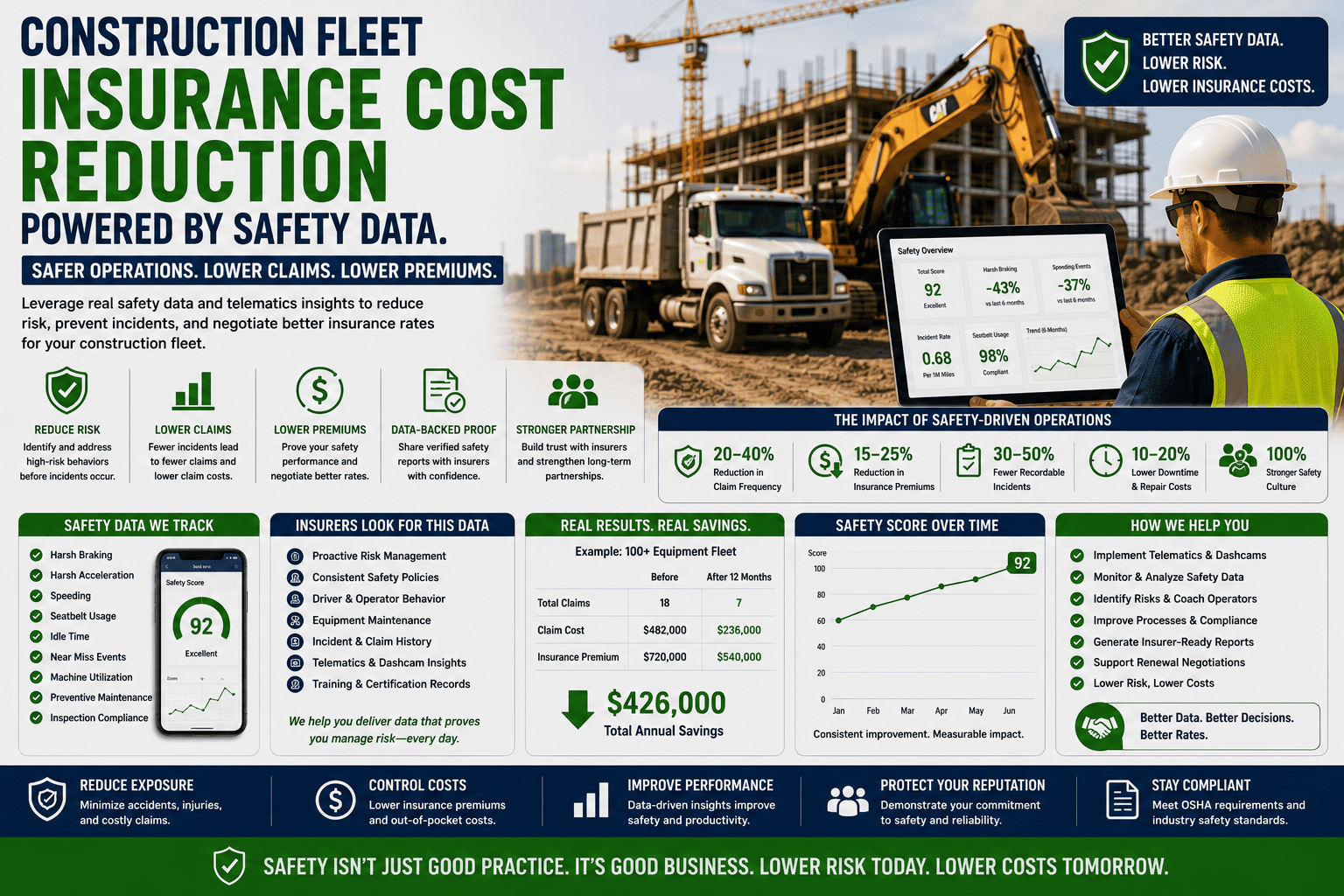
Two construction fleets file the same number of claims this year. Same equipment, same routes, same crew size. One renews at a flat rate. The other gets hit with a double-digit increase. The difference usually isn't how safely either fleet actually operates. It's that one of them can prove it, and the other one is asking the underwriter to take their word for it.
Insurance underwriters now price construction fleets on documented safety data, not just claims history: DOT inspection records, maintenance compliance, telematics behavior, and formal safety programs. Fleets that present this data at renewal routinely see meaningfully lower premiums than fleets that show up with a loss run alone. Sign up for FleetRabbit to start building that record automatically, or book a demo to see a sample underwriting report.
Why Underwriters Are Rewriting the Rules
Commercial fleet insurance used to run on a small set of blunt inputs: years in business, vehicle count, zip code, and whatever showed up on the loss run. That model is fading fast. Underwriters increasingly treat documented safety performance as an active pricing input rather than a footnote, and fleets that decline to share operational data aren't treated as neutral anymore, they're priced more conservatively because an insurer can't reward risk management it can't see.
What Changed the Conversation
Rising claim severity, larger litigation verdicts, and more expensive equipment repairs have pushed carriers to look past industry averages toward fleet-specific evidence. A construction fleet with a clean loss history but no supporting documentation looks the same to an underwriter as a fleet that's simply been lucky. A fleet that can produce inspection records, maintenance compliance, and behavior trends looks like a business that's actually managing its risk, and that distinction is worth real money at renewal.
The Five Data Points That Move Your Premium
Not every piece of safety data carries equal weight with an underwriter. These five categories consistently show up as the direct adjustment factors carriers use to price a fleet above or below the actuarial baseline.
| Data Category | What It Demonstrates |
|---|---|
| DOT Inspection & CSA Scores | Ongoing federal compliance and roadside safety performance |
| Claims History (3-5 Years) | Actual loss frequency and severity trend over time |
| Telematics Behavior Data | Hard braking, speeding, and following-distance trends by driver |
| Maintenance Compliance | Proactive vehicle upkeep versus reactive, deferred repairs |
| Formal Safety Program Records | Documented training, coaching sessions, and hiring standards |
FleetRabbit organizes inspection records, maintenance history, and driver behavior data into the format carriers actually use for renewal reviews. Sign up to generate your fleet's first report, or book a demo to see it before your next renewal.
Two Fleets, Two Renewal Conversations
The clearest way to see the impact of documentation is to compare what actually happens in the room when a renewal conversation starts with data versus one that starts without it.
Loss-Run-Only Renewal
The underwriter sees claims history and industry averages, nothing else. Any safety improvements your fleet made over the past year are invisible. Pricing defaults to the actuarial baseline for fleets of your size and equipment class, with no credit for actual behavior.
Data-Backed Renewal
The underwriter sees inspection history, maintenance compliance, and a documented behavior trend alongside the claims data. Improvements show up as evidence, not a claim you're making. Pricing shifts toward preferred tiers because the risk is verifiable, not assumed.
Building the Safety Binder Underwriters Want
A generic safety manual downloaded from the internet doesn't move a premium. A documented, fleet-specific record does. Building that record is a matter of organizing data your operation is already generating, not creating new work from scratch.
Four Building Blocks of a Defensible Safety Record
Start with DOT inspection and maintenance logs tied to each specific vehicle, since gaps here are the fastest way to lose underwriter confidence. Layer in telematics behavior data covering at least one full policy term, since a single strong month reads as noise rather than a trend. Add documented training records and coaching sessions that show behavior issues are addressed, not just observed. Finally, keep incident response documentation current, so any claim that does occur is backed by a clear, contemporaneous account of what happened.
Presenting the Data Where It Counts
Collecting the data is only half the job. It needs to reach your broker and underwriter in a format they can actually price, ideally 60 to 90 days before renewal rather than the week of. A clean, formatted report handed over proactively reads very differently than raw spreadsheets produced only after a rate increase lands.
This is exactly the gap FleetRabbit closes. Inspection records, maintenance history, and driver behavior data are captured automatically and organized into underwriter-ready reports, so your fleet walks into every renewal with evidence instead of a loss run and a hope. Sign up for a free trial to start building your fleet's safety record, or book a demo to see a sample report before your next renewal conversation.
Frequently Asked Questions
FleetRabbit turns your inspection, maintenance, and driver behavior data into the underwriter-ready reports that move premiums, so your fleet gets priced on how it actually performs.