Two operators run the same model excavator on the same job site for a full season. One burns noticeably less fuel, reports every small defect before it becomes an expensive repair, and has never had a safety incident flagged against their name. The other runs hot, skips pre-shift inspections more often than not, and has racked up a couple of near-misses nobody formally documented. Without a scorecard, both operators look identical on paper, because nobody is actually measuring the difference. Operator scorecards give construction fleets a way to see that difference clearly, coach the right people at the right time, and recognize the operators who are quietly protecting equipment and safety every single day.
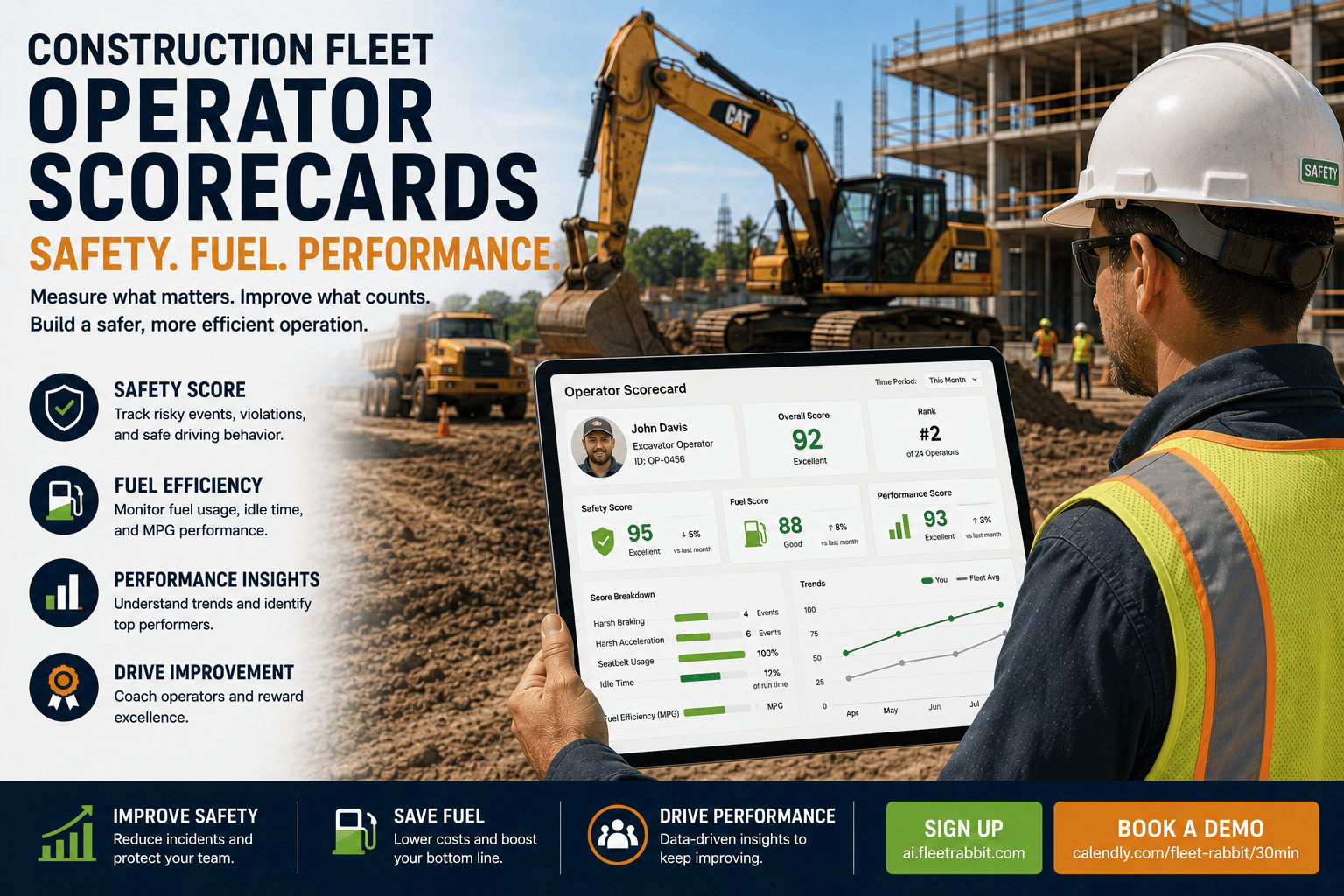
A construction fleet operator scorecard combines safety event data, fuel efficiency, idle time, and inspection compliance into a single, comparable view of how each operator performs across similar equipment. Used well, scorecards support coaching and recognition rather than punishment, helping fleets reduce fuel costs by 5 to 15 percent and cut preventable safety incidents, while giving operators clear, fair evidence of how their performance compares.
Why Operator Performance Is So Hard to See Without Data
Equipment tells a story every shift, but almost nobody is reading it. Fuel consumption, idle time, harsh acceleration events, and inspection habits all vary significantly from one operator to the next, even on identical machines doing identical work. Without a system that captures this, fleet managers are left relying on impressions, a supervisor's memory of who seems careful, or which operator happens to mention a mechanical issue out loud. That kind of subjective judgment is neither fair to good operators nor useful for catching risky habits before they turn into an incident or an expensive repair.
What Belongs on a Fair Operator Scorecard
The strongest scorecards combine a handful of specific, measurable categories rather than a single vague performance rating. Each category should be something an operator can actually influence through their own behavior, which is what makes the resulting conversation feel fair rather than arbitrary.
| Scorecard Category | What It Measures | Why It Belongs on the Scorecard |
|---|---|---|
| Fuel Efficiency | Fuel consumption relative to similar equipment and work type | Operating habits like idling and harsh acceleration directly affect fuel cost per hour |
| Idle Time | Hours of engine runtime with no active work performed | Excess idling wastes fuel and adds engine hours without any productive output |
| Safety Events | Harsh braking, sudden acceleration, and any reported near-misses or incidents | Patterns here flag operators who may need coaching before a real incident occurs |
| Inspection Compliance | Consistency of completed pre-shift inspections and defect reporting | Operators who inspect diligently catch small issues before they become costly repairs |
Why Comparing Similar Equipment and Conditions Matters
A scorecard only feels fair to operators if it compares like with like. An operator running a compact skid steer on soft ground all day will naturally show different fuel and idle numbers than one running a large dozer on a demanding grading job. The most useful scorecards group comparisons by equipment type and job conditions, so the resulting numbers reflect operator behavior rather than the nature of the assignment itself.
FleetRabbit automatically groups operator performance by equipment type, so fuel efficiency, idle time, and safety data compare fairly across similar jobs rather than penalizing tougher assignments. You can start a free trial and see your fleet's operator data today.
Using Scorecards to Build Trust, Not Fear
A scorecard introduced badly can feel like surveillance, and operators who feel watched rather than supported tend to become defensive rather than receptive. The fleets that get the most value from scorecards treat them as a coaching tool first and a performance record second. That starts with transparency: operators should see their own numbers, understand exactly what is being measured and why, and know that the same standard applies to everyone running the same type of equipment.
Turning Scorecard Data Into Real Coaching Conversations
Numbers alone rarely change behavior. What works is pairing the data with a specific, private conversation that focuses on one or two clear opportunities rather than an overwhelming list of every metric at once. An operator whose idle time has crept up over the last month benefits far more from a short conversation about that specific pattern than from a generic reminder to be more fuel conscious. Framing the conversation around improvement, not blame, keeps the process focused on outcomes both the operator and the company actually want.
Recognizing Top Performers Publicly
Scorecards work best when they cut both ways. Operators who consistently rank well on fuel efficiency, safety, and inspection compliance deserve visible recognition, whether that is a mention at a safety meeting, a small incentive program, or simply being asked to help mentor newer operators. Recognition reinforces the behaviors a fleet wants to see far more effectively than any warning ever could.
FleetRabbit surfaces individual operator trends automatically, so coaching conversations start from specific data instead of a vague impression. Book a demo and see how scorecards support coaching across a real fleet.
Frequently Asked Questions
Your best operators deserve recognition, and your riskiest habits deserve a coaching conversation before they become an incident. FleetRabbit turns raw telematics into scorecards your whole crew can trust.