"One more scoop won't hurt" is one of the most expensive sentences in construction. It sounds harmless in the moment, a few extra shovels of material to save a trip, but that small decision repeated across a fleet of dump trucks every day adds up to blown tires, cracked frames, failed brakes, and a citation at the scale that costs far more than the fine printed on the ticket. Overloading doesn't announce itself with a warning light. It shows up months later as a suspension repair that seems to come out of nowhere, on a truck that was "just carrying a little extra" for most of its life.
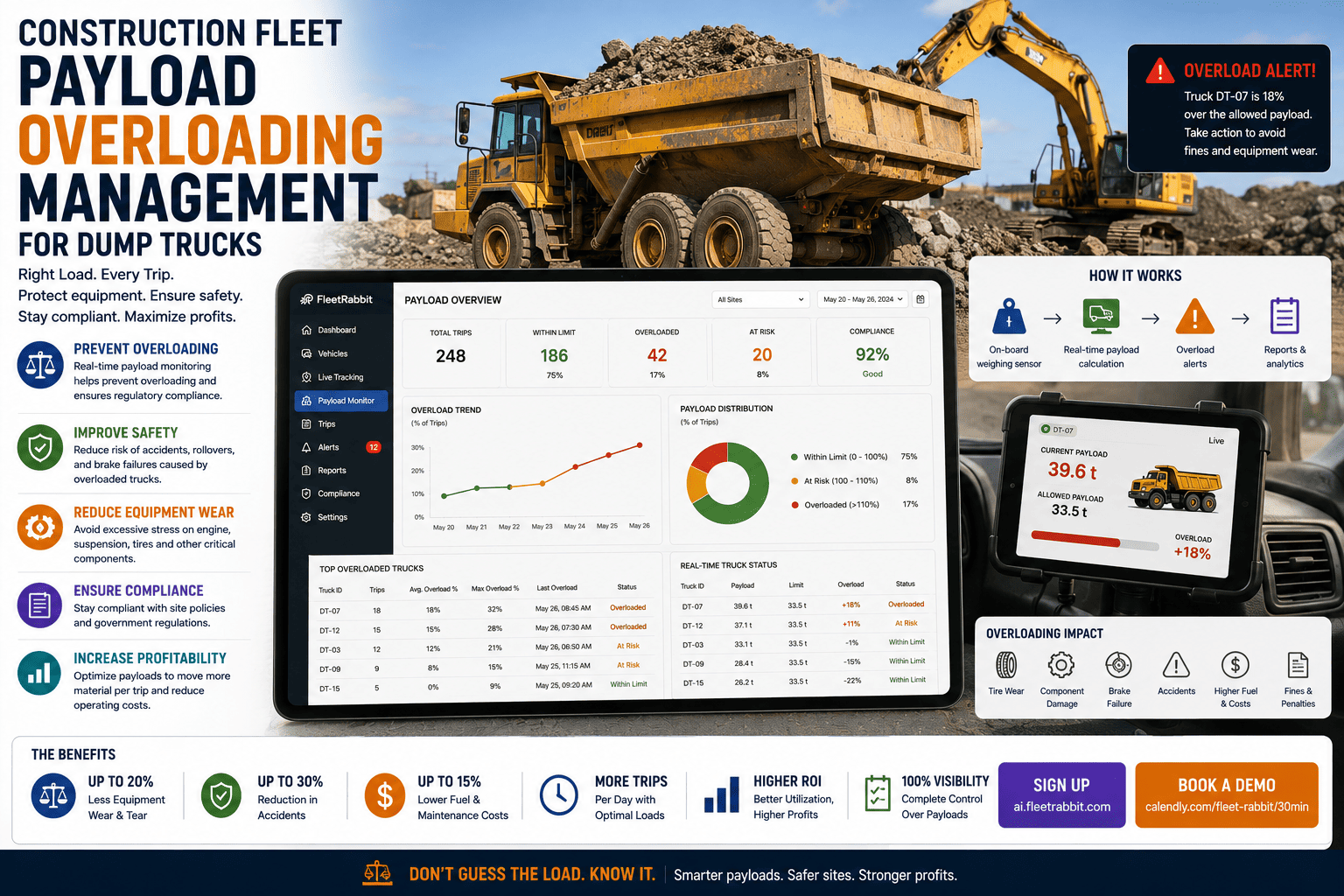
Payload and overloading management means tracking how much weight each dump truck actually carries against its rated capacity and legal axle limits, then catching repeated overloading before it turns into fines, breakdowns, or an out-of-service order. Overweight citations typically run $500 to $10,000 depending on severity, but the real cost multiplies 6 to 10 times higher once downtime, freight redistribution, and accelerated wear on tires, brakes, and suspension are counted. Fleets that monitor payload trends by truck catch chronic overloading patterns early, protecting both compliance and equipment life.
The Citation Is Never the Real Cost
A scale ticket shows one number. The actual bill hides behind it, made up of costs that never show up on the citation itself but land on the fleet budget anyway. Seeing both side by side makes it obvious why prevention is so much cheaper than the fine alone suggests.
That gap exists because the fine is the only part of the incident anyone writes down. The truck still has to sit out-of-service while material gets redistributed roadside. The driver's CSA score takes a hit that follows the carrier for up to 24 months. And the suspension, tires, and brakes that absorbed months of chronic overloading don't fail on the day of the citation, they fail weeks later, on a normal Tuesday, when nobody connects it back to the loading habits that caused it.
FleetRabbit monitors payload trends and flags overloading events by truck, so chronic patterns get caught before they turn into fines, breakdowns, or accelerated wear. Sign up free and see your fleet's payload data today.
What Chronic Overloading Actually Does to a Truck
The damage from carrying too much weight doesn't hit every component the same way or on the same timeline. Some parts wear down gradually, others fail suddenly, and knowing which is which helps explain why a truck that "seemed fine" can still be quietly heading toward a breakdown.
| Component | Effect of Chronic Overloading | Typical Added Cost |
|---|---|---|
| Suspension | Uneven wear from excess and unbalanced weight, reduced stability | Up to 15% higher component costs annually |
| Tires | Overheating and accelerated tread wear, higher blowout risk | More frequent replacement cycles |
| Brakes | Reduced stopping power, longer stopping distances under load | Faster pad and rotor turnover |
| Axles | Early suspension and axle component wear from sustained excess load | Over $1,000 per axle annually in added maintenance |
| Frame | Stress cracking and fatigue from repeated overload cycles over time | Major structural repair if left unaddressed |
Total Weight Isn't the Only Number That Matters
A truck can register under its total legal weight limit and still be cited, because axle-by-axle distribution matters just as much as the number on the overall gross weight. A load that shifts forward, sits unevenly across dual rear axles, or piles up on one side during loading can put a single axle well over its limit even while the truck's total weight looks fine on paper. This is why relying on a single gross weight check misses a large share of real overloading events.
Signs a Truck Has a Chronic Overloading Problem
- Uneven tire wear appearing faster on one side or axle than the others
- Suspension components needing replacement well ahead of their expected service life
- Longer stopping distances reported by operators, especially on grades or in wet conditions
- Repeated scale flags for the same truck across multiple loads or job sites
- Visible frame stress such as cracking near suspension mounts during routine inspections
Building a Payload Monitoring Program That Prevents Repeat Violations
Most overloading problems aren't one-time mistakes, they're a pattern that keeps repeating because nobody is tracking payload data by truck over time. A structured monitoring program turns that pattern into something visible and correctable.
How FleetRabbit Keeps Payload Under Control Fleet-Wide
Tracking payload manually across a fleet of dump trucks moving between job sites is nearly impossible to keep current, which is exactly how chronic overloading habits go unnoticed until a citation or a breakdown forces the issue. FleetRabbit logs payload data by truck and by load, flagging patterns of repeated overloading before they become a fine, and connecting that history to each truck's maintenance schedule so accelerated wear on tires, brakes, and suspension gets caught during a planned inspection instead of a roadside failure.
Fleet managers get a clear picture of which trucks and which loading crews are driving overloading events, instead of discovering the problem one citation at a time. That visibility turns payload management from a reactive scramble after a scale ticket into a routine part of running the fleet. If you want to see how this looks against your own truck list, you can book a demo and walk through your payload data with our team.
Get overloading alerts, payload history, and wear tracking for every dump truck in one dashboard. Create your free account or talk it through with our team first.
Frequently Asked Questions
Overloading rarely feels like a decision in the moment. It feels like efficiency, one more scoop to save a trip, one less run back to the pit. But the truck absorbing that extra weight doesn't know it was supposed to be a one-time thing, and neither does the scale that eventually catches it. Tracking payload by truck, not just by load, turns a habit that quietly erodes equipment life and invites citations into a pattern you can see and correct before it costs far more than the fine ever suggested.
FleetRabbit tracks payload against rated capacity for every dump truck, flags overloading patterns before they become citations, and ties overload history to your maintenance schedule. Get started free, no credit card required, or book a demo to see your fleet's payload data first.