A skid steer leaves Site A in good shape. It arrives at Site B with a cracked light guard and a dent nobody can explain. The transporter says it was fine when they dropped it. The receiving crew says it was already damaged. Site A insists it left the yard clean. This is how most equipment damage disputes actually play out, three parties, three versions of events, and no record anyone can point to. Reducing these claims is less about preventing every scratch and more about closing the gap in custody where nobody was watching closely enough to prove what happened.
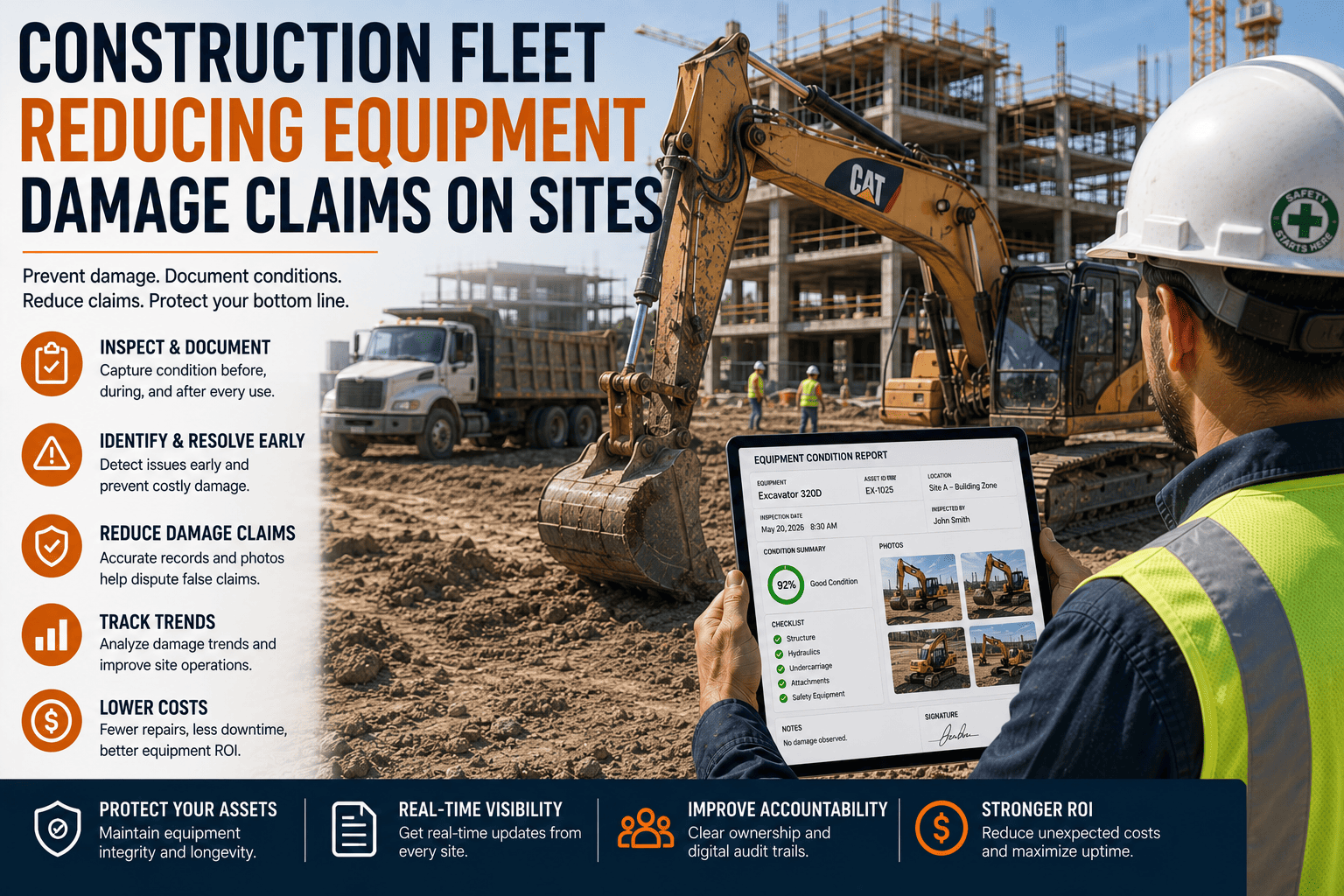
Equipment damage claims between construction sites are reduced by creating a documented condition record at every custody handoff, not just at pickup and delivery. When a machine's condition is verified and timestamped every time responsibility changes hands, from the sending site, through transport, to the receiving site, disputes get resolved with evidence instead of conflicting accounts, and most claims close in days rather than weeks.
Why Damage Disputes Are So Hard To Settle
Construction equipment insurance built for jobsite and transit coverage generally follows whoever has care, custody, or control of the asset at the time damage occurs. That sounds simple until a machine passes through three sets of hands in a single move, the crew that releases it, the carrier that hauls it, and the crew that receives it. Without a record at each handoff, custody itself becomes the argument, and insurers are left trying to reconstruct a timeline from memory instead of evidence.
Where The Accountability Gap Actually Happens
Equipment damage disputes rarely come from one dramatic event. They come from a handoff nobody documented.
Site A Release
Machine leaves the originating site with no photographed condition record.
In Transit
Transporter has custody, but no baseline exists to compare against on arrival.
Site B Receipt
Damage is noticed only once the machine is already in use, too late to trace its origin.
Each of these three links is a moment where responsibility could be proven with a simple photo and timestamp, and each is also where most fleets currently have nothing at all.
What This Costs When It Goes Unresolved
Damage claims on heavy equipment routinely exceed $12,000 once repair and downtime are factored in, and that number climbs further when the dispute itself drags on. A claim without a clear custody trail can take weeks to settle, during which the machine may sit unused, project schedules absorb the delay, and the relationship between sites, crews, or transport partners takes the strain. If your team wants to see how a documented handoff process actually works, you can book a demo and walk through a real condition report.
Undocumented Handoffs Versus Verified Ones
Undocumented Transfer
No baseline condition, no timestamp, and no clear record of who had custody when the damage occurred. Resolution depends on memory and negotiation.
Verified Digital Handoff
Photos and notes logged at every custody change, tied to a timestamp and the responsible party, so the record settles the question before it becomes a dispute.
FleetRabbit lets your crews log equipment condition in seconds at every custody change, from release to transport to receipt, so damage claims get resolved with proof instead of arguments. Sign up and start documenting your next equipment transfer.
How Fast A Claim Resolves With The Right Record
A Short Checklist For Every Equipment Transfer
The process does not need to be complicated to close most of the gap. Consistency at each step is what makes the record trustworthy.
Why A Single Shared Record Matters More Than Paperwork
Two crews each keeping their own paper log creates the same dispute all over again, just with more paperwork. What actually resolves a claim is a single, shared, timestamped record that both the sending site and the receiving site can see, so nobody is relying on a form that only they have access to.
Frequently Asked Questions
Damage disputes between sites almost always trace back to a handoff nobody documented. FleetRabbit gives your team a shared, timestamped condition record at every stage of a move, so accountability is never a guessing game.