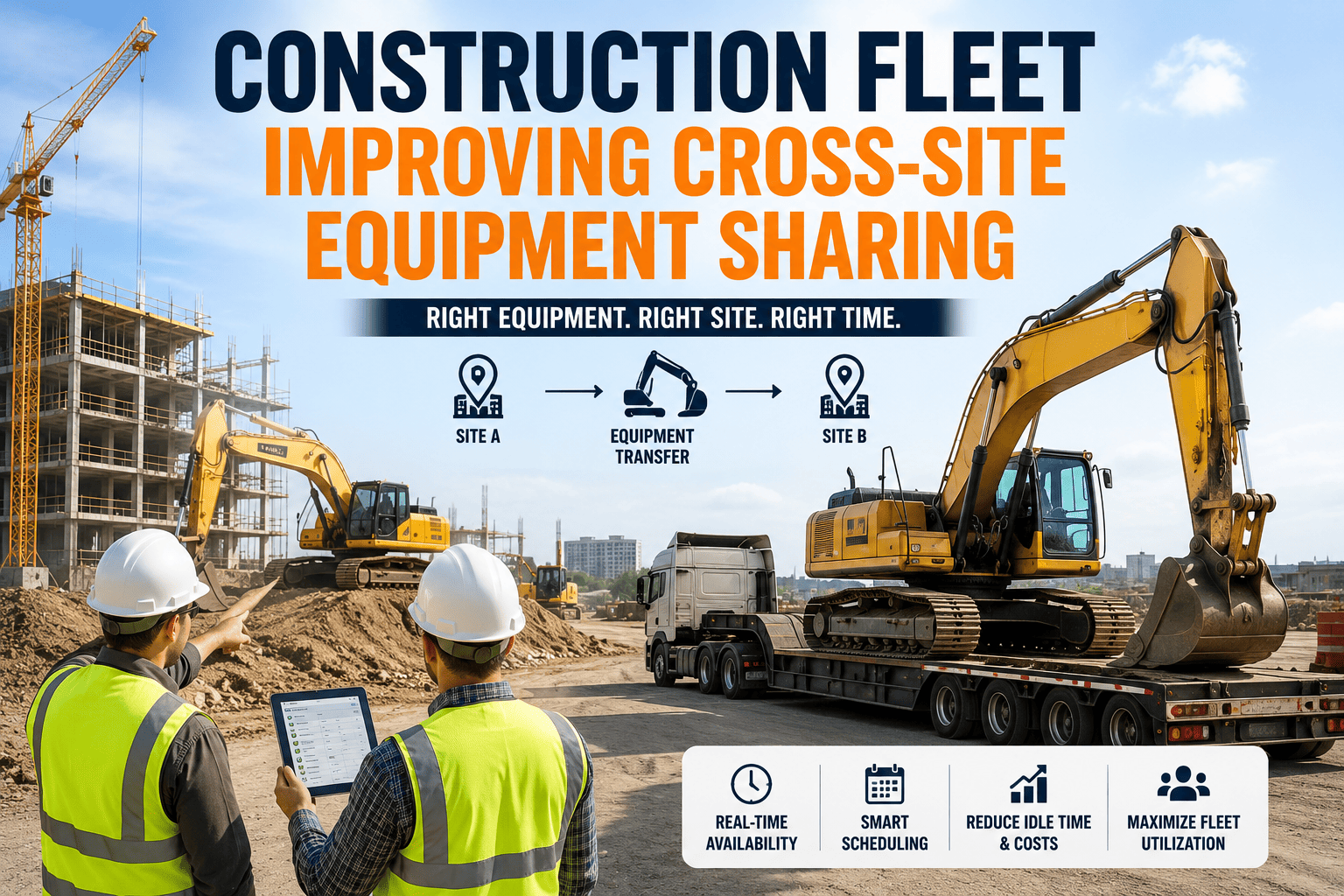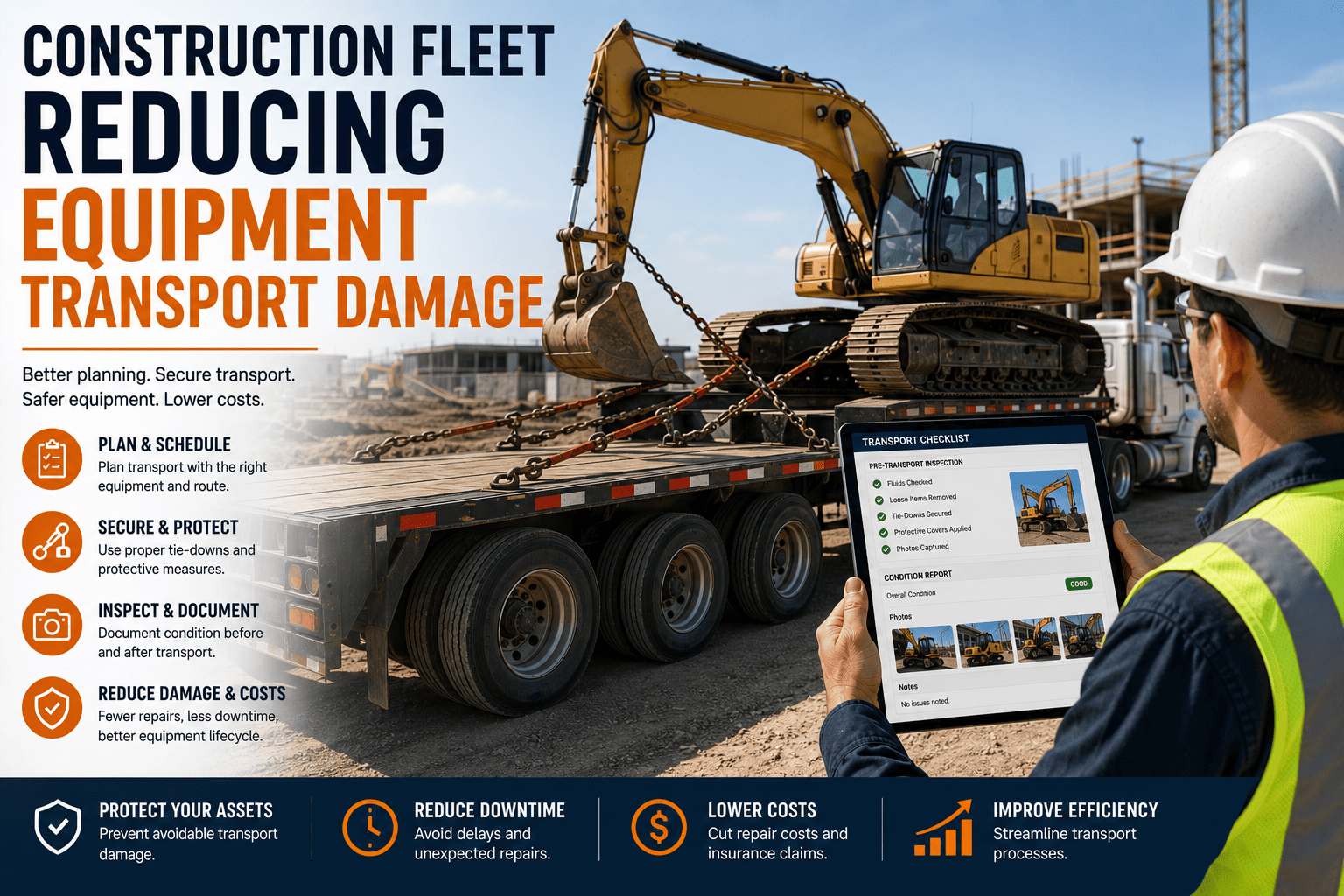
Every time a bulldozer, excavator, or skid steer rolls onto a lowboy trailer, a construction fleet is placing a six or seven figure asset in the hands of securement chains, tie-down points, and a driver's judgment. Most moves between job sites go fine. But when something shifts during transit, or a dent goes unnoticed until the machine is already back at work, the argument over who caused it and who pays for it can drag on for weeks. Reducing equipment transport damage is not just about tighter chains, it is about proof, process, and visibility from the moment a machine leaves one site until it arrives at the next.
Construction equipment transport damage is best reduced through a combination of correct trailer selection, proper securement at four anchor points, and digital condition inspections completed before and after every move. Fleets that document equipment condition with timestamped photos cut disputed damage claims significantly, since there is a clear record of what state the machine was in before it ever left the yard.
Why Transport Damage Happens More Often Than Fleets Expect
Heavy equipment does not get damaged in transit because operators are careless. It happens because moves are routine until they are not, and small gaps in process compound quickly. Recent DOT reporting found that 37 percent of transport accidents happen due to poor securement, which points to how much of this risk sits in preparation rather than the road itself. A machine that looks fine leaving the yard can arrive with a cracked hydraulic line or a scraped undercarriage, and without a documented starting point, nobody can say for certain when it happened.
What Transport Damage Actually Costs
The financial exposure is larger than most fleet managers assume once repair, downtime, and dispute time are added together. Industry data shows the average damage claim on a heavy haul move exceeds $12,000 per incident, and that figure does not include the days a machine sits waiting for parts or the hours spent proving fault. A single unresolved claim can also strain the relationship with the trucking partner your projects depend on.
Where the Cost Actually Lands
Repair invoices are only the visible part. Every disputed claim also consumes project time, since equipment sits idle while insurers, transporters, and site managers work out responsibility. If your team wants to see how digital records shorten that process, you can book a demo and walk through a real inspection workflow.
A Three-Stage Process For Protecting Equipment In Transit
Reducing damage comes down to controlling three moments: before the machine loads, while it travels, and the instant it arrives. Each stage needs its own checkpoint.
Pre-Load Condition Inspection
Photograph the machine from all sides, note existing wear, hydraulic leaks, glass condition, and attachment position. This record is what turns a disputed claim into a settled one.
Correct Trailer and Securement
Match the trailer type to the machine, keep weight distribution within a five percent side-to-side variance, and secure with four anchor points at the recommended angle.
Arrival Verification
Inspect and photograph again at delivery before the machine moves under its own power. Any new marks are flagged immediately, while the transporter is still on site.
FleetRabbit lets your crew log condition photos and notes in seconds, before and after every move, so damage disputes get resolved with evidence instead of arguments. Sign up and start documenting your next equipment move today.
A Practical Checklist Before Every Move
Crews that follow the same short checklist every time see far fewer surprises at delivery. Consistency matters more than complexity here.
Paper Logs Versus Digital Condition Records
Many fleets still rely on a paper form scribbled at the gate, which works until a claim actually needs to be proven months later. A digital record settles the question in minutes instead of weeks.
Paper-Based Process
Handwritten notes, easy to lose, no timestamp, and photos scattered across personal phones with no central record tied to the move.
FleetRabbit Digital Process
Timestamped photos and notes attached directly to the equipment record, accessible instantly by dispatch, site managers, and the transporter if a dispute arises.
Why This Matters For Contract Relationships
Transporters and equipment owners both want the same outcome, a fair resolution when something goes wrong. A digital condition report removes the guesswork from that conversation and tends to keep long-term hauling relationships intact rather than strained by a single disputed invoice.
Frequently Asked Questions
Damage disputes cost more than repairs, they cost time, trust, and project momentum. FleetRabbit gives your team a simple digital inspection workflow that documents equipment condition before and after transport, so you always have the proof you need.