A foreman needs a specific attachment for the excavator right now. Nobody remembers which truck it went out on last, so three people start walking the yard, someone calls the last job site, and twenty minutes disappear before the search even narrows down to "maybe it's still on the trailer." Multiply that by every tool, attachment, and generator on a site, every single day, and misplaced equipment quietly becomes one of the biggest hidden productivity losses in construction.
The average construction worker loses about 10 percent of every working day searching for tools and attachments, and companies typically lose 5 to 10 percent of their portable tool inventory each year to misplacement, theft, or damage. Real-time asset tracking with last-known location history cuts search time dramatically, with fleets reporting up to 70 percent fewer lost items and 20 percent gains in overall jobsite productivity.
The Time Drain Nobody Tracks
Misplaced equipment does not show up as a line item on any budget, which is exactly why it survives year after year unaddressed. It shows up instead as a foreman standing around, a crew waiting on a tool that should already be there, and a schedule quietly slipping by a few minutes at a time until those minutes add up to real money.
The Manual Hunt
- Someone remembers, or nobody does
- Phone calls to three different job sites
- Walking trailers and yards to check by eye
- Work stalls until the item turns up
The 30-Second Answer
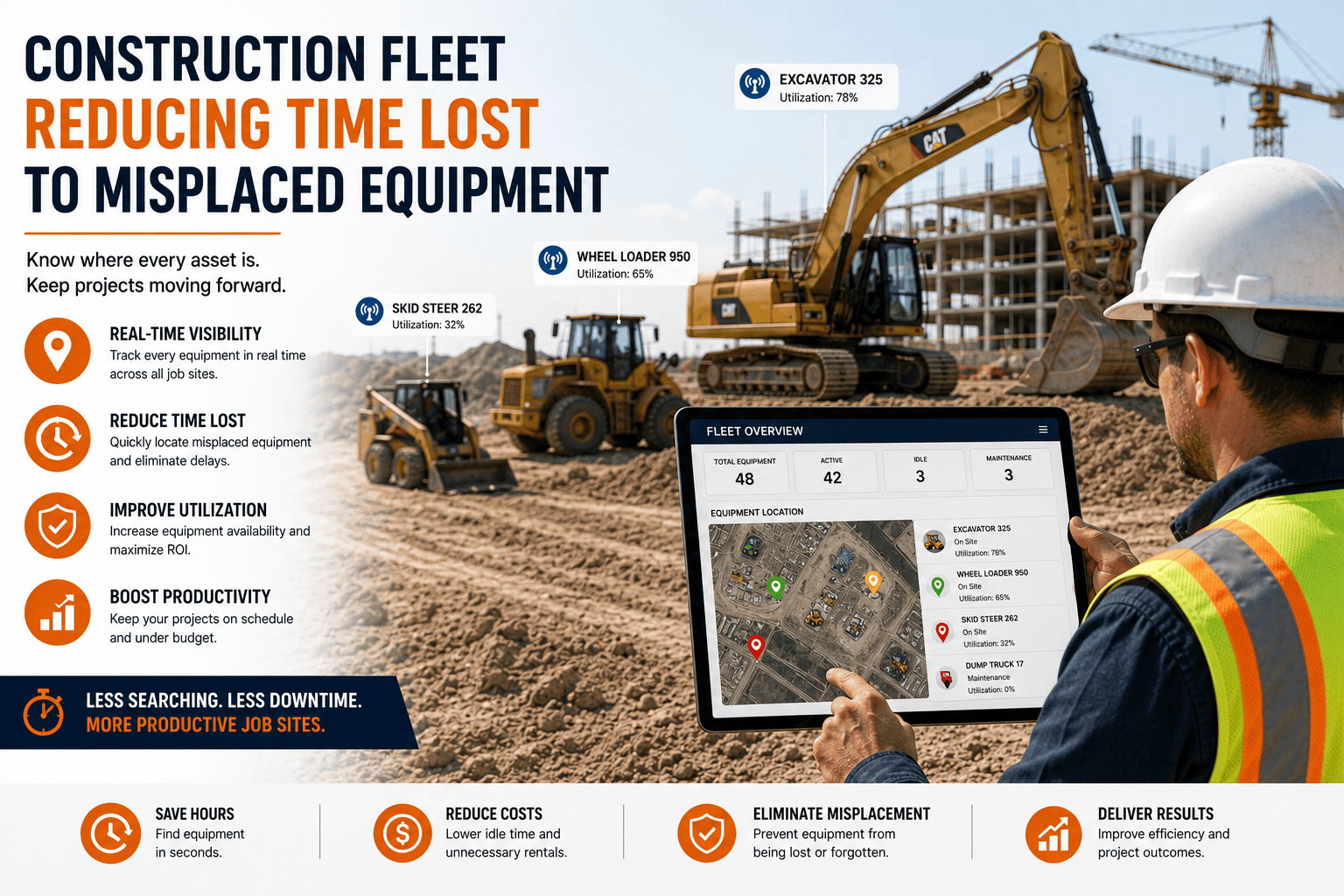
- Search the equipment name on a dashboard
- See its last known location instantly
- Dispatch the closest available unit
- Crew keeps working without the pause
Ten Percent Of Every Day, Gone
Research on jobsite productivity found that the average worker spends roughly 10 percent of every working day simply searching for tools and attachments. On an eight-hour shift, that is close to 48 minutes per worker, per day, spent not building anything.
Loss Compounds Across The Whole Inventory
Construction companies typically lose 5 to 10 percent of their portable tool inventory every year to misplacement, theft, or damage, and mid-size firms can spend upwards of 400,000 dollars annually replacing tools and consumables that were never actually gone, just untracked.
Most Losses Never Get Solved
More than 60 percent of recovered stolen or misplaced equipment had no unique identifying numbers recorded by the owner, which means even when something turns up, matching it back to the right site or job is nearly impossible without a proper digital record.
FleetRabbit gives every piece of equipment a real-time location and a full location history, so your crew stops guessing and starts working. Sign up free and see where everything on your fleet actually is right now.
Why "Last Known Location" Matters More Than People Think
Not every piece of equipment needs a live GPS pin updating every second. What actually solves most misplaced-equipment problems is a reliable answer to one question: where was this last seen, and when? That single piece of information turns a 30-minute search into a direct trip to the right trailer.
| Tracking Approach | Typical Search Time | Best Fit For |
|---|---|---|
| Memory And Phone Calls | 20 to 40 minutes, sometimes never resolved | Sites still relying on verbal check-ins |
| Paper Sign-Out Sheets | 10 to 20 minutes, if the sheet is current | Small crews with low equipment turnover |
| Bluetooth Proximity Tags | Under 5 minutes within range | Hand tools and smaller items moving within a site |
| Real-Time GPS Dashboard | Under 1 minute from any location | Heavy equipment, attachments, and multi-site fleets |
What Full Equipment Visibility Actually Looks Like
Once every asset reports its location automatically, the benefit goes well beyond finding a missing drill. It changes how equipment gets assigned across an entire operation.
Faster Transfers Between Sites
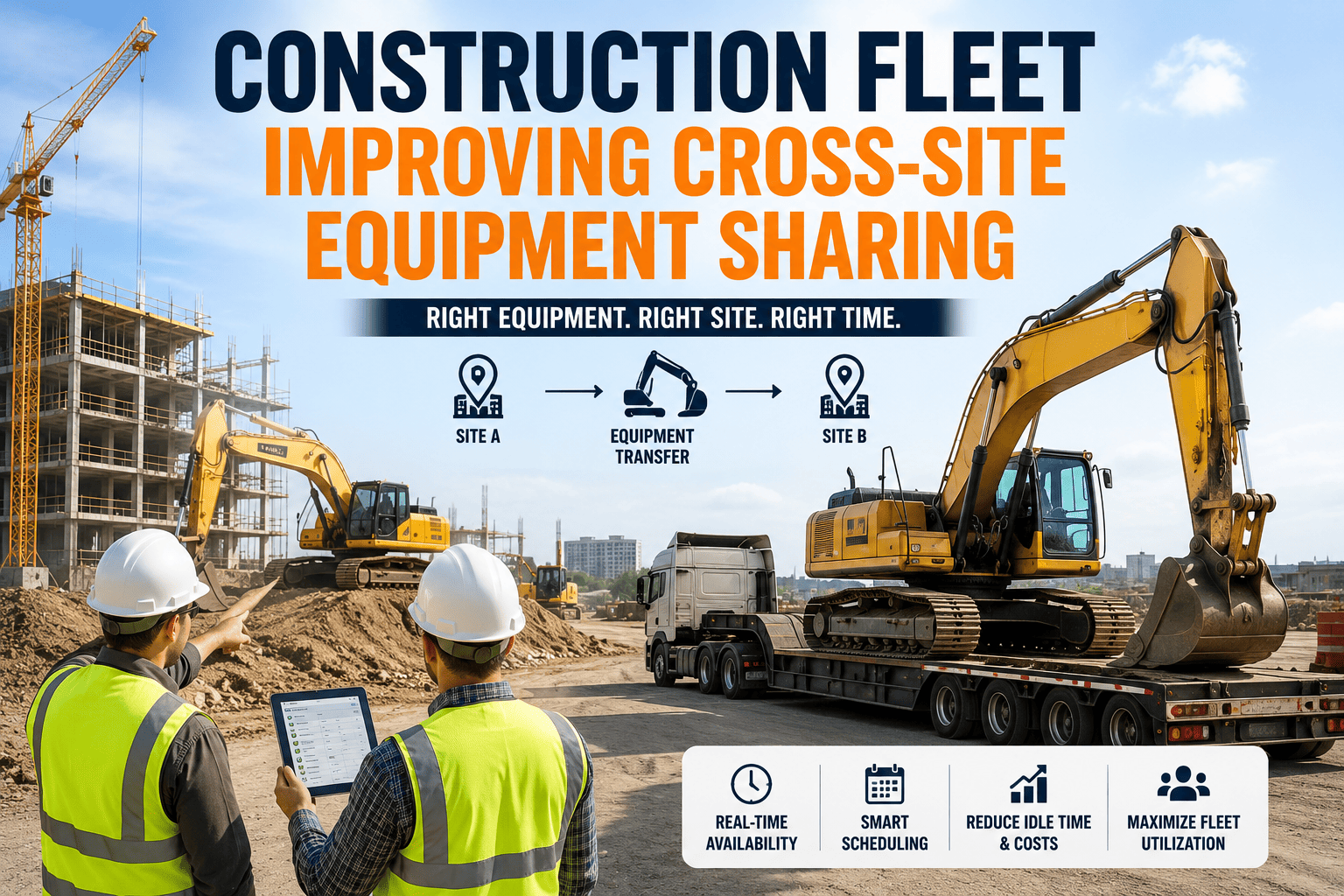
Instead of calling around to find out which site has a spare generator, a site manager checks the dashboard and dispatches the closest available unit immediately, cutting out the guesswork entirely.
Less Duplicate Buying And Renting
When managers can see everything the company already owns across every site, they stop renting equipment that was sitting idle two miles away the whole time.
A Real Case For Recovery
Fewer than 25 percent of stolen heavy equipment is ever recovered industry-wide, but assets with real-time location data give law enforcement an actual starting point instead of a general report, dramatically improving the odds when theft does happen.
A Quick Gut Check
Think about the last time a piece of equipment went missing on your site. If the honest answer to "how long did it take to find" is more than a few minutes, that gap is exactly what location tracking closes.
Building A Site That Doesn't Lose Equipment
Reducing misplaced equipment is less about buying more gear and more about knowing exactly what you already have, and where it is right now.
Give Every Asset A Digital Identity
A serial number in a filing cabinet does nothing during an active search. Every tool, attachment, and machine needs a digital record tied to a location that updates automatically.
Make Location History Searchable
Live location matters, but so does history. Being able to see everywhere an item has been over the last week answers "where did we leave it" even when the current signal is weak or the battery tracker hasn't reported recently.
Put The Dashboard In Everyone's Hands
A tracking system only saves time if foremen and site managers can actually check it from the field, not just from an office computer at the end of the day.
FleetRabbit tracks every asset's real-time and last-known location, so your teams stop wasting hours a week hunting for tools and attachments. Book a demo and see your fleet on one map, live.
Every misplaced tool and machine costs real time and real money, quietly, every single day. FleetRabbit gives you real-time and last-known location for every asset across every site, so the next search takes seconds instead of hours. Sign up free or book a demo to see your full equipment fleet on one map.