Predictive maintenance only works if someone trusts the alert enough to act on it. Plenty of construction fleets have already installed the sensors and turned on the software, only to watch technicians start ignoring notifications a few weeks in because too many of them turned out to be nothing. That's alert fatigue, and it quietly kills more predictive maintenance programs than bad sensors ever do. Setting up alerts the right way, with the right tiers, thresholds, and follow-through, is what separates a system technicians trust from one they mute.
A healthy predictive maintenance alert setup keeps response rates above 85 percent, false positive rates below 20 percent, and gets Priority 1 alerts acknowledged in under 30 minutes. Fleets that tier alerts by urgency instead of sending every signal as urgent see technicians act on notifications instead of muting them, and well-tuned systems can flag developing failures 200 to 400 hours before a breakdown actually happens.
Why Well-Meaning Alert Systems End Up Ignored
Most alert fatigue doesn't come from bad technology, it comes from treating every signal as equally urgent. When a system pages a technician for a minor temperature fluctuation with the same urgency as a hydraulic pressure drop that could cause a failure within days, technicians learn fast that most alerts don't need immediate action. Once that pattern sets in, the handful of alerts that genuinely matter get buried along with the noise, and equipment starts failing without warning again even though the sensors were technically working the whole time.
The Real Cost of a Muted Notification
Unplanned equipment failure remains one of the largest controllable costs on a construction site, with breakdown repairs eating into annual operating hours and pushing project milestones off schedule. An alert tuning problem is rarely visible until the exact moment it matters most, when a real failure signal arrives looking identical to the dozens of false alarms a crew has already learned to dismiss. Getting the setup right the first time is far cheaper than rebuilding trust in the system after that happens. You can see how a tuned alert workflow looks on your own fleet by choosing to sign up free and connecting your existing equipment data.
Building an Alert System That Earns Trust
A trustworthy alert setup is less about the sensors themselves and more about how signals get sorted, labeled, and routed once they're detected. The construction fleets getting this right follow a similar structure, regardless of which equipment brands or telematics hardware they already have installed.
Tier Alerts by Urgency, Not by Volume
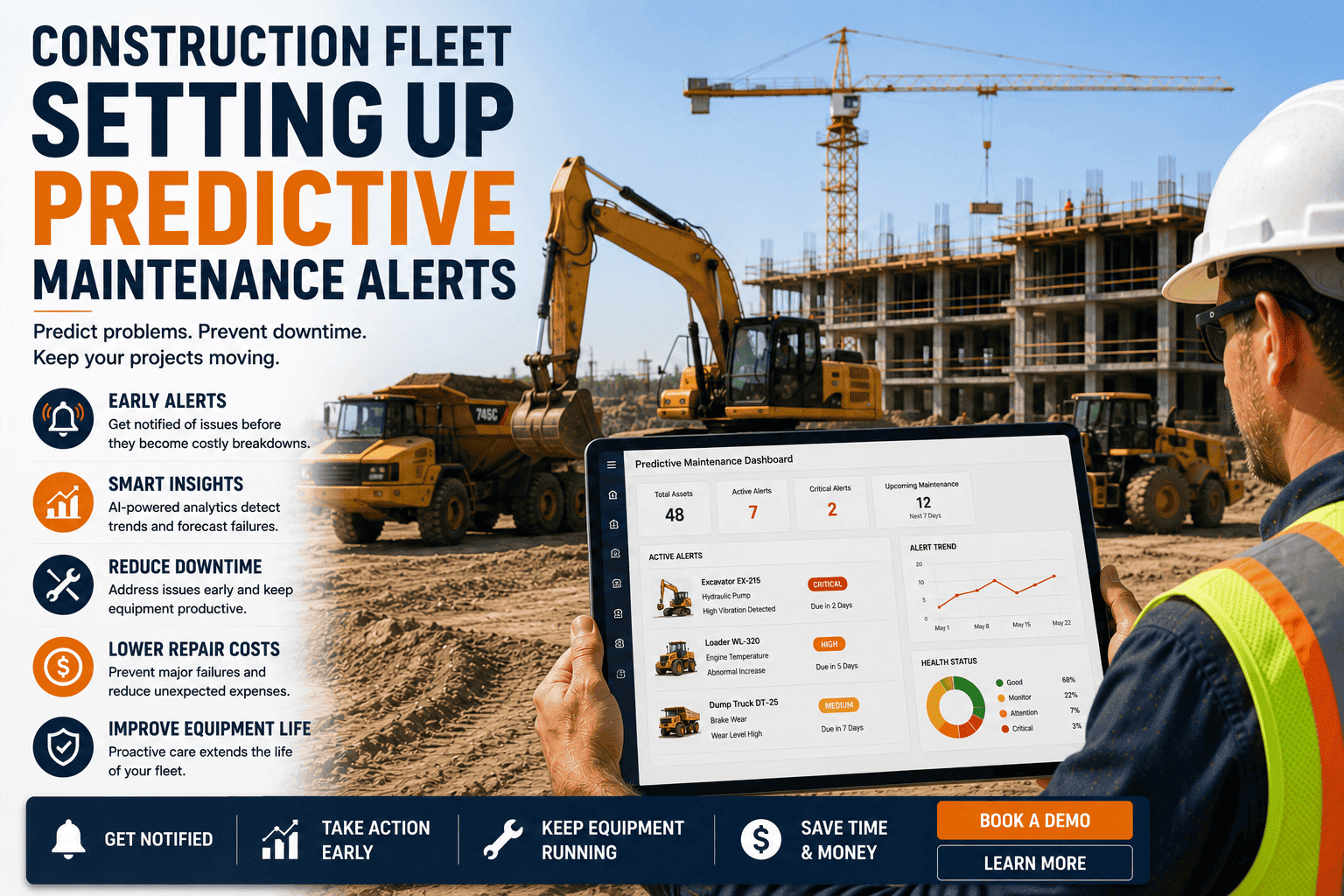
Every incoming signal should land in one of a small number of urgency tiers instead of a single undifferentiated feed. Priority alerts, reserved for high-confidence signals with a short window before failure, should interrupt a technician's day. Advisory alerts, which flag a trend worth watching without requiring immediate inspection, can wait for the next scheduled review. This single distinction is usually the difference between a system people check and one people mute.
Route Alerts to the Right Person, Not Everyone
A fleet manager on a job site and a technician in the shop need different information from the same signal. Sending both groups identical, unfiltered data guarantees at least one of them starts ignoring it. Alerts should carry enough context, which machine, which site, which specific parameter drifted, that the recipient can decide whether to act without opening a separate dashboard first.
Treat False Positives as Tuning Data, Not Failures
Not every alert that doesn't confirm a failure was wasted. An inspection triggered by a borderline signal often turns up a loose fitting, minor leak, or early wear that wasn't yet detectable by the sensor itself, and it documents that the machine was checked and found serviceable. What matters is feeding those outcomes back into the system so thresholds get sharper over time instead of staying static.
FleetRabbit monitors 40-plus real-time parameters across your fleet and sorts every signal into a priority tier, so technicians only get interrupted when it actually matters. Confirmed developing issues show up at inspection roughly 87 percent of the time.
The Four-Step Setup Sequence
Rolling out predictive alerts across an entire fleet on day one is the most common way these programs fail. A phased sequence gives the system, and your team, time to build trust before expanding.
Metrics That Tell You the System Is Working
| Metric | Healthy Range | What It Reveals |
|---|---|---|
| Alert Response Rate | Above 85 percent | Share of alerts acknowledged and acted on within the expected window |
| False Positive Rate | Below 20 percent | Share of alerts that led to no maintenance action after inspection |
| Time to Acknowledge | Under 30 minutes for Priority 1 | How fast the most urgent alerts get a human response |
| Alert-to-Failure Correlation | Above 75 percent | Share of actual failures that were preceded by a Priority alert |
Why Weekly Review Matters More Than the Initial Setup
A predictive alert system tuned once and left alone drifts back toward noise as equipment ages and duty cycles change. Reviewing these four numbers weekly, and adjusting thresholds based on what the past week actually confirmed, is what keeps a system reliable a year in instead of just in the first month.
Turning an Alert Into a Completed Repair
An alert that lands in a dashboard and goes nowhere has no operational value, no matter how accurate the underlying model is. The setup should connect directly into your work order and parts process, so a confirmed signal becomes a scheduled service appointment automatically instead of a notification someone has to remember to act on. That link between detection and dispatch is usually what determines whether a predictive maintenance program actually reduces downtime or just adds another screen to check.
If you'd rather walk through how alert tiering and work order routing would look for your specific equipment mix, you can book a demo and see the setup applied to your fleet directly.
Frequently Asked Questions
Every alert your technicians mute is a real failure signal that could get missed next time. FleetRabbit tiers every signal by urgency and confidence, so the notifications that matter never get lost in the noise.