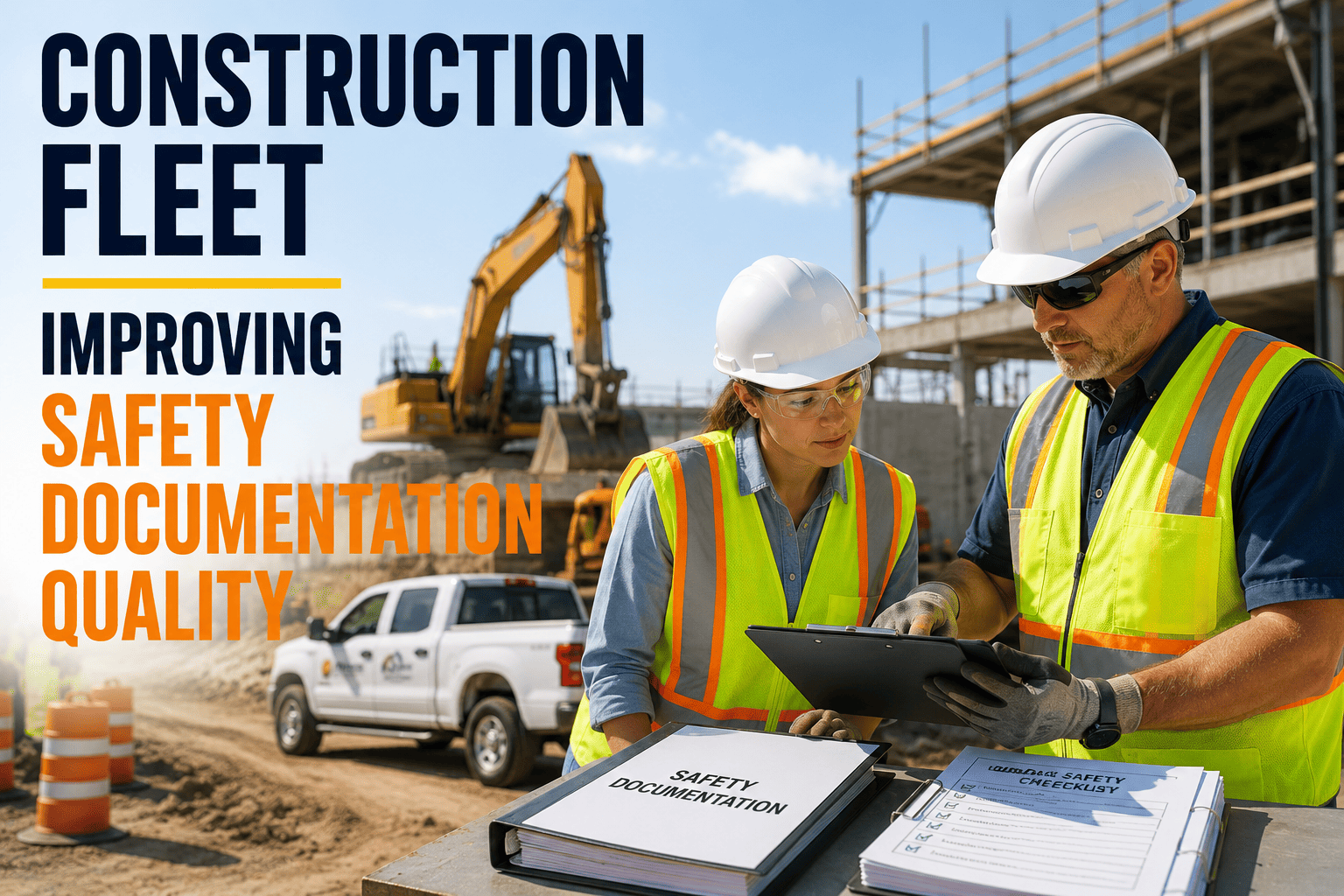
Ask any construction safety manager what keeps them up at night and pre-start inspections come up fast, not because operators don't know the checklist, but because on a busy job site, the checklist is the first thing that gets rushed. A quick walk-around instead of a full inspection, a paper form signed at the end of the shift instead of the start, a defect that gets mentioned verbally but never logged. None of it feels like a big deal in the moment. Then an OSHA auditor asks for last Tuesday's inspection record, or worse, a preventable failure happens on equipment nobody actually checked.
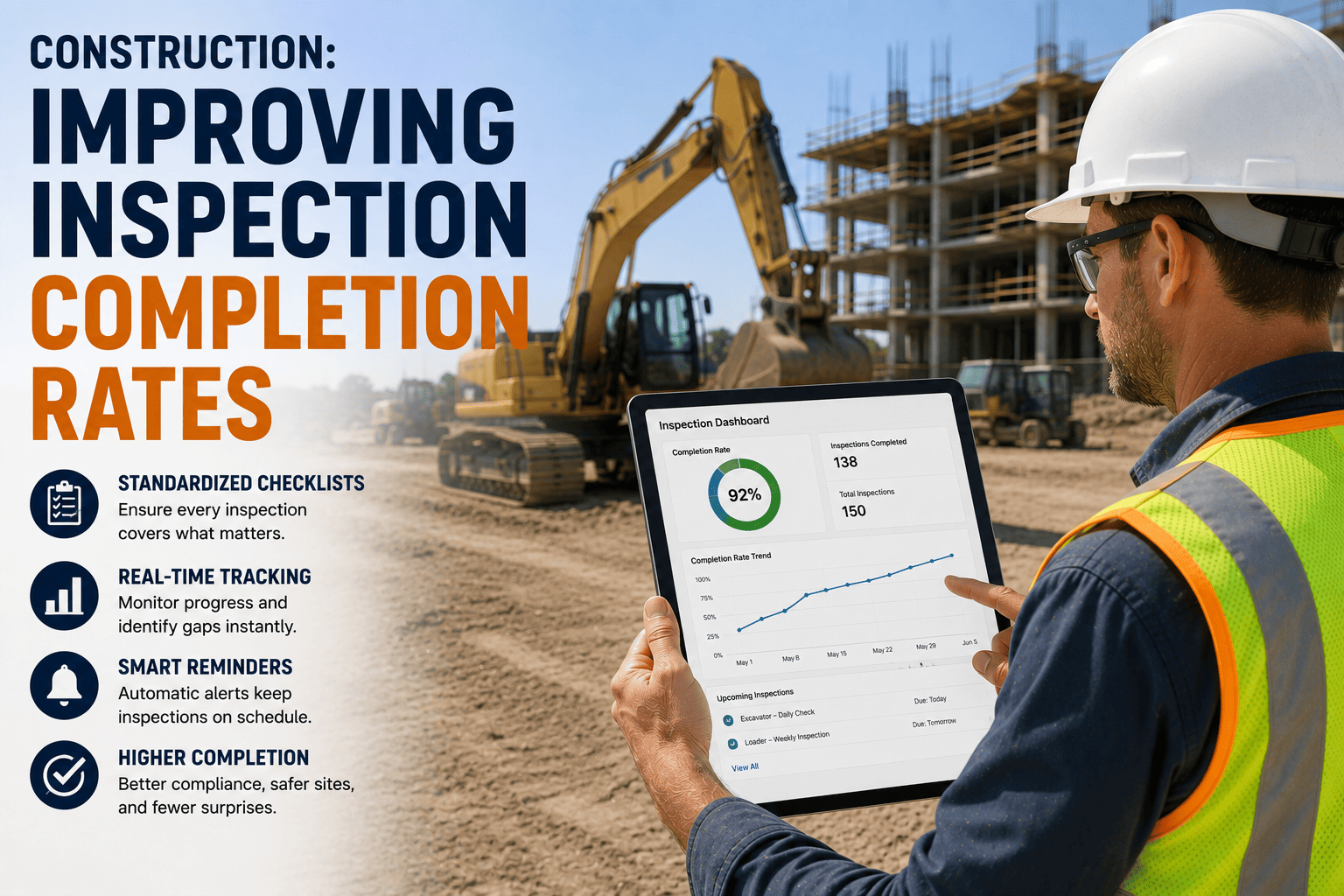
Construction equipment failures contribute to roughly 1 in 5 workplace fatalities in the industry, and about 90 percent of those failures are preventable through proper pre-start inspection. Paper-based inspection programs average around 73 percent audit pass rates, while digital inspection systems reach approximately 96 percent, mainly because a digital checklist can't be skipped, backdated, or left in a truck.
Why Inspection Completion Rates Slip on Busy Job Sites
Nobody sets out to skip a safety inspection. It happens gradually, under schedule pressure, when a crew is already behind and the machine "looked fine yesterday." Understanding exactly where the process breaks down is the first step toward fixing it.
Paper Forms Walk Away
A clipboard left in a cab, a form buried under a stack of paperwork in the site trailer, a signature added after the fact to cover a shift that never got inspected properly. Paper records are the single biggest reason inspection completion rates look better on file than they actually are in practice.
No Immediate Consequence for Skipping
When an incomplete inspection doesn't stop a machine from starting, operators learn quickly that the checklist is optional in practice, even when it's mandatory on paper. Without a system that locks equipment out until inspection is confirmed, completion becomes a matter of individual discipline instead of process.
No Visibility for Supervisors Until It's Too Late
A site supervisor managing a dozen machines across multiple crews often has no real-time way to see which inspections are done and which are overdue. By the time a gap is discovered, it's usually during an audit, an incident review, or a general contractor's site walk, all moments where the answer needed to already be yes.
FleetRabbit pushes the correct inspection checklist to every operator before their shift starts, flags overdue inspections automatically, and gives supervisors live visibility across every job site. Sign up free and see your completion rate from day one.
The Compliance Chain: From Inspection to Resolution
A high completion rate only matters if the inspection actually connects to action. A strong inspection program links four steps together, and a gap at any point turns a completed checklist into a false sense of security.
What Happens When a Link Breaks
Break the chain at step one and there's no record an inspection happened at all, the most common gap on paper-based sites. Break it at step two, and an operator notices a problem but never reports it, often because there's no simple way to log it in the moment. Break it at step three, and a real defect sits unaddressed because nobody formally assigned it to anyone. Break it at step four, and a machine goes back into service with the same fault it left with. A digital system that connects all four steps automatically is what turns "we did an inspection" into "we can prove exactly what happened and when."
| Metric | Paper-Based Process | Digital Process |
|---|---|---|
| Audit Pass Rate | Approximately 73 percent | Approximately 96 percent |
| Overdue Visibility | Discovered after the fact, often during audit | Flagged automatically before the deadline passes |
| Defect-to-Repair Trail | Manual, easy to lose between shift and shop | Automatic work order generated at the point of detection |
| Multi-Site Oversight | Limited to whatever paperwork reaches the office | Real-time completion status across every job site in one view |
Benchmarks for a Healthy Inspection Program
FleetRabbit ties pre-shift inspections directly to defect logging, work order creation, and repair verification, so nothing falls through the cracks between the checklist and the shop. Book a demo to see the full chain in action.
Frequently Asked Questions
The Bottom Line
Inspection completion isn't really about paperwork, it's about whether a construction site can prove, at any moment, that its equipment was actually checked before it moved. That proof protects workers from preventable failures and protects the business from citations that follow every broken link in the chain from inspection to resolution. Closing that gap is one of the simplest, highest-impact changes a construction operation can make to its safety program.
FleetRabbit connects pre-shift inspections, defect logging, work orders, and repair verification into one digital chain, giving every job site a completion rate you can actually see and prove. Get started free, no credit card required.