Every construction superintendent knows the feeling. The crew is on site, the schedule says the excavator should be running, and instead everyone is standing around waiting for a machine that isn't ready. It might be stuck in a queue for repairs, sitting at another job site, or simply not inspected in time to confirm it's safe to run. Whatever the reason, the result is the same: idle labor, a slipping schedule, and a project manager explaining the delay on the next call. Equipment readiness sounds like a small operational detail, but on a job site it is often the single biggest variable between a project that finishes on time and one that bleeds margin for months.
Unplanned equipment unavailability costs construction projects between 2,000 and 10,000 dollars per day in idle labor, missed milestones, and rental replacements. Up to 40 percent of a typical equipment fleet sits idle at any given time simply because managers lack visibility into what is available and where. Aligning preventive maintenance with the project schedule, instead of running it separately, closes that gap. Fleets that plan readiness proactively report significantly fewer schedule-driven equipment delays within the first few months.
Why Equipment Isn't Ready When Crews Need It
Equipment readiness problems rarely come from a single cause. They usually come from three gaps working together: maintenance schedules that are built around the shop's calendar instead of the project's calendar, no shared visibility between site supervisors and the equipment yard, and reactive repair work that only starts once a machine has already failed. Any one of these gaps is manageable. Together, they turn a normal Tuesday into a lost work day.
Maintenance on the Wrong Clock
Service intervals set purely by hours or mileage often land in the middle of a critical project phase. A machine due for service on a Wednesday doesn't know that Wednesday is also the day the concrete pour is scheduled.
No Shared Visibility
Site supervisors and the equipment yard frequently work off different information. A machine marked "available" on paper might already be reserved, mid-repair, or parked at another site entirely.
Reactive Instead of Predictive
Without condition monitoring, the first sign of a developing problem is often the breakdown itself, which almost always happens at the least convenient point in the project timeline.
The Real Cost of an Equipment Readiness Gap
When a piece of equipment isn't ready, the cost is never just the repair bill. It cascades outward through the crew, the schedule, and the contract, and most of that cost never gets tracked back to its actual source.
What One Unready Machine Actually Costs
Idle Crew Wages
A crew standing around a missing excavator or loader still gets paid. On most sites, idle labor costs run 1,800 to 3,200 dollars per day depending on crew size.
Emergency Repair Premiums
Fixing a machine after it fails on site typically costs 2.5 to 4 times more than the same repair completed during planned downtime, due to overtime labor and rushed parts sourcing.
Rental Replacements
Bringing in a rented machine to cover the gap adds 800 to 2,500 dollars a day, often for several days until the original unit is back in service.
Contract Penalties
Many construction contracts include liquidated damages clauses that trigger the moment a milestone is missed, ranging from 500 to 5,000 dollars per calendar day.
Add these together and a single unplanned equipment gap can cost a project 3,200 to 8,700 dollars per machine per day. Book a free consultation at https://calendly.com/fleet-rabbit/30min and a FleetRabbit specialist will walk through what this looks like for your own fleet.
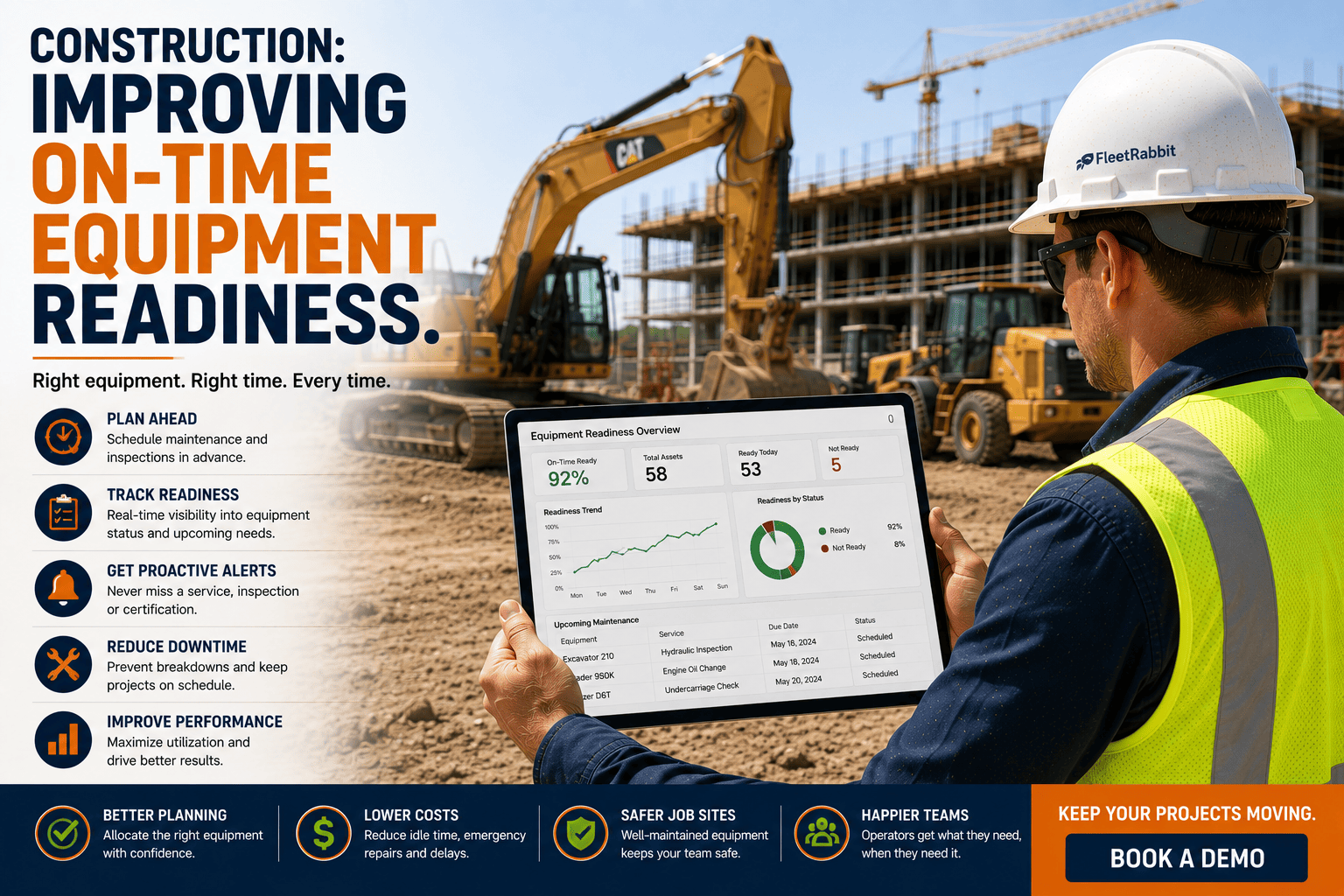
FleetRabbit connects your maintenance schedule directly to your project timeline, so service windows land during planned downtime instead of the middle of a critical phase. See exactly which machines are ready, which are due for service, and which need attention before the crew ever shows up.
Building an On-Time Equipment Readiness System
Closing the readiness gap isn't about buying more equipment. It's about knowing, days in advance, exactly which machines will be ready when the schedule calls for them. That comes down to four connected steps.
Map Maintenance to the Project Schedule
Instead of servicing equipment on a fixed hourly interval, schedule maintenance windows around the project's actual milestones, placing service days on planned slack rather than critical-path days.
Give Site and Yard the Same Data
Supervisors and dispatchers need to see the same real-time status for every machine, so nobody plans around equipment that is actually unavailable.
Monitor Condition, Not Just the Calendar
Real-time monitoring of engine hours, fluid levels, and operating patterns flags developing issues 5 to 15 days before they become breakdowns, giving enough lead time to fix problems on your own schedule.
Review Readiness Weekly, Not After the Fact
A short weekly readiness review, checking upcoming milestones against equipment status, catches conflicts while there is still time to reschedule a service window or line up a backup unit.
What Good Readiness Looks Like on a Scorecard
Fleets that manage readiness well track a few consistent numbers. Equipment availability should sit at 95 percent or higher against the project calendar. Planned maintenance should account for 80 to 90 percent of all service work, with unplanned repairs making up the rest. And the gap between when a problem is detected and when it's actually fixed should be measured in days, not hours spent scrambling.
How FleetRabbit Keeps Equipment Ready for Every Phase
FleetRabbit brings maintenance planning, real-time condition monitoring, and project scheduling into a single view. Instead of separate spreadsheets for the shop and separate schedules for the site, everyone works from one readiness calendar. Alerts flag developing issues while there's still time to schedule a fix, digital work orders keep technicians prepared before a machine even arrives, and dashboards show project managers exactly which machines are ready for tomorrow's phase and which need attention today. Fleets using this kind of connected approach report noticeably fewer schedule-driven equipment delays within the first few months of use.
Frequently Asked Questions
FleetRabbit connects your maintenance schedule to your project calendar so crews never wait on equipment again. Sign up free at https://ai.fleetrabbit.com or book a short demo at https://calendly.com/fleet-rabbit/30min to see it applied to your own fleet.