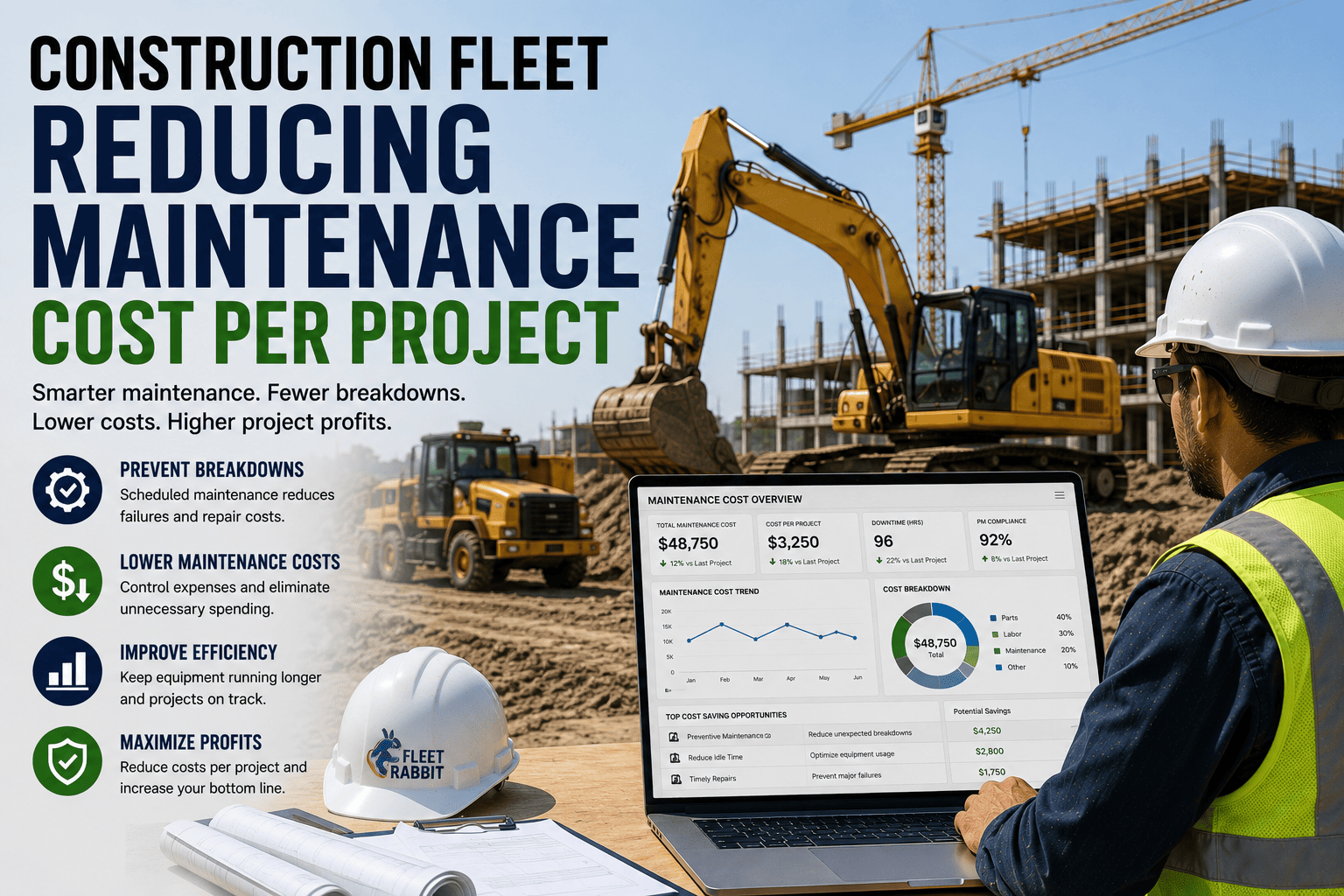
Construction companies managing 20–200+ vehicles and heavy equipment pieces lose $180,000–$750,000 annually to fleet inefficiencies they cannot measure — excavators idling at wrong job sites, dump trucks running empty return trips, maintenance emergencies that shut down $400/hour machines for days, fuel theft siphoning $2,000–$5,000 monthly, and operators misusing equipment with zero accountability because no system tracks it. In 2026, the gap between digitized construction operations and spreadsheet-managed fleets isn't closing — it's accelerating at 18–22% per year. Large contractors using construction management systems operate at 25–35% lower fleet costs than competitors still running on paper logs, phone-call dispatching, and reactive maintenance. Fleet Rabbit's AI-powered construction management platform unifies GPS tracking, equipment monitoring, workforce management, predictive maintenance, fuel analytics, compliance automation, and real-time reporting into a single mobile-first system — purpose-built for fleet-heavy construction operations where every hour of equipment downtime costs $150–$500 in lost productivity. Book a demo to see construction management built for fleet-heavy operations.
Quick Answer
A Construction Management System (CMS) for fleet-heavy operations is an integrated software platform that tracks, monitors, and optimizes every vehicle, machine, operator, and dollar across your construction fleet — replacing spreadsheets, paper logs, and guesswork with real-time GPS data, AI-powered predictive maintenance, fuel analytics, and automated compliance management. Fleet Rabbit's AI-powered CMS gives construction companies with 20–200+ assets the same operational intelligence that billion-dollar contractors rely on — deployed in 10 days, accessible from any mobile device, with average ROI of $4–$6 returned per $1 invested within the first 90 days.
Introduction — Why Fleet Mismanagement Is Costing You More Than You Think
The $750K Problem Hiding in Your Fleet
Fleet-heavy construction operations — companies running excavators, loaders, dump trucks, concrete mixers, cranes, and support vehicles across multiple job sites — face a management complexity that grows exponentially with fleet size. A 50-vehicle fleet generates 2,400+ data points daily: locations, fuel consumption, engine hours, operator behavior, maintenance status, and utilization rates. Without a centralized system, this data exists nowhere — lost in driver phone calls, paper fuel receipts, and maintenance shop memory. The result: $180,000–$750,000 in annual waste that no one can see, measure, or fix.
Construction delays cost the U.S. industry $177 billion annually, and 34% of those delays trace directly to equipment unavailability, maintenance failures, and fleet coordination breakdowns. Every excavator sitting idle at the wrong site, every dump truck making an unauthorized detour, every preventable breakdown that shuts down a $400/hour crane — these aren't minor operational hiccups. They're systematic failures that compound across projects, quarters, and years.
The 2026 digital shift in construction isn't optional. Cloud-based fleet management platforms that cost $100K+ to deploy five years ago now cost $15–$45/vehicle/month. AI capabilities that required data science teams are built into platforms designed for construction managers, not IT professionals. Fleet Rabbit was built for this moment — giving fleet-heavy construction companies enterprise-grade management intelligence without enterprise-grade complexity.
$177B
Annual U.S. Construction Delays
34%
Delays from Equipment Issues
25–35%
Cost Gap: Digital vs Manual
2,400+
Data Points/Day per 50 Vehicles
$400/hr
Avg Crane Downtime Cost
What Is a Construction Management System (CMS)?
01
Fleet Tracking
Real-time GPS location, speed, idle time, route history, and geofencing for every vehicle and machine — from pickup trucks to 80-ton cranes. Know where every asset is and how it's being used, 24/7/365.
02
Equipment Management
Engine hours, utilization rates, maintenance schedules, operating costs, and lifecycle tracking for excavators, loaders, dozers, and specialty equipment. Maximize productive hours per machine.
03
Workforce Coordination
Operator assignments, certification tracking, driving behavior scoring, HOS compliance, productivity metrics, and safety performance — connecting the right operator to the right machine at the right site.
04
Financial Intelligence
Fuel cost allocation, maintenance expense tracking, rental vs ownership analysis, project costing, and total cost of ownership per asset — turning operational data into financial clarity.
Why Fleet-Heavy Operations Need a CMS — The 5 Critical Challenges
Equipment Coordination Across Multiple Sites
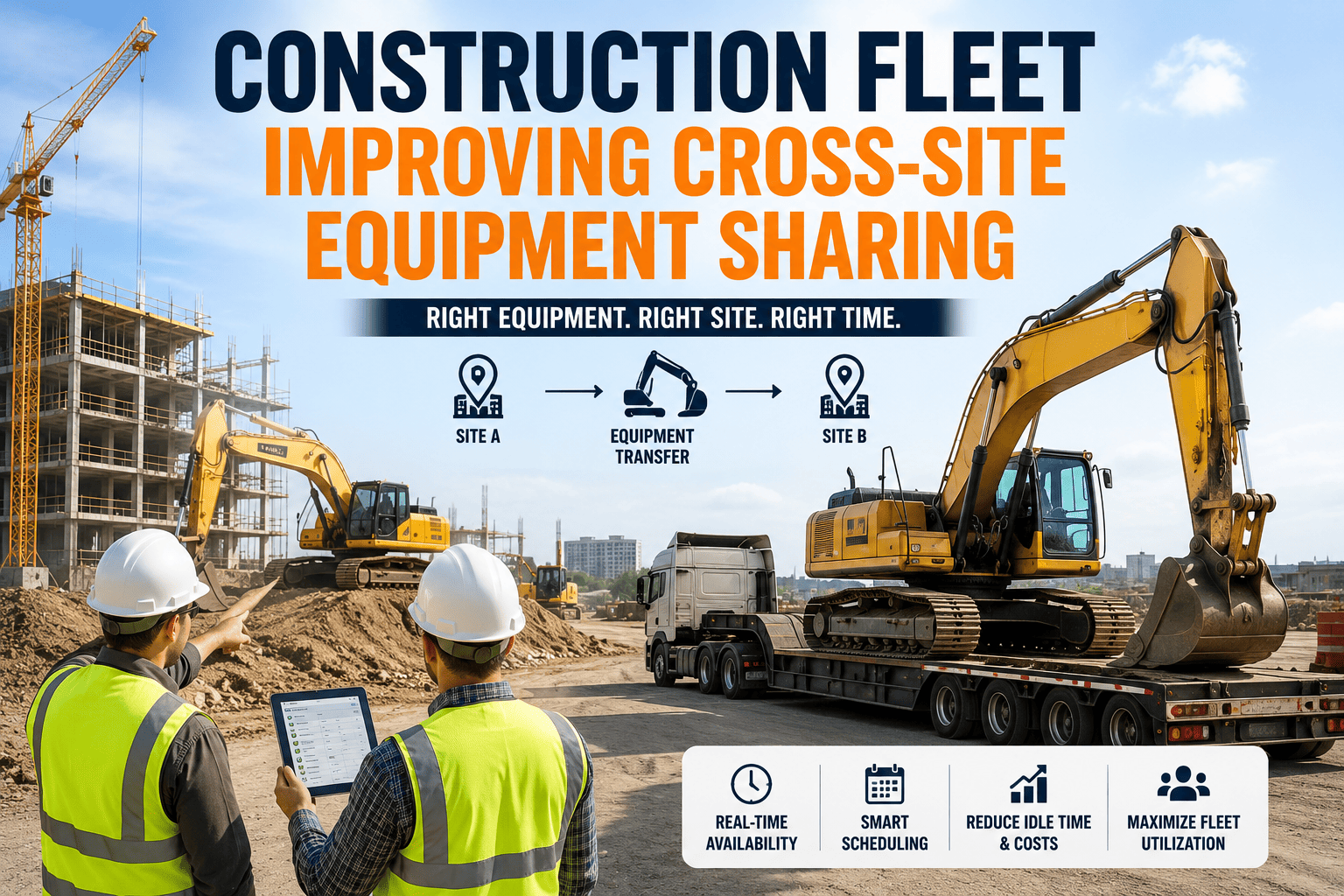
A 40-vehicle fleet spread across 4–8 active job sites creates a logistics puzzle that spreadsheets cannot solve. Which excavator goes to which site tomorrow? Is the loader at Site C actually needed, or has it been idle for 3 days? Did the concrete mixer finish at Site A in time to reach Site B? Without real-time GPS tracking and utilization data, dispatchers make decisions based on yesterday's phone calls — resulting in equipment at wrong sites, duplicate rentals for machines you already own, and idle assets costing $200–$600/day in depreciation while producing nothing. Fleet Rabbit's multi-site dashboard shows every asset's location, status, and utilization in real time — enabling intelligent dispatch that reduces idle equipment by 35% and eliminates unnecessary rentals.
Uncontrolled Maintenance Costs and Downtime
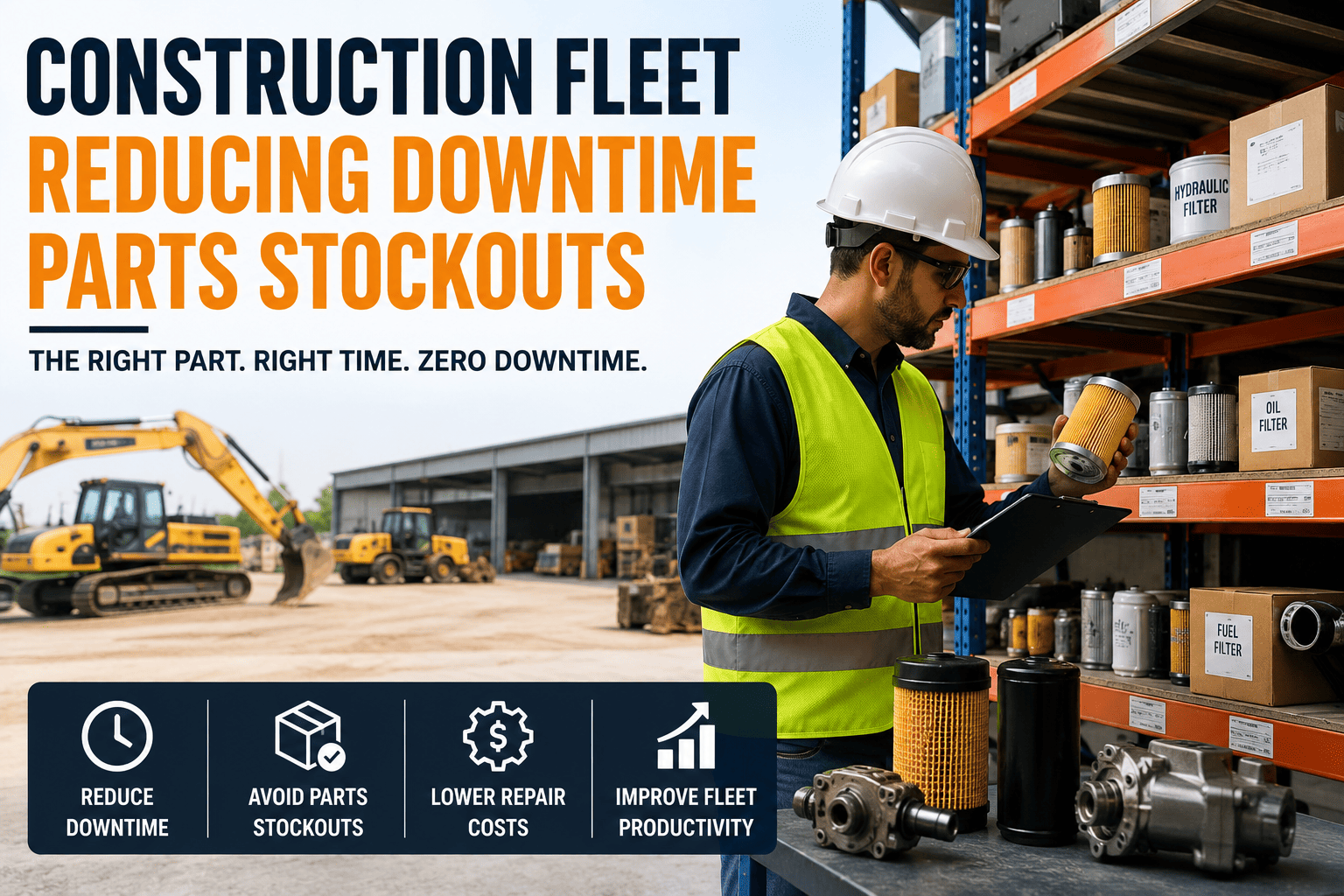
Reactive maintenance costs 3–5x more than preventive maintenance. A hydraulic pump failure on an excavator costs $4,500–$8,000 in emergency repair, towing, and 5–7 days of downtime — versus $800–$1,200 for a scheduled replacement caught by predictive monitoring. Construction equipment operates in extreme conditions: dust, vibration, temperature extremes, and heavy loads that accelerate wear far beyond manufacturer schedules. Calendar-based maintenance misses the machines that need service soonest and services machines that don't need it yet. Fleet Rabbit's AI monitors engine diagnostics, oil pressure trends, hydraulic system health, and component wear patterns — predicting failures 5–15 days before breakdown and scheduling service during planned downtime.
Fuel Waste — Your Second-Largest Fleet Expense
Construction fleets waste 15–28% of fuel spend on excessive idling, unauthorized personal use, inefficient routing, and fuel theft. A fleet spending $25,000/month on diesel is losing $3,750–$7,000/month to waste nobody can see — that's $45,000–$84,000/year burned without producing a single productive work hour. Without per-vehicle fuel consumption tracking, you can't identify which trucks idle 3 hours/day, which operators take 40-minute personal detours, or which job site has fuel disappearing after hours. Fleet Rabbit's fuel analytics track consumption per vehicle, per driver, per route — identifying theft via consumption anomalies and excessive idling costing $1.50–$3.00/hour per vehicle.
Compliance Gaps and Safety Liability
OSHA inspections, DOT compliance, operator certifications, equipment inspection records, HOS logs, and insurance documentation — construction compliance requires tracking dozens of expiration dates, filing requirements, and regulatory standards across every vehicle and operator. A single missed inspection certificate or expired operator license can trigger $5,000–$70,000 in fines and shut down job site operations until resolved. Fleet Rabbit automates compliance tracking with 30/60/90-day expiration alerts, digital inspection records, and audit-ready documentation stored for every asset and operator.
Zero Data Visibility = Zero Improvement
Without a CMS, construction fleet managers operate on instinct, experience, and incomplete information. You can't benchmark equipment utilization across sites, compare operator productivity, track maintenance cost trends, or calculate true cost-per-hour for any machine. Decisions about equipment replacement, fleet expansion, project bidding, and operator allocation are made from gut feeling — not data. Fleet Rabbit gives construction managers the same data-driven decision capability that Fortune 500 contractors rely on — from a mobile app that takes 20 minutes to learn.
Built for Fleet-Heavy Construction
Enterprise Fleet Intelligence — Deployed in 10 Days, Not 10 Months
Fleet Rabbit gives construction companies with 20–200+ assets the GPS tracking, predictive maintenance, fuel analytics, and AI insights that large contractors use. No IT team needed. Priced per vehicle.
Key Features of a Construction Management System
Core Feature
Fleet & Equipment Tracking — GPS + Usage Monitoring
Real-time GPS tracking with 30-second refresh for every vehicle and machine. Historical route playback. Geofencing with instant alerts for boundary violations, after-hours movement, and unauthorized site departures. Speed monitoring, idle time detection, and engine-hours tracking. Fleet Rabbit provides sub-30-second GPS updates across all vehicle classes — from pickup trucks to 80-ton cranes — with 99.7% uptime. Multi-site map view shows your entire fleet on a single dashboard. Utilization rate tracking identifies equipment sitting idle at sites where it's no longer needed — enabling redeployment that saves $200–$600/day per idle machine.
30 sec
GPS Refresh
99.7% Uptime
67%
Fewer Breakdowns
5–15 Day Warning
Core Feature
Maintenance Management — Preventive + Breakdown Tracking
Automated maintenance scheduling based on actual engine hours, mileage, and AI-predicted component life — not generic calendar intervals. Digital service records per vehicle with full maintenance history. Parts inventory alerts. Vendor management. Cost-per-repair tracking. Fleet Rabbit's predictive maintenance AI monitors engine diagnostics, oil pressure, hydraulic system health, brake wear, and component degradation to predict failures 5–15 days before breakdown. Emergency repairs drop by 67%, average equipment lifespan extends 18–24 months, and maintenance costs decrease 22–35% within the first 90 days.
Core Feature
Fuel Management — Consumption + Theft Detection
Per-vehicle fuel consumption tracking correlated with engine hours, distance, load, and operator behavior. Idle fuel waste calculation showing cost per hour per vehicle. Route efficiency scoring. Fuel theft detection via sudden consumption drops or after-hours fuel level changes — triggering instant alerts to fleet managers. Monthly fuel reports by vehicle, driver, project, and site enable data-driven fuel budgeting. Fleet Rabbit's fuel analytics identify $3,750–$7,000/month in recoverable fuel waste for a typical 50-vehicle fleet — paying for the entire platform within 30 days through fuel savings alone.
15–28%
Fuel Savings
Theft Detection
Real-Time
KPI Dashboards
Custom Reports
Core Feature
Analytics & Reporting — KPIs, Dashboards, Decision Intelligence
Real-time fleet dashboards showing utilization rates, fuel costs, maintenance expenses, operator performance, and project profitability — with drill-down capability from fleet-wide overview to individual asset detail. Automated weekly and monthly reports delivered to stakeholders. Custom KPI tracking for metrics that matter to your operation: cost-per-hour, utilization percentage, mean time between failures, fuel efficiency index, and safety incident rate. Fleet Rabbit's AI highlights the highest-impact optimization opportunities each week — actionable recommendations that drive continuous improvement without requiring data science expertise.
Essential
Mobile Accessibility — Full Platform, Any Device
Construction managers don't sit at desks. Your CMS must deliver full functionality from Android and iOS devices — not a stripped-down mobile view. Fleet Rabbit's mobile app provides complete fleet visibility, alert management, report generation, work order creation, and operator communication from any smartphone or tablet. Push notifications for critical events: geofence violations, maintenance alerts, safety incidents, and compliance expirations. Operators complete digital pre-trip inspections, log hours, and report issues directly from the field — eliminating paper forms and end-of-day data entry delays.
100%
Mobile Features
iOS + Android
The Role of AI in Construction Management Systems
AI Intelligence
How Fleet Rabbit's AI Transforms Raw Data Into Actionable Decisions
Most fleet platforms show you dashboards full of numbers. Fleet Rabbit's AI tells you what those numbers mean and what to do about them. Every week, the system analyzes fleet utilization patterns, maintenance trends, fuel consumption anomalies, operator behavior data, and project schedules — generating specific, actionable recommendations that drive measurable cost reduction. AI capabilities include predictive maintenance forecasting, smart equipment scheduling, real-time cost optimization, anomaly detection across all fleet operations, and automated reporting that replaces hours of manual data compilation.
Predictive
Predictive Maintenance
AI analyzes engine diagnostics, oil pressure trends, vibration patterns, and component wear data to predict equipment failures 5–15 days before breakdown. Maintenance schedules automatically adjust based on actual machine condition — not generic calendar intervals. Result: 67% fewer emergency repairs, 18–24 month equipment life extension.
Scheduling
Smart Scheduling
AI optimizes equipment assignments across job sites based on machine capability, proximity, availability, operator certification, and project priority. Eliminates the dispatcher guesswork that puts wrong equipment at wrong sites. Result: 23% improvement in fleet utilization, 40% reduction in empty transport trips.
Cost
Cost Optimization
AI calculates true cost-per-hour for every asset — fuel, maintenance, depreciation, insurance, and operator cost — enabling data-driven decisions about equipment allocation, replacement timing, and rent-vs-own analysis. Identifies highest-cost assets and recommends specific actions to reduce operating expenses.
Detection
Anomaly Detection
AI identifies unusual patterns across fleet operations: sudden fuel consumption spikes (potential theft), after-hours equipment use (unauthorized), operator behavior changes (safety risk), and maintenance cost outliers (recurring component failures). Alerts fleet managers to investigate before anomalies become costly problems.
Reporting
Automated Reporting
AI generates weekly fleet performance summaries, monthly cost analysis reports, and quarterly trend analyses — replacing 8–12 hours of manual data compilation per reporting cycle. Reports highlight key changes, emerging risks, and optimization opportunities with plain-language explanations that executives and site managers understand immediately.
Safety
Safety Intelligence
AI monitors operator behavior patterns — harsh braking, rapid acceleration, speeding near job sites, seatbelt compliance, and fatigue indicators from HOS data. Safety scores rank operators from highest to lowest risk, enabling targeted training interventions. Construction fleets using Fleet Rabbit's safety intelligence report 34% fewer incidents and 28% lower insurance premiums within 12 months of deployment.
Benefits of Using a CMS in Fleet Operations
45%
Reduced Downtime
Predictive maintenance and real-time monitoring keep more machines running more hours. Average improvement: 3.8 fewer downtime days per vehicle per year — across a 50-vehicle fleet, that's 190 productive days recovered annually, worth $76,000–$190,000 in recovered productivity.
28%
Increased Efficiency
GPS tracking, smart scheduling, and utilization analytics eliminate equipment at wrong sites, duplicate rentals, and idle assets. Fleet utilization improves from the industry average of 55% to 75%+ within 90 days. Idle equipment redeployed, saving $200–$600/day per machine.
$4–$6
ROI per Dollar Spent
Fleet Rabbit costs $15–$45/vehicle/month. For a 50-vehicle fleet, that's $9,000–$27,000/year in software cost — generating $120,000–$250,000 in annual savings through fuel reduction, maintenance optimization, and improved utilization.
Real-Time
Better Decision-Making
Data-driven decisions replace gut instinct. Equipment replacement timing based on actual utilization and cost trends. Project bidding informed by historical fleet cost data. Operator assignments based on performance metrics, not seniority.
34%
Fewer Safety Incidents
Operator behavior monitoring, HOS compliance tracking, and automated safety scoring reduce high-risk driving behaviors. Fleet-wide safety dashboards identify operators requiring training before incidents occur. Lower accident rates translate to 18–28% insurance premium reductions.
100%
Compliance Coverage
OSHA inspections, DOT records, operator certifications, and equipment inspection records tracked with automated expiration alerts. Digital audit trails eliminate paper filing and manual tracking. Fleet managers spend 75% less time on compliance paperwork with zero missed deadlines.
Real-World Use Cases — CMS in Action
A regional highway contractor managing 85 vehicles across 6 active bridge and road construction sites deployed Fleet Rabbit to solve chronic equipment coordination failures. Before CMS: 4 excavators frequently idle at completed phases while new phases waited for equipment, 3 dump trucks making unauthorized personal trips daily, and maintenance emergencies averaging 2.3 per week causing $12,000+ in weekly unplanned costs. After 90 days with Fleet Rabbit: equipment idle time dropped 41%, unauthorized vehicle use eliminated via geofencing alerts, predictive maintenance reduced emergency repairs by 62%, and fuel costs decreased 22%. Annual savings: $187,000 on a fleet that cost $680,000/year to operate.
62%
Fewer Emergency Repairs
A quarry and aggregate mining operation running 120 heavy equipment units — haul trucks, wheel loaders, crushers, and excavators — operating 16-hour shifts in extreme dust and heat conditions. Mining equipment experiences 40% faster wear than standard construction applications, making predictive maintenance critical. Fleet Rabbit's AI detected hydraulic system degradation on a $1.2M haul truck 12 days before catastrophic failure, saving $85,000 in emergency repair and 9 days of production downtime. Fuel theft detection identified $4,200/month in diesel being siphoned after hours. Total first-year savings: $340,000.
$85K
Single Failure Prevented
$4,200/mo
Fuel Theft Stopped
A national commercial construction company managing 200+ vehicles and equipment across 14 simultaneous projects in 6 states. Before Fleet Rabbit, fleet operations were managed by 4 regional dispatchers using separate spreadsheets with no cross-regional visibility. Equipment transfers between regions took 3–5 days to coordinate. Fleet Rabbit's unified platform gave all dispatchers and executives real-time visibility across the entire fleet. Cross-regional equipment sharing increased 35%, rental costs dropped $420,000/year by redeploying underutilized owned equipment, and executive reporting went from weekly manual compilation to daily automated dashboards.
35%
More Equipment Sharing
$420K
Rental Cost Reduction
6 States
Unified Visibility
Challenges Without a CMS — The Cost of Manual Fleet Management
Without CMS — Manual Management
Manual tracking errors
20–35% data inaccuracy
Lack of real-time visibility
Decisions based on 1–3 day old data
Reactive maintenance only
3–5x higher repair costs
No fuel accountability
15–28% fuel waste undetected
Compliance gaps
$5K–$70K fine exposure
No operator accountability
Unauthorized use undetected
Safety incident liability
Higher insurance premiums
Total Annual Impact
$180K–$750K in waste
With Fleet Rabbit CMS
Real-time automated tracking
99.7% data accuracy
Live GPS fleet visibility
30-second refresh on all assets
AI predictive maintenance
67% fewer breakdowns
Fuel analytics + theft detection
15–28% fuel cost reduction
Automated compliance alerts
100% audit-ready documentation
Operator behavior monitoring
34% fewer safety incidents
Smart dispatch & scheduling
23% better utilization
Total Annual Savings
$120K–$340K recovered
Future Trends — AI, IoT, and Smart Construction Sites
2026
AI + IoT Integration — The Connected Fleet
Every piece of construction equipment will broadcast real-time health data via IoT sensors — engine temperature, hydraulic pressure, fuel level, tire pressure, and component wear. Combined with AI analytics, fleet managers will have predictive intelligence that anticipates equipment needs weeks in advance. Fleet Rabbit is already integrating with IoT sensor networks from CAT, Komatsu, John Deere, and Volvo — making connected fleet management available today, not in some distant future.
2027
Smart Construction Sites
Job sites where every vehicle, machine, operator, and material delivery is tracked and coordinated in real time — with AI optimizing equipment positioning, crew scheduling, and material flow. Fleet Rabbit's multi-site dashboard is the foundation for smart site management, combining fleet data with project scheduling to eliminate conflicts and idle time.
2028+
Full Fleet Automation
AI-driven dispatch, autonomous equipment coordination, predictive project planning, and self-optimizing fleet composition. Machine learning trained on millions of equipment operating hours will predict failures with 95%+ accuracy and automatically schedule maintenance, reassign equipment, and adjust project timelines. Fleet Rabbit is building these capabilities now.
Frequently Asked Questions
QHow much does a construction management system cost?
Fleet Rabbit costs $15–$45/vehicle/month depending on features selected. For a 50-vehicle fleet, that's $750–$2,250/month ($9,000–$27,000/year). Average annual savings: $120,000–$340,000. ROI: $4–$6 returned per $1 invested. No setup fees, no minimum contracts, 14-day free trial with full functionality.
Book a demo for custom pricing.
QHow long does deployment take for a fleet-heavy operation?
Fleet Rabbit deploys in 7–14 days for most construction companies. GPS device installation: 5 minutes per vehicle (plug-and-play OBD-II). Equipment without OBD ports uses magnetic GPS trackers. Operator mobile app training: 15 minutes. Fleet manager dashboard training: 45-minute session. Within 24 hours of installation, your fleet dashboard shows live GPS locations and initial data. No IT team required.
QCan Fleet Rabbit track both vehicles and heavy equipment?
Yes. Fleet Rabbit tracks any asset: trucks, pickups, vans, excavators, loaders, dozers, cranes, concrete mixers, generators, trailers, and compactors. Vehicles use OBD-II plug-in devices. Heavy equipment without OBD ports uses battery-powered magnetic GPS trackers with 6–12 month battery life. All assets appear on a single unified dashboard with real-time location, utilization, and health data.
QDoes Fleet Rabbit integrate with existing construction management software?
Fleet Rabbit integrates with major construction management platforms including Procore, PlanGrid, Buildertrend, and accounting systems like QuickBooks and Sage. API access available for custom integrations. Data flows bidirectionally — fleet data enriches project management, and project schedules inform fleet optimization.
Start a free trial to test integrations.
QWhat's the minimum fleet size for Fleet Rabbit?
No minimum. Fleet Rabbit works for operations with 10 vehicles up to 500+. Per-vehicle pricing means you only pay for what you track. Most construction companies start with their highest-value equipment and expand coverage over 3–6 months as they see ROI on initial assets. The platform scales without migration, data loss, or retraining.
Stop Managing Your Fleet on Spreadsheets — Start Managing It with AI
Fleet Rabbit gives fleet-heavy construction companies enterprise-level GPS tracking, predictive maintenance, fuel analytics, compliance automation, and AI-powered insights — deployed in days, not months. No IT team. No long contracts. No minimum fleet size.
GPS Tracking
Predictive Maintenance
Fuel Analytics
AI Insights
OSHA Compliance
Mobile App
April 17, 2026
By Michael
All Posts