A superintendent hands the keys to a skid steer to whoever's available that morning because the job needs to move. Nobody checks whether that person's certification is current, because on a busy site, certification status lives in a filing cabinet or a supervisor's memory, not in front of anyone at the moment it actually matters. Then an OSHA inspector shows up, or worse, something goes wrong, and the company discovers the operator's credential expired four months earlier. This isn't a rare story. It's what happens by default when certification tracking depends on paper and good intentions instead of a system that actually enforces the rule before equipment starts moving.
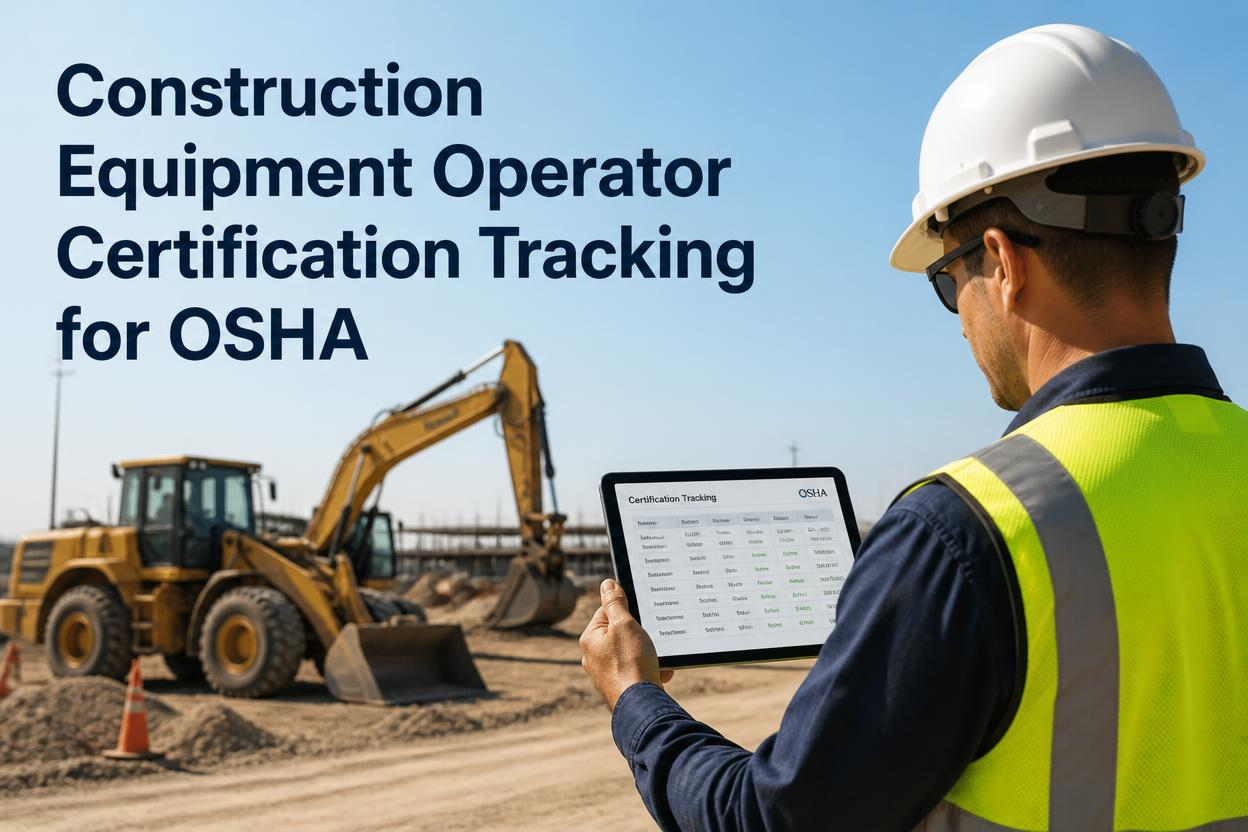
OSHA requires certified or qualified operators for cranes, forklifts, aerial lifts, and other powered equipment, and running a machine with an expired or missing credential is a citable violation. Fines for serious violations run into the tens of thousands of dollars, and repeated or willful violations can exceed 160,000 dollars per incident. Digital certification tracking closes the gap by flagging expirations early and blocking dispatch when a credential lapses. FleetRabbit ties operator certification status directly to equipment assignment.
Which Equipment Actually Requires A Certified Operator
Not every machine on a jobsite carries the same certification requirement, and knowing which ones do is the first step to staying compliant. Some credentials come from accredited third-party testing organizations, others can be issued through an audited employer program, but all of them need to be current and documented on site.
| Equipment Type | Certification Requirement | Typical Renewal Cycle |
|---|---|---|
| Cranes And Derricks | Certified by type through an accredited testing organization or audited employer program, plus an employer evaluation | Every 5 years |
| Forklifts And Powered Industrial Trucks | Employer-issued training and evaluation covering the specific truck type and worksite conditions | Every 3 years, or sooner after an incident or unsafe operation |
| Aerial And Scissor Lifts | Employer-provided training on the specific model and site hazards before independent operation | Retraining triggered by equipment change or observed unsafe use |
| Signal Persons And Riggers | Qualification through documented training or third-party certification tied to crane operations | Ongoing, verified per project or per employer policy |
Certification Versus Qualification
OSHA's language distinguishes between "certified" and "qualified" depending on the equipment, but the practical outcome is the same: someone needs documented proof that a specific operator is cleared for a specific machine, and that proof needs to be available on site, not just filed away at the office. A crane operator certified for a mobile crane isn't automatically cleared to run a tower crane, since certification under the cranes standard is issued by type.
What An Uncertified Operator Actually Costs
The financial exposure from letting a certification lapse goes well beyond an awkward conversation with an inspector. It touches fines, liability, and insurance all at once.
Certification Tracking Tied To Every Operator
FleetRabbit tracks every operator's certification status and flags expirations before they become violations. Sign up free and see your team's certification status in one dashboard.
Why Certification Tracking Breaks Down On Paper
Most companies aren't ignoring certification requirements on purpose. The system they're using just isn't built to catch a lapse before it becomes a problem.
Expiration Dates Live In A Spreadsheet
No Link Between Certification And Dispatch
Multiple Sites, No Shared Record
Building A Certification System That Actually Enforces Itself
The goal isn't just recording who's certified. It's making sure an uncertified operator physically can't get assigned to a machine they aren't cleared for, without anyone having to remember to check.
Digitize Every Credential
Upload each operator's certifications, evaluations, and qualifications into one record that travels with them across every site and project.
Set Expiration Alerts Early
Configure alerts to fire 30 to 60 days before a certification lapses, giving enough lead time to schedule recertification without pulling an operator off a job unexpectedly.
Connect Certification To Dispatch
Link operator credentials directly to equipment assignment, so scheduling a person for a machine they aren't certified on gets flagged before it happens, not after.
Keep Records Audit-Ready
Maintain a digital, timestamped history of every certification and evaluation so documentation is ready the moment an inspector asks for it.
Teams that put this in place stop finding out about expired credentials from an inspector and start catching them weeks in advance instead. You can book a demo to see how certification tracking connects to your dispatch process, or sign up free to start digitizing operator records today.
What To Do When A Certification Is About To Lapse
The moment an alert fires, the fix is usually simple: schedule the recertification exam or employer evaluation before the expiration date, and reassign that operator to uncertified-only tasks in the meantime if the date can't be moved up. The expensive version of this problem only happens when nobody knew the date was coming.
One Record For Every Credential, Every Site
FleetRabbit connects certification status to equipment dispatch, so uncertified assignments get caught before they happen. Start with three operators free, no credit card required.
Frequently Asked Questions
Don't Let An Expired Credential Turn Into An OSHA Citation
FleetRabbit tracks every operator certification and blocks dispatch the moment one lapses, so compliance happens automatically instead of by accident. Start free with three operators, no credit card required.