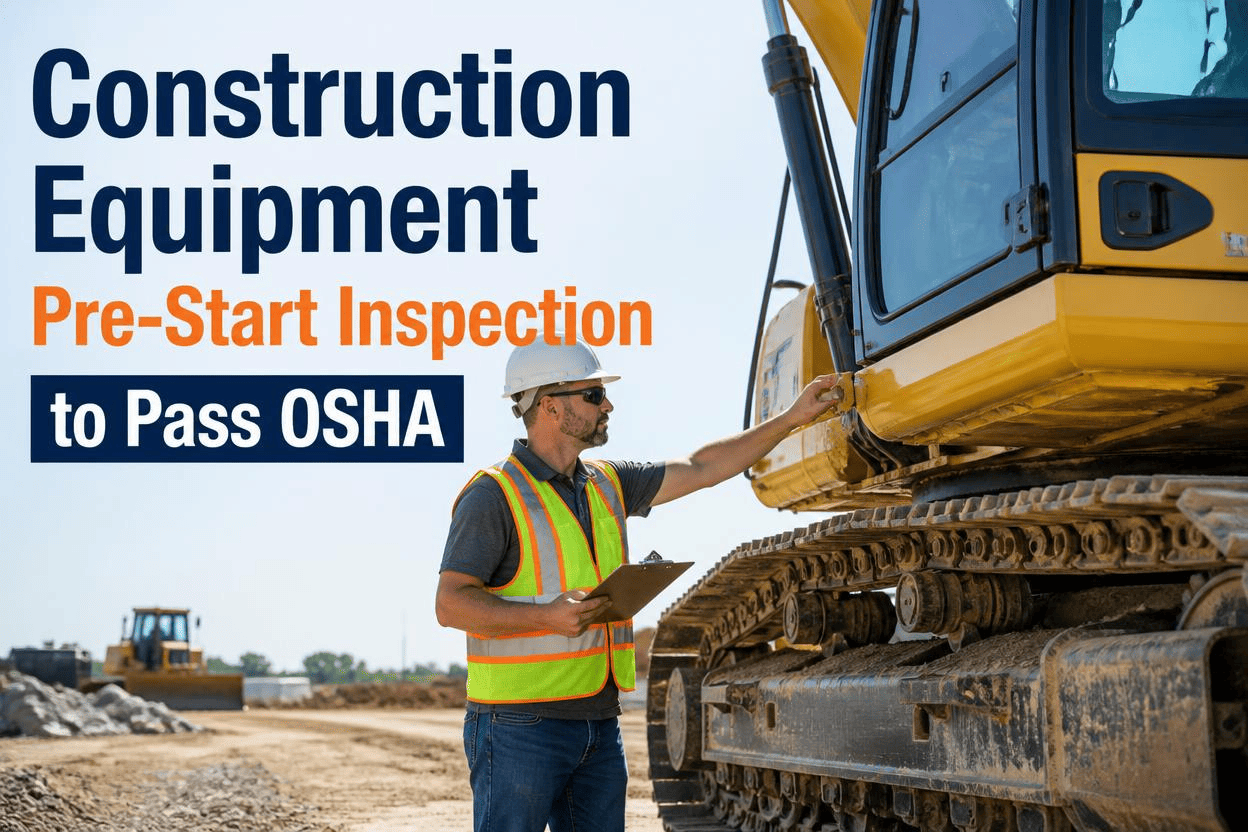
An operator climbs into an excavator at 6:45 in the morning, turns the key, and starts digging. No walkaround, no fluid check, no test of the backup alarm, because the crew is already behind schedule and the machine started fine yesterday. Three hours later a hydraulic hose that's been seeping quietly for a week finally lets go under load. What looks like bad luck is almost always a skipped pre-start inspection, and it's one of the most common findings when OSHA shows up: not a missing guardrail, but no proof anyone checked the equipment before it started moving.
OSHA requires a competent person to visually inspect construction equipment before each shift, covering fluid leaks, structural integrity, safety devices, and operator systems. Skipping this step, or failing to document it, is one of the most frequently cited compliance gaps on construction sites, with serious violations reaching over 16,000 dollars and willful or repeated violations climbing past 165,000 dollars. A consistent, documented pre-start process catches developing defects early and keeps records ready for any audit. FleetRabbit guides operators through equipment-specific checks and stores every record automatically.
What OSHA Actually Requires Before Equipment Starts Moving
The specific rule that applies depends on what kind of equipment is being inspected, but the underlying expectation is the same across almost all of it: someone qualified checks the machine before it goes to work, and that check gets documented.
| Equipment Type | Governing Standard | Inspection Frequency |
|---|---|---|
| Earthmoving Equipment | 29 CFR 1926.20 and 1926.600 | Frequent and regular inspection by a competent person, in practice before each shift |
| Cranes And Derricks | 29 CFR 1926.1412 | Visual inspection each shift, documented inspection monthly, comprehensive inspection annually |
| Forklifts And Powered Industrial Trucks | 29 CFR 1910.178(q)(7) | Examined before service at least daily, and after each shift if used around the clock |
| General Site Equipment | 29 CFR 1926.20(b)(3) | Any noncompliant equipment must be tagged, locked, or removed from operation immediately |
The Rule That Trips Up Most Sites
OSHA doesn't require a specific checklist format, but inspectors consistently look for the same thing during an audit: proof that an inspection happened, who performed it, what was found, and what corrective action was taken. If there's no record, the default assumption is that no inspection occurred at all, regardless of what actually happened that morning.
The Four Zones Every Pre-Start Walkaround Should Cover
A thorough pre-start inspection doesn't need to take long, but it does need to be systematic. Walking the same path around the machine every time, checking the same four zones, is what keeps a ten-minute inspection from missing something critical.
Fluids And Engine Systems
Structural Integrity
Safety Devices
Operator Area
Equipment-Specific Pre-Start Checklists
FleetRabbit walks operators through the exact inspection points for their machine and flags defects the moment they're found. Sign up free and put a real checklist in every cab.
Why Paper Checklists Fail The Audit
Most crews aren't skipping inspections out of carelessness. The paper process itself is what breaks down: clipboards get left in cabs, forms get filled out from memory at the end of the day, and by the time an auditor asks for records, half of them can't be found at all.
What "Readily Accessible" Actually Means
OSHA doesn't accept "somewhere in a filing cabinet at the office" as an answer during an inspection. Records need to be producible on request, which in practice means digital records that can be pulled up immediately rather than paper forms that have to be tracked down across multiple sites and supervisors.
Building A Pre-Start Process That Actually Holds Up
A checklist only works if it's followed the same way every time, by every operator, on every machine. That consistency is hard to enforce with paper and easy to enforce with a system that won't let a shift start without it.
Match The Checklist To The Machine
Use inspection points specific to each equipment type, since a crane, a forklift, and an excavator each carry different regulatory requirements and failure risks.
Require Digital Sign-Off Before Startup
Make the inspection a required step before equipment can be logged as in-service, so a shift can't quietly begin without it being completed.
Route Defects Automatically
When an operator flags an issue, send it straight to the maintenance team instead of waiting for someone to notice a note on a paper form later that day.
Keep A Timestamped, Searchable Archive
Store every completed inspection with a date, operator name, and result, so any record an auditor asks for can be pulled up in seconds instead of searched for.
Once this runs automatically, the ten-minute walkaround stops being a task someone might skip under pressure and becomes simply how the equipment starts every day. You can book a demo to see how this fits your fleet, or sign up free to put a digital pre-start checklist in front of your operators this week.
Every Inspection, Timestamped And Searchable
FleetRabbit stores every pre-start inspection automatically, so your records are audit-ready every single day, not just the day an inspector shows up.
Frequently Asked Questions
Don't Let A Skipped Inspection Become Your Next Citation
FleetRabbit guides operators through equipment-specific pre-start checks and stores every record automatically, so your fleet stays safe and audit-ready every shift. Start free with three machines, no credit card required.