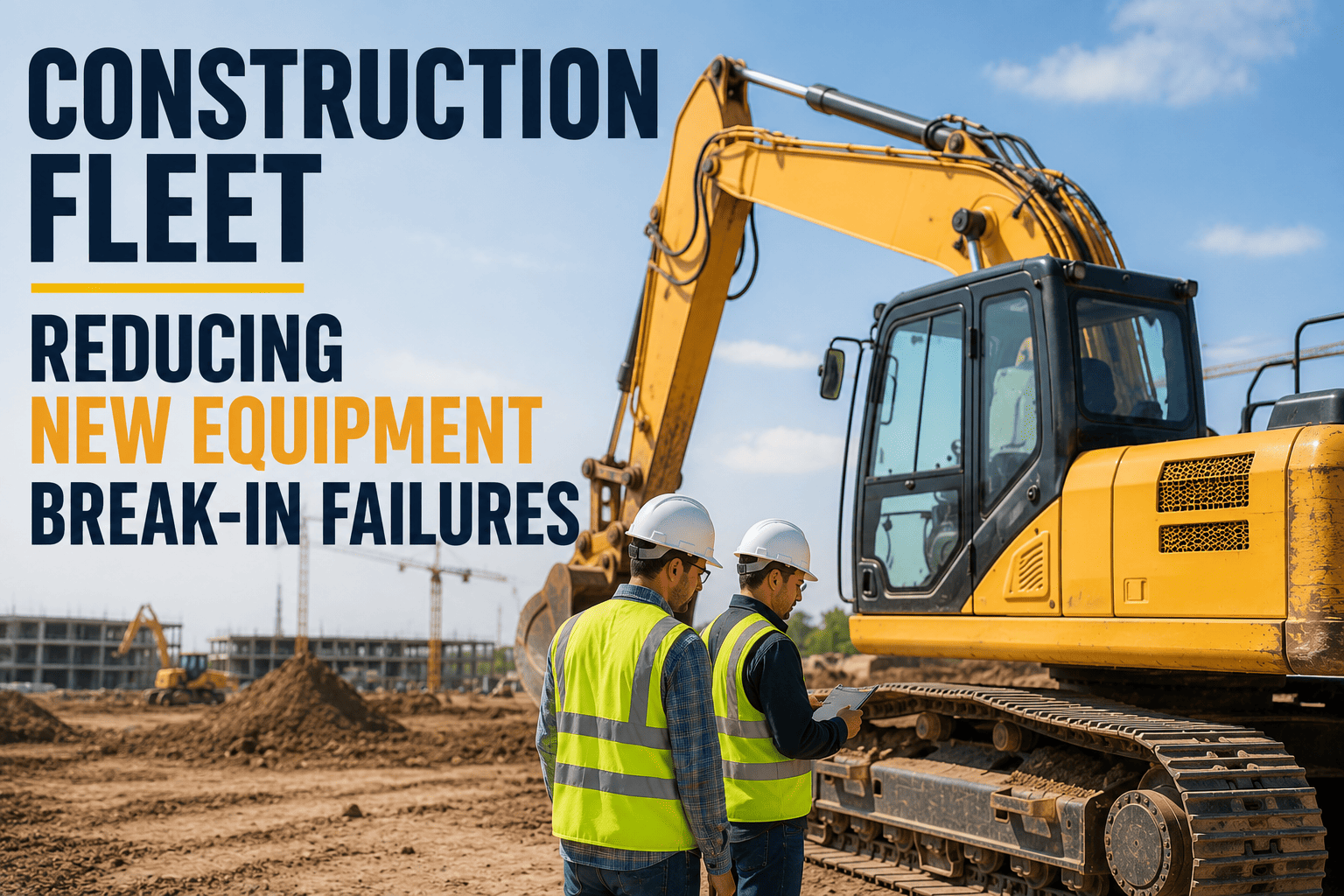
A brand new excavator sitting on a trailer, fully paid for, is not an asset yet. It becomes one only after someone verifies the fluids, tests the safety systems, logs the serial numbers, trains the operator, and signs off that the machine is actually ready for a job site. Skip any of that, and the excavator that was supposed to start earning on Monday is still parked on Thursday, while the crew waits and the schedule slips. Commissioning is the invisible step between delivery and productivity, and for most fleets it is the least standardized part of the entire equipment lifecycle.
Equipment commissioning delays happen when new machines sit idle after delivery because inspections, documentation, or operator training were not organized in advance. A structured, digital commissioning workflow can compress onboarding from days to hours and prevent the untracked hours, warranty gaps, and compliance risk that come with rushing a machine into service. Sign up free or book a demo to see how FleetRabbit standardizes it.
Why New Equipment Sits Idle Longer Than It Should
Every new machine that arrives on a job site needs the same things before it can be trusted with real work: a physical inspection, a safety check, fluid verification, a digital record, and an operator who has actually been walked through it. When those steps live on paper checklists, scattered emails, and someone's memory, they get done out of order, get skipped under deadline pressure, or get done twice by two different people who did not know the other had already started. The machine is technically on-site, but it is not commissioned, and an uncommissioned machine cannot be safely or legally put to work.
Five Points Where Commissioning Typically Stalls
Delivery Verification
Serial numbers, attachments, and delivery condition go unchecked against the purchase order, so discrepancies surface weeks later instead of on the day the truck leaves.
Physical and Safety Inspection
Without a standard inspection sequence, some checks get rushed and some get missed entirely, especially when the same person is also trying to unload three other machines that week.
Fluid and Consumable Confirmation
Oil grade, coolant level, and hydraulic fluid checks are easy to assume were done at the dealership, and that assumption is where warranty disputes start.
Digital Record Creation
If the machine is not entered into the fleet system on day one, its maintenance schedule, warranty clock, and compliance documents start with a gap that is hard to close later.
Operator Training and Sign-Off
A machine handed to an operator without a proper walkthrough is more likely to be misused, damaged, or flagged for a safety stand-down in its first month.
FleetRabbit turns commissioning into a guided, digital checklist that follows every new asset from delivery to first shift, so nothing gets skipped and nothing waits on paperwork.
What a Slow Commissioning Process Actually Costs
A delayed commissioning process rarely shows up as its own line item, which is exactly why it survives so long in most fleets. Instead, it hides inside other budget categories: warranty claims that get denied because the first service interval was never logged, safety incidents traced back to skipped training, and productivity reports that quietly assume a machine was working days before it actually was. Comprehensive, structured commissioning reduces operational costs and waste while preventing the costly production delays that come from unresolved errors and defects discovered too late.
| Risk Area | What Happens Without Structured Commissioning | What Structured Commissioning Fixes |
|---|---|---|
| Warranty Coverage | First service interval and fluid checks go unrecorded, giving the manufacturer grounds to dispute a claim | Every fluid, filter, and inspection is logged with a timestamp from day one |
| Maintenance Scheduling | The machine's service clock starts late or inconsistently, throwing off future preventive maintenance dates | Maintenance intervals are set the moment the asset enters the system |
| Compliance Documentation | Inspection and safety records exist on paper, in emails, or not at all when an auditor asks | A complete digital record is created and searchable before the machine's first shift |
| Operator Readiness | Training happens informally or gets skipped under deadline pressure | Sign-off requires confirmed training, reducing early misuse and damage |
Deployment Is a Number Worth Tracking
Deployment measures how many weeks per year a machine is actually on-site contributing to the work it was purchased for, and every day lost to a slow commissioning process is a day subtracted from that number before the machine has even started its working life. A fleet that treats commissioning as an afterthought is, in effect, shortening the useful deployment window on every new asset it buys.
Turning Commissioning Into a Repeatable Workflow
The fix is not more paperwork. It is less of it, replaced by a workflow that tells whoever is receiving the machine exactly what to check, in what order, with a digital sign-off at the end of each phase.
Four Habits That Shorten Time to First Shift
Pre-Delivery Readiness Checks
Confirm site space, fuel access, and documentation requirements before the truck arrives, so nothing gets discovered after the machine is already parked.
One Owner Per Machine
Assign a single person responsible for taking a new asset through every commissioning phase, instead of splitting steps across whoever happens to be free.
Digital Sign-Off at Every Phase
Require a recorded confirmation before a machine moves to the next commissioning stage, so gaps are visible immediately instead of discovered months later.
Operator Walkthrough Before First Shift
Pair every new machine with a scheduled operator training session rather than assuming it will happen informally once work starts.
FleetRabbit walks every new asset through delivery verification, inspection, fluid checks, digital record creation, and operator sign-off, so your equipment starts earning the day it arrives instead of the week after.
Frequently Asked Questions
The Bottom Line for Equipment Managers
A new machine is only worth what it produces, and it cannot produce anything while it is stuck in an unstructured commissioning process. The fix is not adding more steps. It is making the steps that already exist consistent, assigned, and recorded, so every asset enters the fleet the same way, on the same timeline, with the same complete record behind it.
FleetRabbit turns equipment commissioning into a guided digital workflow, from delivery verification to operator sign-off, so new machines start working the day they arrive instead of the week after.