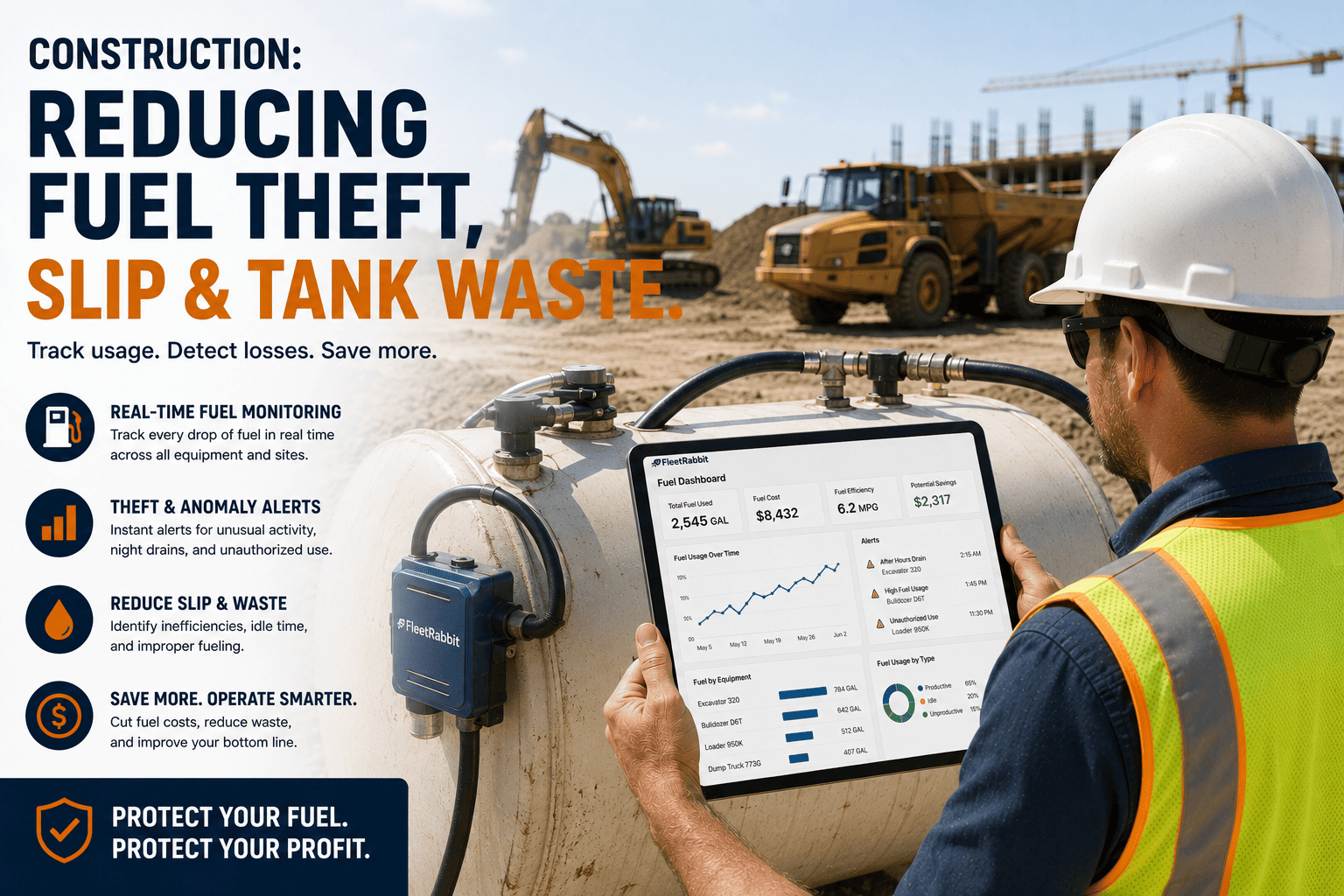
Diesel is quietly becoming the most expensive line item on every construction budget, and it is also the easiest one to steal. A slip tank parked behind a half-built structure, a generator running unattended overnight, an excavator topped off by a fuel truck nobody double-checked. Every one of these ordinary moments is an opening. Most contractors do not lose fuel in one dramatic incident. They lose it a few liters at a time, night after night, until the annual fuel bill stops making sense.
Construction fuel theft and slip-tank shrinkage cost job sites tens of thousands of dollars a year, with unattended overnight tanks and unverified vendor fill-ups the two biggest culprits. Continuous fuel-level monitoring paired with GPS-matched transactions can identify theft within minutes instead of weeks, and most sites recover the cost of monitoring within the first few incidents it prevents. Sign up free or book a demo to see it on your own equipment.
Why Slip Tanks Have Become the Easiest Target on Site
Slip tanks and site generators sit in the open for hours after crews leave, usually with nothing more than a padlock between the fuel and anyone who walks up with a hose. Thieves targeting heavy machinery on construction sites use gravity-fed siphoning in the majority of cases, and it takes only minutes to drain a slip tank that nobody is watching after dark. On multi-phase or remote projects, the problem compounds: more equipment, more storage points, and fewer eyes on any one of them at any given hour.
Three Patterns Behind Nearly Every Site Fuel Loss
Overnight Siphoning
Unattended slip tanks and idle equipment lose fuel between the last shift and the first, with the loss only discovered when a machine will not start the next morning.
Under-Delivered Fill-Ups
A vendor invoice can say 120 liters were delivered when the tank only received a fraction of that, and without a sensor tracking the actual level, the gap disappears into the paperwork.
Card and Credential Misuse
Fuel cards get used away from the vehicle, at unusual hours, or for machines that were not even running that day, and the charge quietly clears as a normal purchase.
FleetRabbit connects to your existing fuel sensors, telematics, and fuel cards to flag sudden drops, mismatched deliveries, and off-hours transactions the moment they happen, not weeks later on a reconciled invoice.
What Fuel Theft Actually Costs a Job Site
The number on the invoice is never the whole story. A single genset losing even a modest amount of diesel every few weeks adds up fast once you multiply it across every generator, slip tank, and piece of heavy equipment on a project. Diesel stolen from construction equipment tanks and site storage is estimated to cost the construction industry tens of millions of dollars annually across just a handful of markets, and industry researchers believe the true figure runs two to three times higher than what gets formally reported, because most losses never clear the threshold to file a claim.
| Loss Type | Typical Site Impact | Why It Goes Unnoticed |
|---|---|---|
| Slip Tank Siphoning | Partial to full tank loss overnight, often 100+ liters per incident | No one checks tank levels between fills, so the loss is invisible until the tank runs dry |
| Vendor Under-Delivery | Billed volume higher than actual delivered volume, recurring monthly | Paper delivery tickets are trusted without a sensor cross-check at the tank |
| Card Misuse | Charges for fuel the equipment never received | Purchases are approved by amount, not matched to equipment location or run hours |
| Idle and Burn-Rate Drift | Consumption that no longer matches hours worked | Without a burn-rate baseline, gradual drift looks like normal variation |
The Recovery Problem Makes Prevention Non-Negotiable
Once fuel is gone, it is gone. Unlike a stolen machine, there is no serial number to trace and no recovery call to make. That is exactly why detection has to happen at the moment fuel leaves the tank, not after it has already been burned, sold, or absorbed into an inflated invoice.
How Fuel Monitoring Catches Theft Before the Tank Runs Dry
Modern fuel monitoring pairs a level sensor in the tank with location and transaction data, so every liter can be traced from delivery to burn. When the numbers stop lining up, the system tells you immediately instead of waiting for someone to notice a machine that will not start.
Four Signals That Expose Theft in Real Time
Sudden Drop While Stationary
A fast, unexplained fall in tank level while the machine is parked and powered down is the clearest sign of siphoning, and it triggers an alert within minutes.
Delivery vs. Sensor Mismatch
Comparing the vendor's invoiced volume against the tank sensor's recorded rise catches under-delivery the same day it happens, not at month-end reconciliation.
Location-Mismatched Purchases
GPS-verified transaction matching flags any fuel card charge that does not line up with where the equipment actually was at that hour.
Burn Rate Drift
Tracking consumption against run hours surfaces machines quietly using more fuel than their workload explains, often the first clue of hidden diversion.
FleetRabbit gives every generator, slip tank, and machine on your site a fuel history that is checked continuously, so nothing drains, disappears, or gets over-billed without you knowing the same day.
Building a Fuel Security Routine That Actually Holds
Technology closes the visibility gap, but it works best alongside a few basic site habits that remove easy opportunities for theft in the first place.
Five Habits Worth Building Into Every Site Routine
- Lock and position tanks deliberately. Keep slip tanks within sight of site lighting or cameras rather than tucked behind material stacks.
- Verify every delivery against the sensor reading. Do not sign off a fuel ticket without checking it against what the tank actually shows.
- Review burn rate weekly, not quarterly. Small drift caught early is a data point. Drift caught after three months is a pattern that already cost you money.
- Restrict card use to assigned equipment and hours. Fewer valid combinations mean fewer places for misuse to hide.
- Treat every alert as worth ten minutes. Most theft investigations that go nowhere started with an alert that got dismissed as a sensor glitch.
Frequently Asked Questions
The Bottom Line for Every Site Manager
Fuel theft rarely announces itself. It shows up as a slightly higher monthly bill, a generator that runs out sooner than expected, or an invoice that never quite matches what was actually delivered. None of it looks dramatic in isolation, which is exactly why it survives so long on so many sites. Continuous fuel monitoring turns that invisible drain into a visible, traceable event the moment it happens, giving site managers the chance to act instead of explain the loss after the fact.
FleetRabbit tracks every liter from delivery to burn across your slip tanks, generators, and heavy equipment, flagging theft, under-delivery, and misuse the same day it happens. See it running on your fleet with no hardware install required.