It usually starts small. One oil change pushed back a week because the machine was needed on site. One inspection marked "pending" because nobody had time that day. One driver-reported defect that got logged but never scheduled. None of these feel urgent on their own, which is exactly why maintenance backlogs are so dangerous. They don't announce themselves with a warning light. They build quietly, week after week, until a machine that should have been serviced three times over finally fails in the middle of a job, and everyone is surprised except the maintenance record, which saw it coming the whole time.
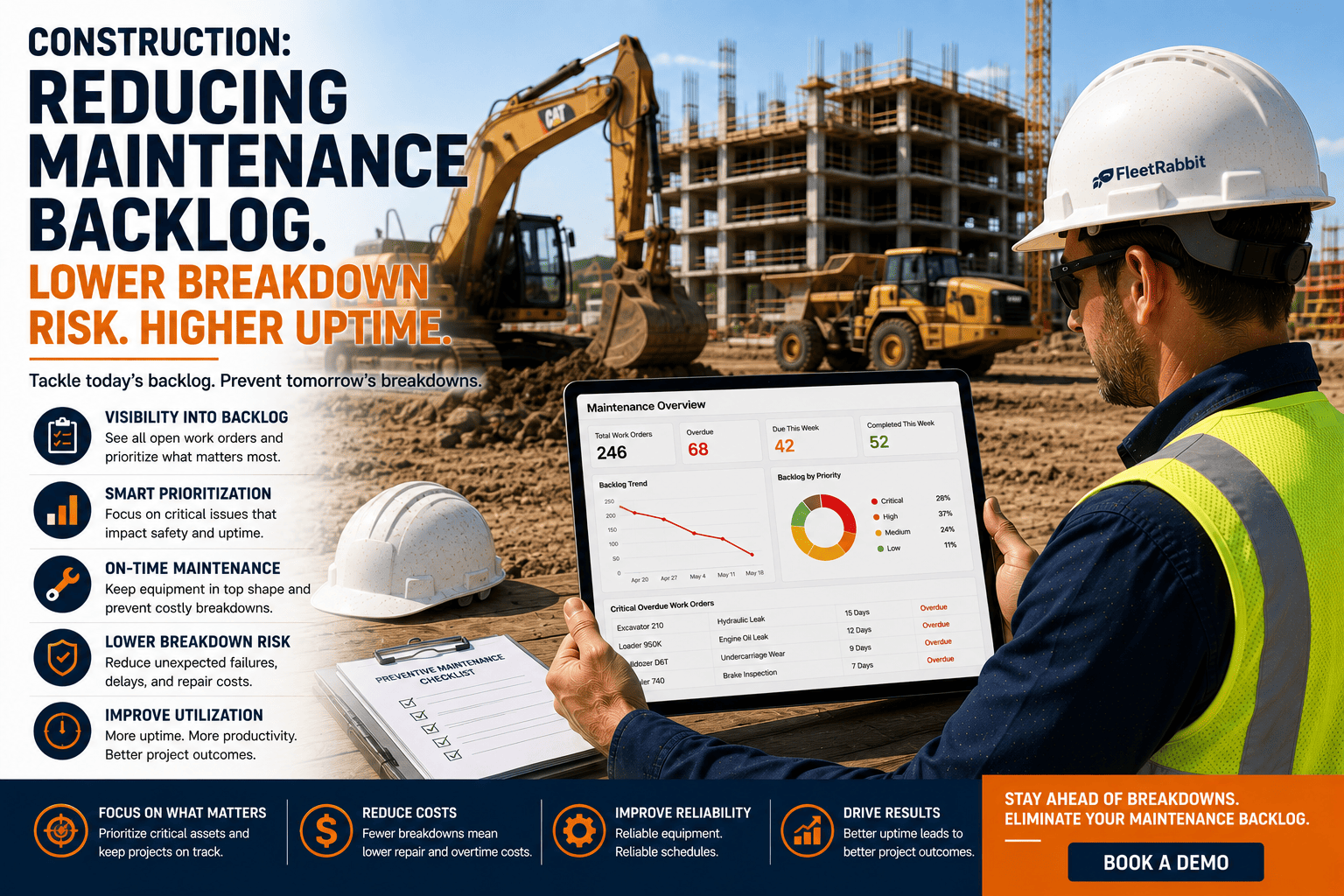
A maintenance backlog is the total overdue preventive service, open work orders, unresolved defects, and delayed repairs sitting behind your fleet. Fleets with preventive maintenance compliance below 80 percent experience 60 to 70 percent more breakdowns than fleets above 95 percent compliance. The backlog itself is rarely the real problem. Not knowing which overdue items carry the highest breakdown risk is. Prioritizing backlog by risk, utilization, and downtime impact, rather than by date alone, is what actually keeps equipment reliable.
How a Small Backlog Turns Into a Breakdown Risk
A backlog doesn't grow in a straight line. It compounds, because every week a work order sits unresolved, the equipment keeps running, keeps accumulating hours, and keeps drifting further from the condition it was in when the service was first due.
This is a common pattern in fleets without a clear priority system. If a team closes 15 work orders a week but 18 new ones are created in that same week, the backlog grows by 3 every week without anyone deciding it should. By week ten, the gap has more than tripled, and the equipment carrying the oldest overdue items is now the one most likely to fail without warning.
What's Actually Hiding Inside Your Backlog
FleetRabbit centralizes every overdue PM, open work order, and unresolved defect into one live view, so nothing sits forgotten until it becomes a breakdown. Sign up free to see your own backlog mapped out in minutes.
Prioritizing Backlog by Risk, Not Just by Date
The instinct with a backlog is to work through it oldest first. That feels fair, but it isn't how breakdown risk actually works. A three-week-overdue inspection on a rarely used trailer is far less urgent than a one-week-overdue brake check on your highest-utilization excavator. Reducing backlog efficiently means sorting it into risk tiers before you touch a single work order.
High Utilization, High Downtime Impact
Equipment running daily on critical-path tasks, where a failure would stop other trades. These items get scheduled first, even if they aren't the oldest on the list.
Moderate Utilization, Repeat Defects
Machines with a history of recurring issues. A defect that has been logged more than once is a strong signal that the underlying problem hasn't actually been fixed.
Low Utilization, Minor Deferred Items
Equipment sitting idle or used occasionally, with overdue items that pose limited near-term risk. These can be batched into the next scheduled service window.
A Simple Way to Score Every Overdue Item
You don't need complex software to start prioritizing. A basic score works: rate each overdue item on utilization, downtime impact, and repeat history, from 1 to 3 each. Anything scoring 7 or higher gets scheduled this week. Anything scoring 4 to 6 gets scheduled within the month. Anything below 4 goes into the next routine service window. This alone turns a flat, intimidating list into a clear action plan.
A Practical Plan to Bring the Backlog Down
Get One Complete List
Combine overdue PM, open work orders, and unresolved defects into a single view. A backlog you can't see completely can't be reduced reliably.
Score and Sort by Risk
Apply the utilization, impact, and repeat-history score to every item, and rank the list instead of working it in date order.
Match Capacity to Demand
Set a realistic weekly target based on how many work orders your team can actually close, not how many you wish they could.
Protect Preventive Work
Once the backlog is under control, keep new preventive maintenance from sliding into the same trap by scheduling it around real project downtime.
How FleetRabbit Keeps Backlogs From Building Back Up
FleetRabbit tracks every overdue PM, open work order, and reported defect in one dashboard, automatically scoring each item by utilization, downtime impact, and repeat history so your team always knows what to schedule next. Instead of a flat list sorted by date, maintenance managers see a ranked priority queue, with alerts before items become urgent instead of after. Fleets using this kind of connected, risk-based approach typically bring PM compliance from the industry average of roughly 84 percent up toward 95 percent or higher within a few months, cutting breakdown frequency along the way. You can book a short walkthrough at https://calendly.com/fleet-rabbit/30min to see how it would prioritize your current backlog.
Frequently Asked Questions
FleetRabbit turns a scattered backlog into a clear, risk-ranked action plan your team can actually keep up with. Sign up free at https://ai.fleetrabbit.com or book a short demo at https://calendly.com/fleet-rabbit/30min to see your backlog prioritized today.