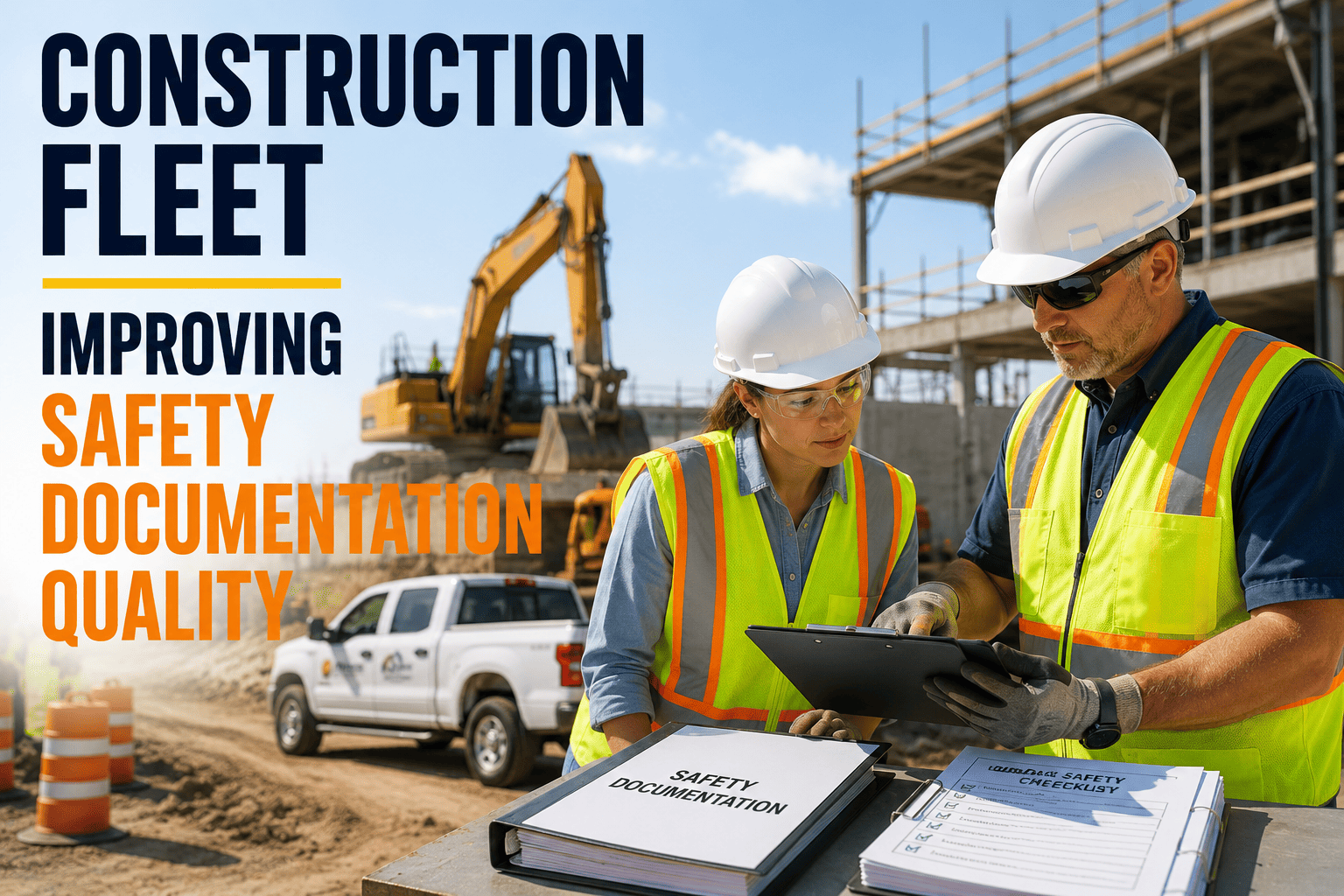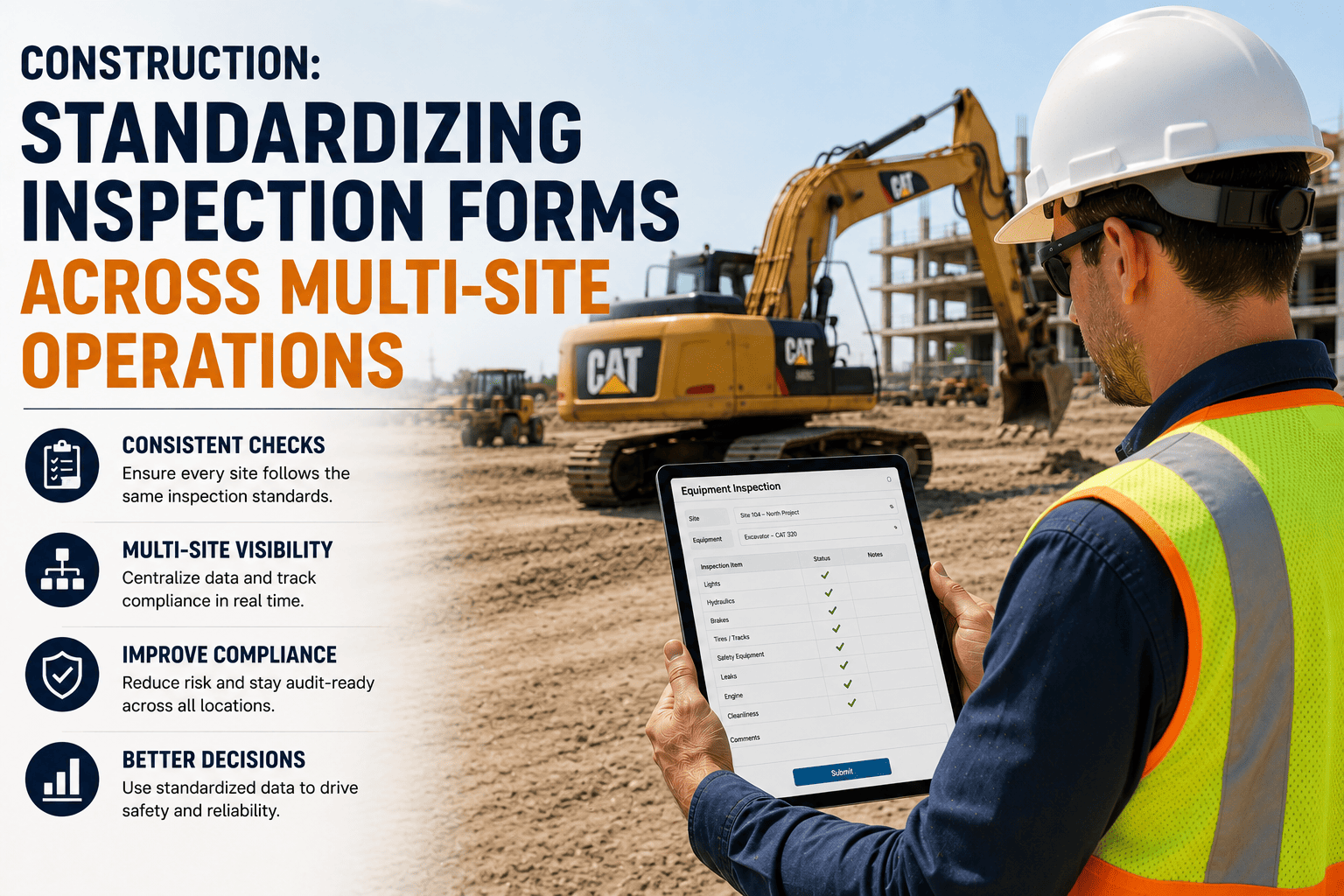
Site A checks tire condition, hydraulic lines, and backup alarms every morning. Site B, running the same model excavator three counties over, has a shorter form that skips the backup alarm check entirely because "the supervisor always eyeballs it anyway." Neither crew is being careless. They're both using whatever inspection form got handed down over the years, on paper or in a spreadsheet nobody has updated since the equipment was new. Then an OSHA auditor shows up at Site B, asks for documentation on a specific safety device, and finds nothing. That gap didn't come from a bad crew. It came from a form that was never standardized in the first place.
Construction equipment failures contribute to roughly 1 in 5 workplace fatalities in the industry, and 90 percent of these failures are preventable with proper inspections. OSHA requires documented pre-shift inspections under 29 CFR 1926, and missing records create an automatic presumption that no inspection occurred, the single most common finding on construction equipment audits. Paper-based inspection systems achieve only a 73 percent audit pass rate, while standardized digital systems reach 96 percent, largely because every site uses the identical checklist for the identical equipment type.
The Hidden Cost of Inconsistent Inspection Forms
Multi-site construction fleets rarely set out to run inconsistent inspection programs. It happens gradually. One site adopts a checklist from an equipment manufacturer. Another site's supervisor builds their own spreadsheet. A third site is still using a laminated paper form from years ago that references equipment the fleet no longer even operates. Each version might look reasonable on its own, but stacked side by side across a multi-site operation, they create exactly the kind of documentation gaps that turn a routine audit into a costly citation.
Why This Problem Compounds Across Multiple Sites
A single-site operation can get away with an informal inspection process because one supervisor knows every piece of equipment and every quirk of the crew. That informal knowledge doesn't transfer across a multi-site fleet. When five sites run five different versions of the same inspection, there is no single, consistent record that proves your equipment inspection program actually covers what OSHA requires. Fleet managers evaluating construction inspection software consistently cite this exact gap as the reason they started looking for a standardized digital solution.
The Documentation Gap OSHA Auditors Look For First
OSHA's enforcement approach makes this an easy violation to verify: either documented inspection records exist, or they do not. Missing records create a presumption that no inspection was performed at all, regardless of whether the crew actually walked around the machine that morning. This single finding consistently ranks as the most common issue auditors identify on construction equipment audits.
FleetRabbit automatically assigns the correct inspection checklist to each equipment type, so every site, every crew, and every shift runs the same standardized form. Sign up for a free trial and see your inspection records unified across every site.
Matching Inspection Forms to Equipment Type and Standard
Standardization does not mean forcing every machine through an identical checklist. It means every unit of the same equipment type, at every site, runs the same correctly scoped checklist tied to the regulation that actually governs it.
| Equipment Category | Governing OSHA Standard | Key Inspection Points |
|---|---|---|
| Excavators & Earthmoving | 29 CFR 1926.651 | Hydraulic lines, boom structural condition, tracks, backup alarms |
| Cranes | 29 CFR 1926.1412 | Wire rope condition, load charts, operator certification records, signal communication |
| Aerial Lifts | 29 CFR 1926.453 | Guardrails, fall protection anchor points, controls, outriggers |
| Powered Industrial Trucks | 29 CFR 1910.178 | Forks, mast condition, horn, seat belts, tire condition |
| Loaders, Dozers & Graders | 29 CFR 1926.20 | Service brakes, reverse alarms, seat belts, fluid levels, glass condition |
Why One Universal Checklist Doesn't Work
A single generic checklist applied across every equipment type inevitably misses category-specific risks. A crane's wire rope condition means nothing on an excavator's inspection form, and an aerial lift's guardrail check has no place on a powered industrial truck's checklist. Standardization works best when it is applied within each equipment category consistently across every site, not when it flattens every machine into one identical form.
What Standardized Digital Inspections Change in Practice
Moving every site onto the same digital checklist framework changes far more than paperwork. It changes what fleet managers can actually see and act on.
Whether you manage five machines or five hundred across multiple sites, consistent digital checklists keep every crew aligned. Book a demo to see how equipment-specific templates apply automatically across your entire fleet.
Rolling Out Standardized Forms Without Disrupting Crews
Standardizing inspection forms across a multi-site fleet works best as a phased rollout rather than a single overnight switch.
Start With an Equipment Inventory Audit
Catalog every piece of equipment at every site by category, and identify which inspection form each site currently uses for that category. This audit surfaces the exact gaps and duplications that need resolving before a single standardized checklist is built.
Build One Master Template Per Equipment Category
Rather than customizing a checklist per site, build one master digital checklist for each equipment category that maps directly to the governing OSHA standard. Every site then uses this same template for every unit within that category, regardless of location.
Train Crews on the New Standard, Then Retire the Old Forms
Give every site's crew a short training session on the new standardized digital checklist, then formally retire every legacy paper form and spreadsheet still in circulation. Leaving old forms available, even as a backup, tends to reintroduce the same inconsistency the standardization effort was meant to eliminate.
Frequently Asked Questions
Inconsistent inspection forms create the exact documentation gaps that turn a routine audit into a costly citation. FleetRabbit standardizes digital inspection checklists by equipment type across every site, so every inspection is complete, consistent, and audit-ready the moment an auditor asks for it. Start your free trial with no credit card required, or talk to our team about your specific fleet.