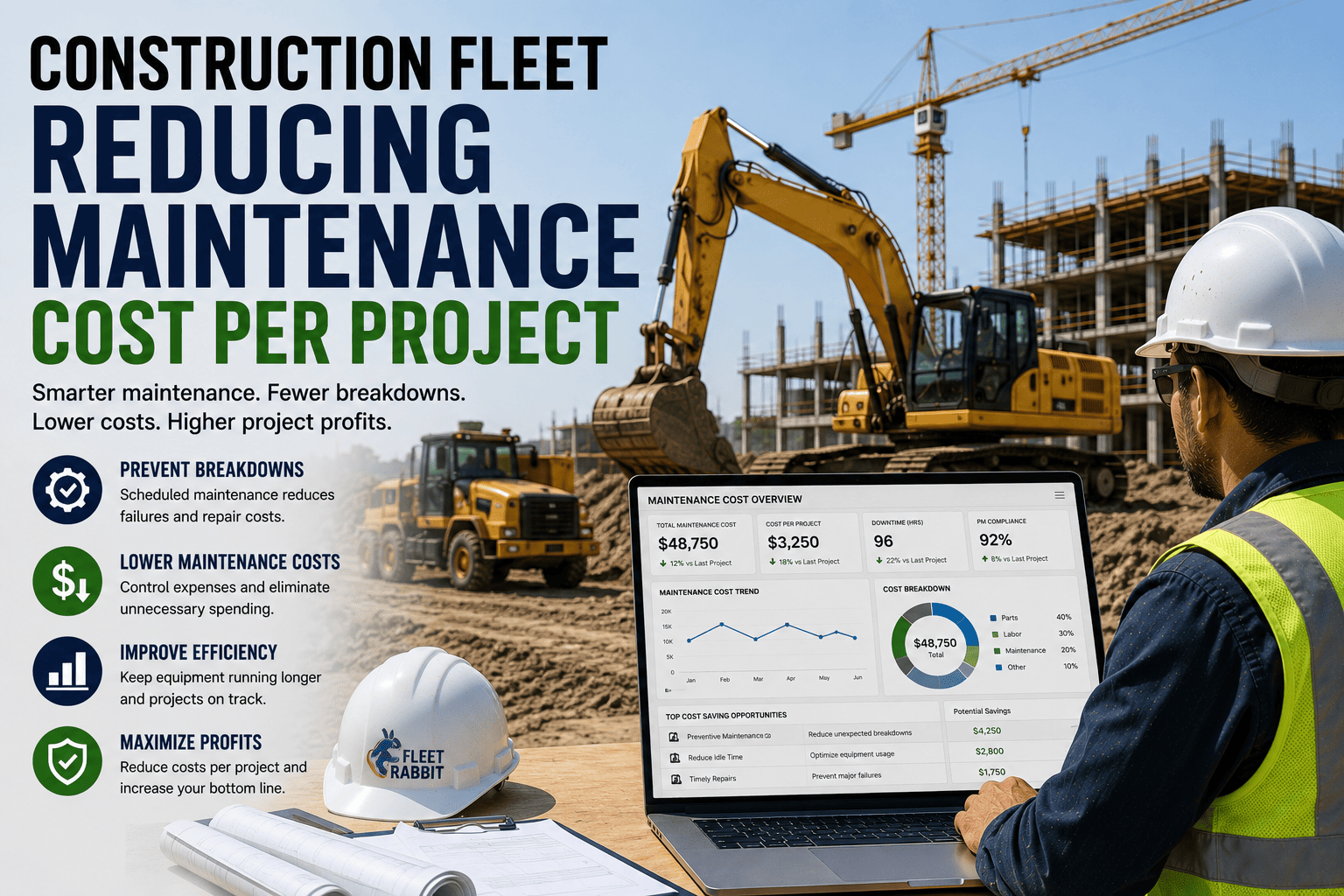
If you've heard the word "telematics" thrown around at equipment dealer presentations, industry conferences, or in conversations with other fleet managers — but you're still not entirely sure what it means, how it works, or whether it's actually worth the investment — this guide is for you. Construction telematics is simply the technology that connects your heavy equipment to the internet and sends data about each machine back to you in real time: where it is, engine hours, fault codes, fuel burn, and operating temperatures. That continuous data transforms equipment management from reactive guesswork into actionable intelligence. Contractors who implement telematics typically see a 35–42% reduction in fuel waste, up to 40% fewer unplanned downtime events, and $8,200–$18,400 in annual savings per machine — returns that consistently recover the platform investment within 45–75 days. Fleet Rabbit's platform is purpose-built for construction heavy equipment and delivers every capability described in this guide through a single hardware installation that takes 2–4 hours. Book a demo to see how Fleet Rabbit's telematics applies to your fleet.
Quick Answer
Construction telematics collects real-time data from heavy equipment — GPS, engine hours, fault codes, fuel consumption, and health parameters — and transmits it wirelessly to a management platform. Hardware connects to a machine's J1939 CAN bus and streams data via cellular or satellite. Contractors use telematics to reduce downtime by 40%, cut fuel waste 35–42%, optimize utilization, automate PMs, track assets, and generate OSHA compliance documentation.
What Construction Telematics Actually Is — No Jargon
Strip away the technical language and telematics comes down to one idea: putting a small device on each of your machines that listens to what the machine is telling you and relays it to you. Every modern piece of heavy equipment runs an electronic control unit (ECU) that tracks dozens of parameters and fault codes. Without telematics, that data is trapped inside the machine. Telematics is simply the bridge connecting the data your machines already generate to a platform where you can see it, search it, and get real-time alerts.
The Data Your Machines Already Have
A modern excavator's ECU tracks engine RPM, coolant temp, oil pressure, fuel rate, and fault codes in real time. Without telematics, this stays on the machine's display. With telematics, it streams to your phone or desktop every 30–60 seconds from every job site.
What Changes When You Can See It
Fleet managers catch developing problems before breakdowns occur. They identify idling machines, track underutilized assets, and prove project contributions. Visibility converts reactive management into proactive decision-making.
Why Construction Is Different
Vehicle telematics is built for highway mileage. Heavy equipment wear is measured in engine hours, requiring J1939 industrial protocols that vehicle hardware can't read. Purpose-built telematics like Fleet Rabbit is designed for this specific environment.
How Construction Telematics Works: The Technical Basics
You don't need to be an engineer to use telematics, but understanding the basics helps you evaluate platforms and set accurate expectations. Here's how the system works from machine to dashboard.
1
Step 1: The Device — What Goes on the Machine
A small module installs on the machine, connecting to the J1939 CAN bus via the diagnostic port or harness. It reads ECU data (hours, faults, fuel) and tracks GPS. It transmits via 4G LTE. Installation takes 2–4 hours with zero ECU modification.
Fleet Rabbit installation: Technician connects J1939 harness, mounts device, and activates. Machine streams GPS, hours, and parameters within 15 minutes.
2
Step 2: Data Transmission — From Machine to Cloud
Data transmits via 4G LTE continuously. Packets with GPS, engine parameters, and faults are sent every 30–60 seconds, or instantly for critical alerts. In poor coverage areas, the device buffers data locally and uploads when reconnected — no data is lost.
4G LTE cellular30–60s updatesInstant faultsLocal buffering
3
Step 3: The Cloud Platform — Processing the Data
Raw data is processed in Fleet Rabbit's cloud platform. Machine learning models identify anomalies and predict failures. Individual data is aggregated into fleet-level views accessible via any web browser or mobile app — no IT installation required.
Web + Mobile AppCloud MLNo IT requiredFull history retained
4
Step 4: Alerts and Actions — Driving Decisions
Data becomes action through real-time alerts (pushed within 60 seconds), scheduled reports, and on-demand queries. Critical faults go straight to site supervisors, weekly utilization goes to fleet managers, and cost reports go to ownership.
Action: Fault detected → supervisor alerted in 60s → tech dispatched → issue resolved same shift. Without telematics, the machine might run 12+ hours with a developing issue.
Purpose-Built Construction Telematics
See Every Machine. Know Every Problem. Act Before Breakdown.
Fleet Rabbit connects to your J1939 diagnostic system to deliver real-time health monitoring, predictive alerts, and utilization analytics — purpose-built for construction fleets.
OEM vs. Aftermarket Telematics: Which Is Right for You?
Most newer equipment has OEM telematics (Cat Product Link, Komtrax, JDLink). These provide baseline data directly from the manufacturer. Aftermarket platforms like Fleet Rabbit add capabilities OEM systems miss. Understanding the difference is key.
What the Manufacturer Provides
Pros: Factory telematics provide GPS, hours, and basic faults for their brand. Data integrates seamlessly with the manufacturer's dealer service network.
Cons: OEM telematics is brand-specific. A mixed fleet means juggling multiple logins with no unified view. They also lack advanced predictive AI, cross-brand utilization tracking, and job costing tools.
Best for: Single-brand fleets wanting basic tracking and deep dealer integration.
What Fleet Rabbit Adds
Unification: Unifies Cat, Deere, Volvo, Doosan, etc., onto a single dashboard. One login, one alert system for all machines.
Advanced Analytics: Predictive AI spots failures weeks out. Includes idle coaching, job costing, and utilization intelligence that OEMs skip.
Older Equipment: Covers legacy machines back to 2000 that lack OEM hardware entirely.
Best for: Mixed-brand fleets needing advanced insights, older equipment coverage, and unified visibility.
Using OEM and Aftermarket Together
The integration: Run OEM telematics on new machines and Fleet Rabbit on the rest, pulling OEM data into Fleet Rabbit via API for a unified view.
Data Ownership: Integrating OEM data means your historical records live in Fleet Rabbit. You retain your data even if you switch equipment brands in the future.
Best for: Fleets with heavy new single-brand investments wanting unified visibility without losing existing dealer ties.
Machines Without J1939 CAN Bus
Pre-J1939: Machines built before 2005 often lack J1939 ports but can use universal IoT sensors for GPS, runtime (via ignition), and geofences.
The Value: Accurate engine-hour tracking on legacy equipment justifies hardware costs quickly via precise PM scheduling and rental avoidance.
Best for: Fleets with valuable legacy iron that needs tracking alongside modern assets.
The 7 Things Contractors Use Telematics Data For
While telematics generates endless data points, successful contractors focus on these seven high-ROI applications to deliver the largest financial returns.
1. Predictive Maintenance — Catching Failures Early
Real-time fault codes and parameter trends identify developing issues 2–4 weeks before breakdown. Fleet Rabbit's ML models recognize failure patterns and trigger alerts. Planned interventions cost 3–5x less than emergency call-outs.
2. Engine-Hour PM Scheduling — Perfect Timing
Streams exact engine hours, automating PMs based on actual wear, not calendar estimates. Countdowns update continuously, achieving 94% PM compliance (vs 71% industry average) and eliminating over-servicing of low-utilization equipment.
3. Fuel Cost Reduction — Idle & Consumption Tracking
Identifies excessive idle time, enabling coaching that reduces idle fuel waste 35–42% within 30 days. Anomaly detection catches mechanical inefficiency early, saving an average of $12,400 per machine annually.
4. Equipment Utilization — Preventing Rentals
Shows productive vs. idle hours across all sites. Check internal availability before renting equipment, avoiding $800–$2,400/day in rental costs. Highlights chronically underutilized assets for reallocation or disposal.
5. Theft Prevention — Geofences and Live GPS
Geofences trigger immediate alerts for unauthorized after-hours movement. Real-time GPS gives law enforcement active pursuit data, resulting in 4x higher recovery rates and frequent insurance premium reductions.
6. Job Costing and Margin Tracking
GPS and engine hours allocate equipment costs to specific projects automatically. PMs see real-time cost accumulation against budgets. GPS-backed billing documentation eliminates disputes and improves payment cycle times.
7. OSHA Compliance Documentation
Builds OSHA compliance documentation automatically — pre-op data, maintenance logs, and incident records. Generates audit-ready reports in under 2 minutes, demonstrating a functioning safety system to inspectors.
What Data Construction Telematics Actually Collects
1
Location Data
GPS coordinates updated every 30–60 seconds. Includes historical trails, site entry/exit times, and geofence alerts. Supports theft prevention, billing verification, and utilization tracking.
2
Engine Hours
Real-time hour counters streaming directly from the ECU with zero manual error. Supports precise PM scheduling, depreciation tracking, and accurate project cost allocation.
3
Diagnostic Codes
Captures ECU diagnostic trouble codes (DTCs) instantly, providing plain-language translations. Supports same-shift responses, warranty documentation, and predictive maintenance.
4
Fuel & Idle Data
Tracks fuel burn rates and productive vs. idle time. Flags excessive idle by operator and detects consumption anomalies. Supports fuel budget tracking and idle reduction programs.
5
Health Parameters
Monitors coolant temp, oil pressure, battery voltage, and engine load. Triggers alerts when limits are exceeded. Supports overheating prevention and major failure avoidance.
6
Operator Behavior
Tracks harsh inputs, aggressive braking, over-speed, and excessive idle periods. Supports operator scorecarding, behavioral coaching, and equipment wear reduction.
All Data. One Dashboard. Every Machine.
Stop Running Blind — Get Full Fleet Visibility Today
Fleet Rabbit unifies GPS, hours, faults, fuel, and health parameters across all brands into a single intuitive dashboard, turning raw data into same-shift action.
What Makes Construction Telematics Different from Basic GPS
1
GPS Trackers: Location Only
Basic trackers report location every 5–15 minutes. Good for theft prevention, but leaves 95% of telematics value on the table. No connection to the ECU means zero fault codes, hours, or engine data.
Location onlyNo ECU dataNo faults
2
Basic Telematics: GPS + Engine Hours
Adds engine hour tracking via ignition monitoring. Supports PM scheduling alongside location tracking. However, it still lacks real-time fault codes, fuel analytics, and predictive AI capabilities.
Location + HoursPM SupportMissing fuel/faults
3
Full Telematics: Complete Machine Intelligence
Full J1939 telematics reads all ECU data—location, hours, faults, parameters, and fuel—processing it via AI to generate predictive alerts. This tier delivers the 40% downtime reduction and massive financial ROI. Fleet Rabbit operates here.
Telematics ROI: What Contractors Actually Save
Maintenance Cost Reduction: $4k–$9.8k/Year
Avoids emergency repair premiums, eliminates secondary damage, and stops over-servicing. Converting emergency fixes to planned interventions saves an average of $9,300 per event.
Fuel Cost Reduction: $3.6k–$5.2k/Year
Reduces idle fuel waste by 35–42% and flags mechanical inefficiencies early. Trimming just 2 hours of daily idle time per machine generates massive compounding savings.
Downtime Avoidance: $3.8k–$7.2k/Year
Prevents idle crew labor, emergency rental replacements, and liquidated damages. Reducing unplanned breakdowns by 20-40% directly protects project margins.
Rental Avoidance: $3k–$9k/Year
Cross-site visibility lets you identify underutilized owned machines for reallocation, preventing $800–$2,400/day rental costs when project managers need extra equipment.
Common Questions
QHow long does installation take?
Fleet Rabbit devices install in 2–4 hours per machine during natural downtime. Data streams live within 15 minutes of activation. No machine modification is required.
QWhat happens to data if we cancel?
You retain full data export rights. Download your complete history, maintenance logs, and records anytime. You are never locked out of your own data.
QWhat about poor cellular coverage?
Devices buffer data locally during outages and upload instantly when coverage resumes. For completely remote sites, satellite options are available.
QHow quickly will we see ROI?
Most fleets spot 2–4 developing issues in the first week. Fuel savings accrue within 30 days. Full subscription ROI is typically recovered within 45–75 days.
10 Questions to Evaluate Telematics Vendors
1. Do you connect to J1939 to read full fault codes, or just GPS?
2. Do you support mixed-brand fleets natively?
3. What is your solution for older, pre-2005 equipment?
4. Is predictive maintenance based on ML trends or basic thresholds?
5. Can you accurately distinguish productive idle from wasteful idle?
6. Can you prove your predictive accuracy and false-positive rates?
7. Who performs the installation?
8. Do you integrate with existing PM and accounting software?
9. Can we easily export our data if we cancel?
10. What structured support is provided during the first 30 days?
Telematics Outcomes Snapshot
35–42%
Fuel Waste Reduction
3–5x
Cheaper Planned Repairs
45–75
Days to ROI Recovery
$18,400
Annual Savings/Machine
Related Fleet Rabbit Resources
Technical guide to Fleet Rabbit's 5-layer downtime prevention system, covering fault monitoring, fuel anomalies, and parameter trends.
Why odometer-based scheduling fails for heavy equipment, and how hours-based tracking achieves 94% PM compliance.
Guide to managing licenses, OSHA cards, and safety records with automated expiration alerts and dispatch gating.
Detailed ROI analysis mapping out the combined financial impact across a fleet that recovers its investment in 45 days.
Ready to See What Telematics Finds in Your Fleet?
Fleet Rabbit installs in 2–4 hours per machine, streams live data instantly, and delivers massive ROI within the first billing cycle. Most fleets discover multiple developing issues in week one alone. See exactly what Fleet Rabbit can identify for you.
Real-Time Machine Health
40% Downtime Reduction
35–42% Fuel Savings
OEM + Aftermarket Support
$18K+ Saved per Machine/Year
May 22, 2026
By Michael Finn
All Posts