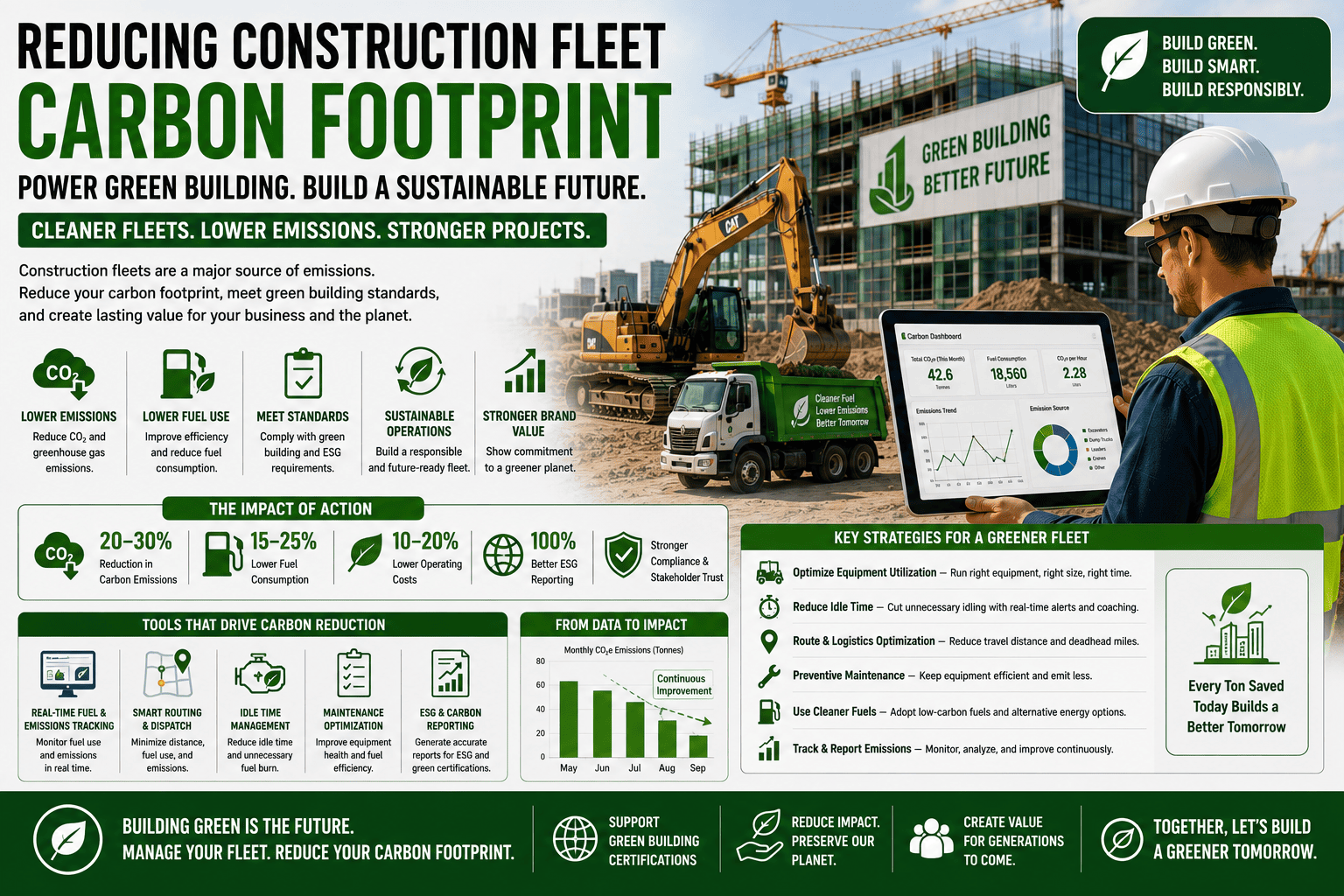
Green building used to be about the materials going into a structure. Now it's also about the diesel burned getting them there. LEED's newest framework puts jobsite fuel use directly into the carbon scorecard, which means the fleet idling outside your project isn't a side issue anymore. It's a line item on the certification.
LEED v5 now tracks carbon emissions from construction activities as part of its Reduce Embodied Carbon credit, and it includes a hard prerequisite banning vehicle idling on job sites. Cutting your fleet's fuel waste, especially idle time, directly supports certification points and lowers real operating cost at the same time. Sign up for FleetRabbit to start measuring where your fleet's carbon comes from, or book a demo to see it mapped to a real project.
Why Your Fleet Is Suddenly Part of the Carbon Conversation
Embodied carbon covers every emission tied to a building before it's ever occupied: manufacturing materials, transporting them, and running the equipment that puts them in place. For years, that conversation stayed focused on concrete and steel. LEED v5 widens the lens to include the construction process itself, and one of its new credit pathways specifically rewards project teams for tracking fuel and utility usage on the jobsite. Your excavators, mixers, and haul trucks are now part of the number a certifier reviews.
The idling prerequisite makes this even more concrete. Where older LEED versions treated idling as a minor best practice, the newest requirements prohibit on-site vehicle idling outright, tying it to both air quality and carbon goals. A fleet that's never tracked idle time now has a compliance reason to start, on top of the fuel savings that come with it.
Embodied vs. Operational Carbon, in Plain Terms
Operational carbon is what a finished building emits while it's running, heating, cooling, lighting. Embodied carbon is everything emitted to get the building built in the first place, and it's locked in before anyone moves in. A fleet burning diesel on-site for months contributes squarely to the embodied side of that ledger, which is exactly why LEED v5 is paying closer attention to it.
Where Fleet Carbon Actually Comes From
Not every gallon of diesel your fleet burns does the same amount of work. Breaking down where fuel actually goes shows fleet managers exactly where the easiest carbon reductions are hiding.
Relative reduction opportunity by category. Active operation is the productive work your fleet exists to do; the other three categories are where carbon gets cut without cutting output.
FleetRabbit surfaces exactly which vehicles idle the most and which routes waste the most fuel, so you know where to act first. Sign up to see your fleet's breakdown, or book a demo for a guided walkthrough.
Three Ways LEED Credits Recognize Carbon Reduction
LEED v5's Reduce Embodied Carbon credit offers more than one path to points, and fleet data feeds directly into the option most construction teams can act on fastest.
| Pathway | What It Measures | Where Fleet Data Fits |
|---|---|---|
| Whole-Building LCA | Full lifecycle assessment of materials and systems | Indirect; equipment use is a smaller factor |
| EPD Analysis | Verified material-level environmental declarations | Indirect; focused on material sourcing |
| Track Construction Activities | Direct fuel and utility usage during construction | Direct; this is fleet fuel and idle data |
The Fastest Path for Contractors
Whole-building assessments and EPD analysis require design-phase coordination that most fleet-focused contractors don't control directly. Tracking construction activity emissions is different. It's built entirely from data a fleet manager already has access to: fuel purchased, hours idled, and equipment run time by vehicle. Getting that data organized is the single fastest way a construction team contributes measurable points to a green building submission.
Practical Steps to Cut Fleet Carbon This Quarter
Reducing fleet carbon doesn't require replacing equipment overnight. Most fleets find meaningful reductions in the first ninety days just by acting on data they didn't previously have.
None of these steps require a large capital outlay to start. What they require is visibility into fuel and idle data that most fleets simply don't have organized today. That's the gap FleetRabbit closes: automatic tracking of fuel consumption and idle time by vehicle, formatted so it's ready the moment a green building submission needs supporting data. Sign up for a free trial to start capturing that data, or book a demo to see how a real fleet's carbon report comes together.
Frequently Asked Questions
FleetRabbit tracks fuel consumption and idle time by vehicle, so cutting your fleet's carbon footprint becomes a data-driven decision instead of a guess, and every green building bid has the numbers ready to go.