Most construction fleets do not choose reactive maintenance. They inherit it. A fleet manager takes over a mixed lineup of excavators, loaders, and dozers with maintenance history scattered across three notebooks, a shared spreadsheet nobody updates, and whatever the last mechanic remembers off the top of his head. Building a real preventive maintenance program from that starting point feels like a massive undertaking, but it comes down to four things done in the right order: knowing exactly what you own, setting intervals that match how hard each machine actually works, giving someone clear ownership of the schedule, and putting a system in place that tracks it automatically instead of relying on memory.
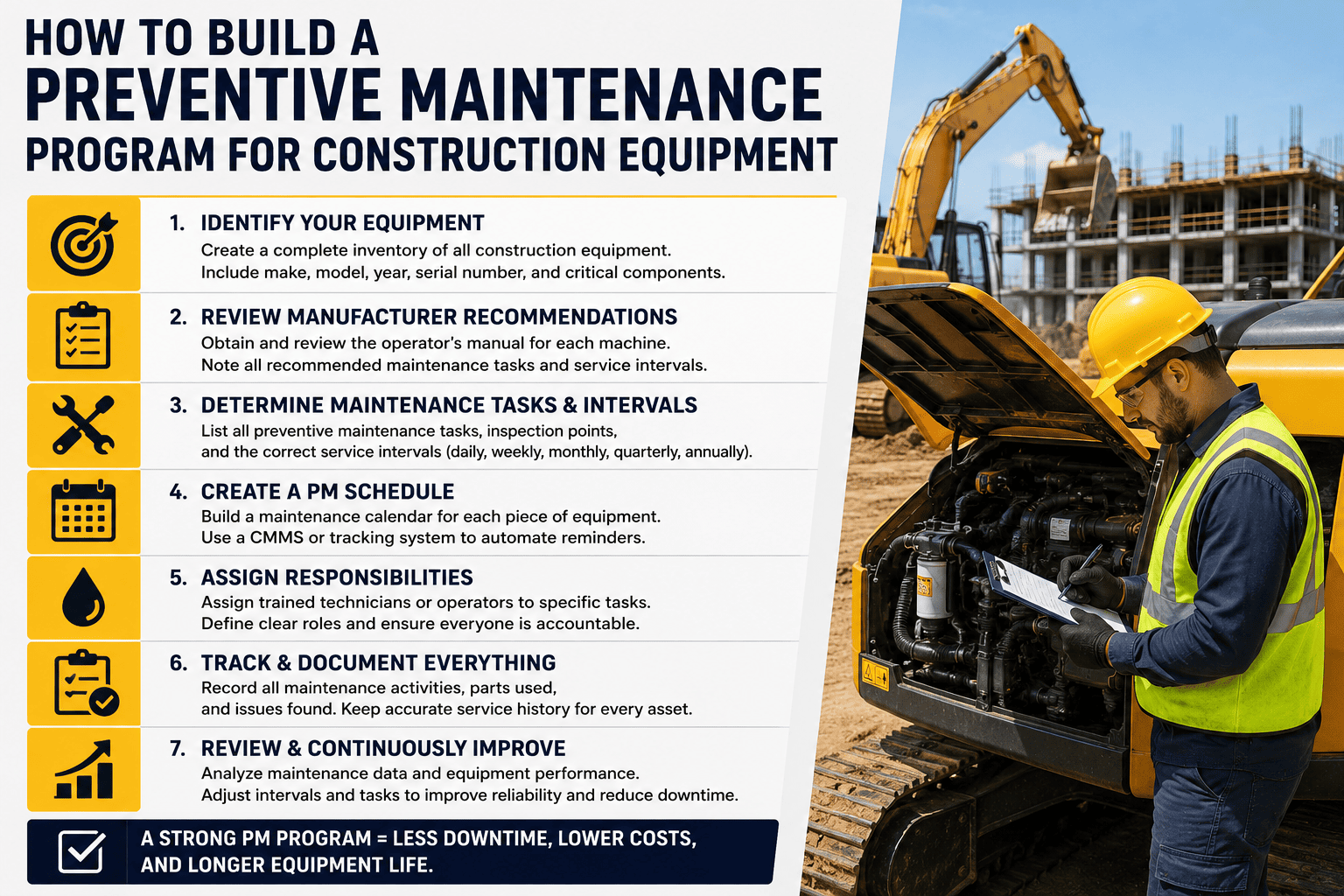
Building a preventive maintenance program for construction equipment takes six steps: build a complete asset inventory, set service intervals based on engine hours and operating conditions, assign clear ownership of the schedule, digitize tracking and reminders, pilot the program on a subset of equipment, and track KPIs to refine it over time. Fleets with a mature PM program report 85 percent fewer unexpected breakdowns and 25 to 40 percent lower total maintenance costs than fleets running reactively. FleetRabbit automates PM-A, PM-B, and PM-C scheduling for every machine in your fleet, so the program keeps running without a spreadsheet behind it.
Six Steps to Build a PM Program From Scratch
Build a Complete Asset Inventory
List every machine by make, model, serial number, and current engine hours. You cannot plan consistent maintenance for equipment you have not fully accounted for, and this step alone exposes gaps most fleets did not know they had.
Set Intervals by Hours and Conditions
Start with manufacturer-recommended service intervals, then tighten them for severe duty such as quarry dust, wet clay, or extreme temperatures. Engine hours, not calendar dates, should trigger every service.
Assign Clear Ownership
Every machine needs an operator responsible for pre-shift walkarounds and a maintenance lead responsible for scheduling and closing out PM work orders. A program without named owners quietly reverts to reactive.
Digitize Scheduling and Reminders
Manual tracking with whiteboards or spreadsheets typically misses 20 to 30 percent of PM windows once a fleet grows past a handful of machines. Automated alerts tied to real engine hours close that gap.
Pilot Before You Scale
Run the new schedule on a subset of equipment first. A controlled pilot validates the workflow, surfaces gaps in parts availability or technician capacity, and builds team confidence before a full rollout.
Track KPIs and Keep Refining
A PM program is never finished. Review completion rates, planned-versus-unplanned ratios, and cost per hour every quarter, then adjust intervals for machines that keep failing early or running longer than expected.
FleetRabbit builds PM-A, PM-B, and PM-C schedules for every machine in your fleet automatically, tracks engine hours in real time, and sends alerts before a service window is missed. Sign up free to load your equipment list today, or book a demo to see a full PM program mapped to your fleet.
What a Mature PM Program Looks Like
You will know the program is working when the numbers move in a specific direction. Use these benchmarks to check your progress against fleets that have already made the shift from reactive to preventive.
A healthy program runs 80 to 90 percent planned maintenance, with only 10 to 20 percent unplanned emergency repairs.
Most well-run construction fleets target 95 to 98 percent uptime across their working equipment.
Structured PM programs typically pay back their setup and technology cost within 6 to 12 months.
Where PM Programs Stall Before They Start
The most common reason a new PM program never gets off the ground is trying to build the perfect system before servicing a single machine. Fleets that succeed start with a simple list of tasks and manufacturer-recommended intervals, then add sophistication once the basics are running consistently. Waiting for a complete, polished program before launch is the surest way to never launch one.
The second most common failure: no one owns the follow-through
A schedule that generates reminders but has no one accountable for closing out the work order is a schedule that will drift within a few months. Naming a maintenance lead responsible for every open PM task is a small step that determines whether the whole program survives its first year.
FleetRabbit assigns every PM task to a responsible technician, tracks completion in real time, and generates the reports you need to see exactly where your program stands. Sign up free to start building your program today, or book a demo and we will walk through your equipment list with you.
Frequently Asked Questions
Every week without a structured PM program is another week of breakdowns you could have prevented. FleetRabbit gives you the schedules, reminders, and dashboards to build a program that actually holds up, starting with the very next machine you service.