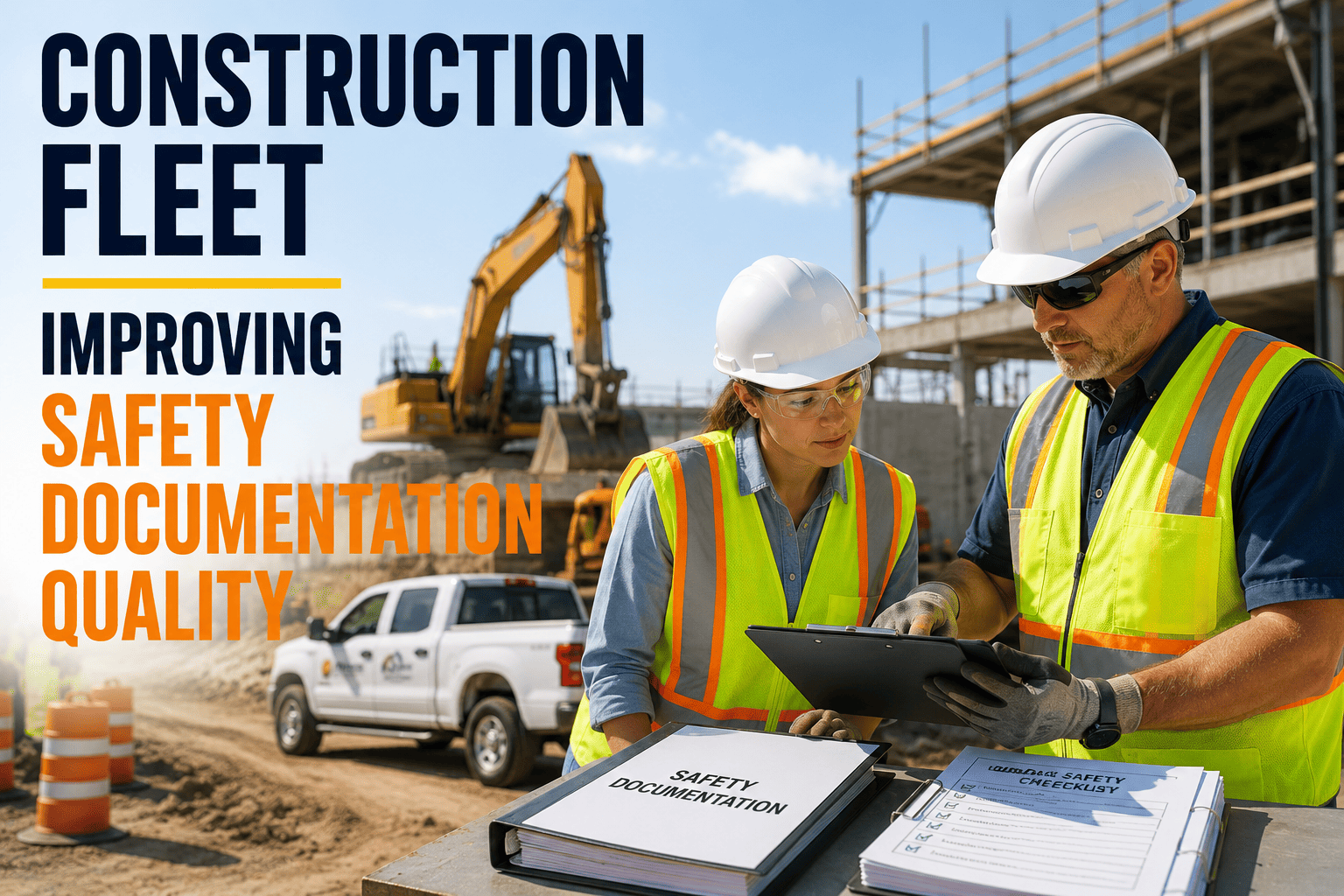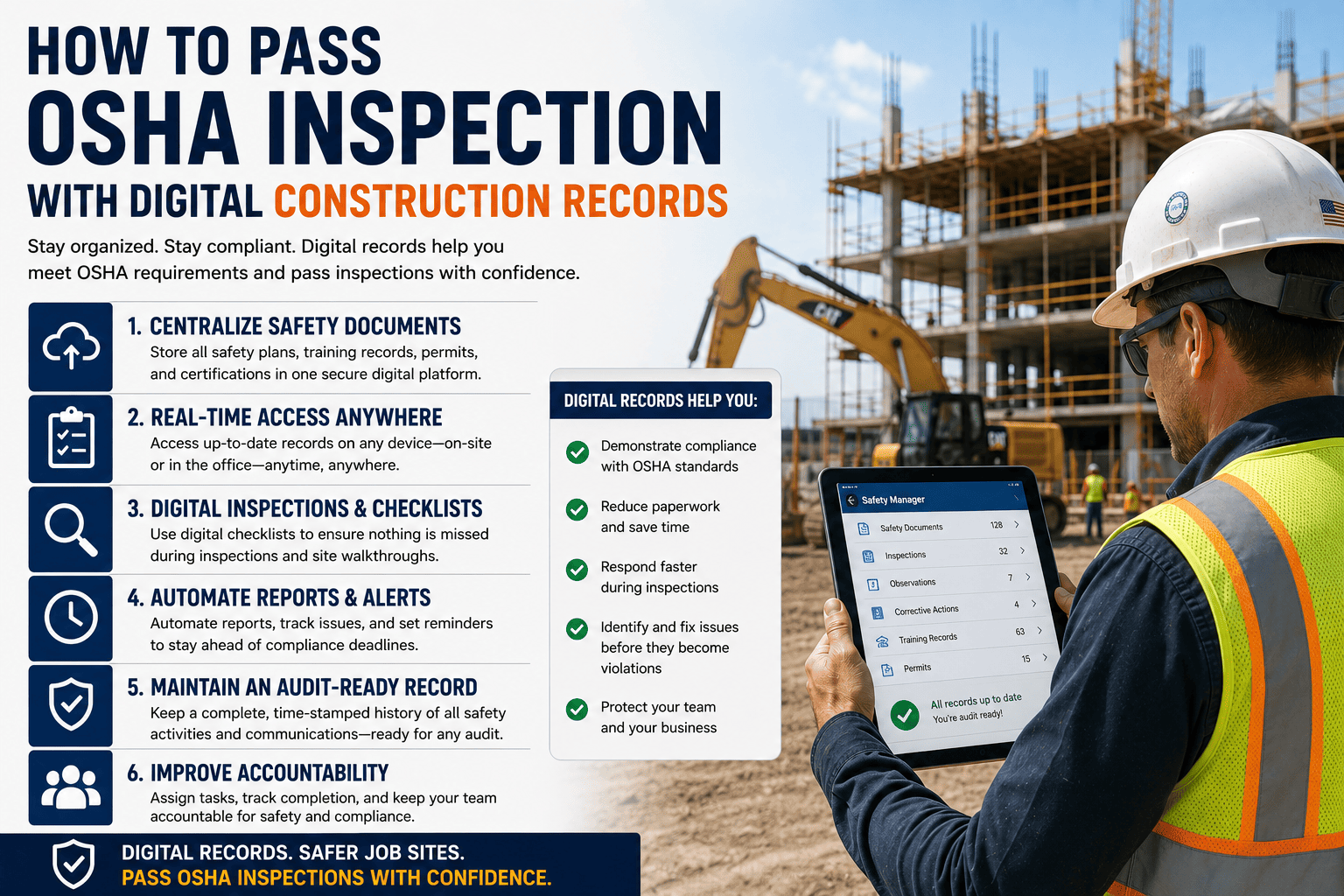
OSHA does not call ahead. An inspector can walk onto your site today and ask for pre-shift inspection logs, crane certifications, and equipment maintenance history going back months, and if the paperwork is missing, scattered across trucks, or sitting in a supervisor's glovebox, that gap becomes the citation. Most construction penalties are not issued because equipment was actually unsafe. They are issued because the proof of safety could not be produced on the spot. Digital equipment records fix exactly that problem, and contractors who switch from paper are turning what used to be a stressful surprise into a five-minute records pull.
OSHA inspectors expect documented pre-shift inspections, current operator certifications, and complete maintenance history for every machine, produced on demand. Paper systems commonly fail to produce this within the inspection window, while digital platforms with timestamped entries and photo evidence hold up under review. A single documentation-based citation runs up to 16550 dollars for a serious violation and up to 165514 dollars for a willful or repeated one, making record-keeping one of the highest-cost gaps a contractor can leave unfixed.
Why Documentation, Not the Machine, Fails Most Inspections
OSHA's position is straightforward: if it isn't documented, it didn't happen. An inspector doesn't take your word that the crane got its monthly inspection or that the excavator operator is certified. They ask for the record, and if it can't be produced immediately, the citation gets written regardless of whether the equipment was actually safe that day. This is why contractors with genuinely strong safety practices still get cited, and why the fix isn't more safety meetings, it's better records.
The Three-Tier Inspection Trap
Equipment like cranes requires shift, monthly, and annual inspections, each with a qualified inspector's signature. Missing even one tier of that record, especially across a multi-site operation using paper logs, is one of the most frequently cited failures in construction, appearing on OSHA's list nearly every year.
FleetRabbit keeps every pre-shift inspection, certification, and repair sign-off in one cloud dashboard, pulled up on a tablet in seconds when an inspector walks on site. Sign up free to digitize your first site today, or book a demo to see the audit-ready report in action.
The Records an Inspector Will Actually Ask For
Knowing exactly what to have ready removes most of the panic from an unannounced visit. These are the documents that come up most often during construction equipment inspections.
| Record Type | What Inspectors Check | Serious Violation Range |
|---|---|---|
| Pre-Shift Inspection Logs | Date, time, operator signature, and defect status for every shift | Up to 16550 dollars |
| Operator Certifications | Current crane, aerial lift, and powered truck certifications on file | Up to 16550 dollars |
| Three-Tier Crane Inspections | Shift, monthly, and annual records with qualified inspector signature | Up to 16550 dollars |
| Defect-to-Repair Sign-Off | Chain of custody from flagged defect to cleared repair | Up to 165514 dollars if repeated |
| Training Documentation | Sign-in sheets and topic detail for fall protection, PPE, and equipment training | Up to 16550 dollars per instance |
What Happens the Day the Inspector Shows Up
Understanding the sequence of an unannounced visit helps you prepare the right records before it happens, not after.
Step One: The Opening Conference
The inspector explains the reason for the visit, whether it's a programmed inspection, a complaint, or a referral, and requests your general safety documentation to start.
Step Two: The Records Request
This is where documentation gaps surface fastest. The inspector asks for specific equipment logs, often for a defined time window, and expects them produced on site, not emailed over later in the week.
Why "We'll Send It Later" Doesn't Help
Records that aren't readily accessible during the walkthrough are treated as a separate compliance failure, on top of whatever the underlying records actually show. Being able to pull a complete history on a tablet in the moment is what separates a clean visit from a compounding one.
Step Three: The Physical Walkaround
The inspector compares what they see on equipment and site conditions against what your records claim, checking fall protection, guardrails, trenching, and machine condition against the paperwork.
Step Four: The Closing Conference
Findings get reviewed, and any apparent violations are discussed before formal citations are issued. Complete, organized records at this stage often prevent findings from escalating.
FleetRabbit's digital DVIRs push pre-shift checklists to every operator's phone, lock out equipment with an unresolved defect, and generate an audit-ready report the moment it's requested. Start free and load your first site, or book a walkthrough to see the compliance dashboard live.
Building a Digital Records System That Holds Up
Passing an inspection isn't about a single clean day, it's about a record-keeping habit that runs every shift, on every machine, across every site.
Push Checklists to the Operator, Not the Office
Pre-shift inspections completed on a phone at the machine, with mandatory fields and photo evidence for any flagged defect, close the gap that paper forms leave open when a form gets lost or filled in late.
Lock Out Equipment With Open Defects
When a defect is logged, the equipment status should flip to out of service automatically until a qualified technician signs off digitally. This single rule prevents the compounded citation that comes from a known defect continuing to operate.
Certification Expiry Alerts
Operator certifications and annual inspection dates should trigger reminders well before they lapse, so a crane operator's credential never quietly expires mid-project without anyone noticing.
Keep Every Site in One Dashboard
Multi-site contractors with paper systems consistently fail the readily-accessible test because records live wherever the paperwork physically is. A unified cloud system means any site's complete equipment history is available from any device the moment it's asked for.
Frequently Asked Questions
The safest crews still get cited when the paperwork can't keep up. FleetRabbit turns pre-shift checklists, certifications, and repair sign-offs into one always-ready digital record, so you walk into every inspection prepared. Get started free or talk it through with our team.