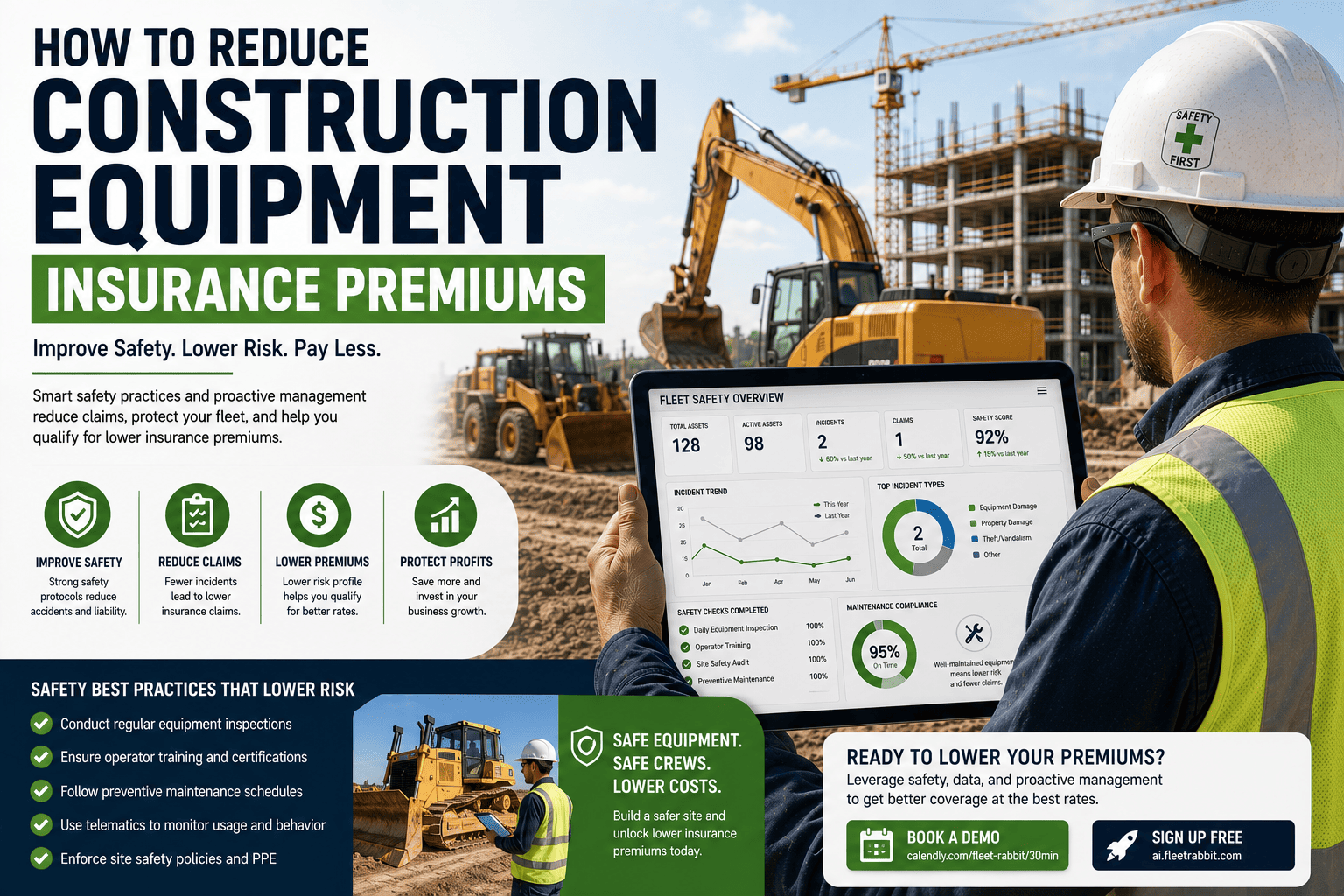
Construction equipment insurance renewals have turned into one of the most painful line items on the budget. Premiums are climbing even for contractors who have never filed a claim, and the reason usually has nothing to do with the equipment itself. Underwriters are pricing risk based on what they can see, and most contractors simply cannot show them enough. Inspection logs live in someone's truck. Operator certifications live in a filing cabinet. Maintenance history lives in three different spreadsheets that nobody has opened since March. When renewal season arrives, the broker asks for documentation and the contractor scrambles, and scrambling never gets you a discount.
The good news is that premium pricing is not fixed. It is a direct response to demonstrated risk, and demonstrated risk is something you can influence with better records, not just better luck. Contractors who can hand an underwriter a clean, organized safety picture are the ones capturing the reductions available in this market. This guide breaks down exactly what insurers are looking for and how a platform like FleetRabbit turns scattered paperwork into the kind of evidence that lowers your rate.
Why Your Premium Is Higher Than It Should Be
Two numbers drive most of your equipment and workers compensation pricing: your Experience Modification Rate and your Total Recordable Incident Rate. Neither one describes how well you actually run your safety program. They only report what happened after the fact, which means a contractor with a genuinely strong program can still get priced like an average one simply because nobody proved the difference on paper.
An EMR of 1.00 is the industry baseline. Fall below it through a clean claims history and you pay less than your peers for identical coverage. Climb above it and the same coverage can cost 30 percent more or higher. Underwriters also look closely at TRIR, and the current construction-wide benchmark sits in the low 2s per 100 full-time workers, so sitting meaningfully below that number is something worth putting in front of your broker in writing, not mentioning verbally at renewal.
The Documentation Gap Nobody Talks About
Here is the part most contractors miss: two companies can have the same EMR and the same TRIR and still walk away from renewal with different prices. The company that shows up with inspection records, operator training certificates, near-miss logs, and maintenance history organized by asset gets treated differently than the one that shows up with a verbal assurance that "safety is a priority." Underwriters price documentation gaps as risk, because an undocumented safety program is indistinguishable from no safety program at all once something goes wrong.
FleetRabbit centralizes inspection logs, operator certifications, maintenance history, and incident reports into one exportable record your broker can hand straight to underwriters. Sign up free and see what your fleet's safety picture looks like today.
Four Records Underwriters Actually Want to See
Inspection History Per Asset
Not a general statement that machines get inspected, but a dated, asset-by-asset log showing what was checked, what was found, and what was corrected. Gaps in this record read as gaps in oversight.
Operator Training and Certification
Underwriters increasingly ask who is behind the controls of high-value equipment and whether that person is certified for it. A current, searchable certification record removes ambiguity from the conversation.
Maintenance and Repair Timeline
Scheduled maintenance completed on time signals a proactive operation. A maintenance history full of reactive, emergency repairs signals the opposite, regardless of what your loss runs show.
Near-Miss and Incident Reporting
A program that logs near-misses, not just injuries, demonstrates that problems get caught before they become claims. That distinction matters more to underwriters than most contractors realize.
What Changes When the Data Is Organized
Think of underwriting the same way a lender thinks about a credit application. A borrower with scattered, incomplete records looks riskier than one who can produce a clean, itemized history, even if their actual finances are similar. Insurance pricing works the same way. The table below shows how the same underlying safety performance gets priced differently depending on how well it is documented.
| Renewal Factor | Undocumented Program | Documented Program |
|---|---|---|
| Inspection Records | Verbal confirmation only, inconsistent across sites | Dated per-asset logs available on request |
| Operator Certification | Filed on paper, unclear which operators are current | Searchable digital record tied to each machine |
| Maintenance History | Reactive repairs dominate the record | Scheduled maintenance visible and on time |
| Underwriter Confidence | Priced as average risk regardless of actual performance | Priced closer to demonstrated performance, often below average risk |
| Renewal Negotiation | Broker has little leverage to push back on increases | Broker can shop the account with evidence attached |
Building the Safety Record That Gets You a Discount
Start With a Baseline Audit
Pull twelve months of inspection logs, maintenance tickets, operator certifications, and any incident or near-miss reports across your fleet. Most contractors discover the records exist, they are just scattered across paper files, text threads, and a handful of spreadsheets that never sync with each other.
Centralize It by Asset, Not by Department
Underwriters think in terms of assets and operators, so your records should be organized the same way. A single dashboard showing every inspection, certification, and repair tied to a specific machine is far more persuasive than department-level summaries.
Bring It to Your Broker Before Renewal, Not During
Documentation delivered 90 to 120 days ahead of renewal gives your broker time to shop the account to multiple carriers with real evidence in hand, rather than making promises on your behalf at the last minute.
FleetRabbit tracks inspections, certifications, maintenance, and incidents automatically so your safety story is always ready to export. Book a demo to see how contractors are using their FleetRabbit data at renewal time.
How FleetRabbit Fits Into the Picture
FleetRabbit was built around the same records underwriters ask for, which is why contractors already using it for maintenance and inspections find renewal prep dramatically less painful. Every inspection gets logged against its asset automatically. Every operator certification is stored and searchable instead of buried in a filing cabinet. Every repair, planned or emergency, sits in a timeline that shows whether your maintenance approach is proactive or reactive. When renewal season arrives, that information exports into a report your broker can hand to underwriters directly, turning a scramble into a five-minute task.
Your safety performance deserves to be priced on what it actually is, not on what you couldn't prove at renewal. FleetRabbit keeps every inspection, certification, and maintenance record ready to hand to your broker the moment renewal season starts.