Most construction fleets aren't short on equipment — they're short on visibility. An excavator sits idle on one site for two weeks while a crew across town calls a rental yard for the exact same machine. Nobody did anything wrong; nobody could see both sites at once. That single blind spot, repeated across a fleet, is why the average contractor runs utilization in the 60 to 65 percent range while the best-run fleets consistently clear 80 percent on their core equipment.
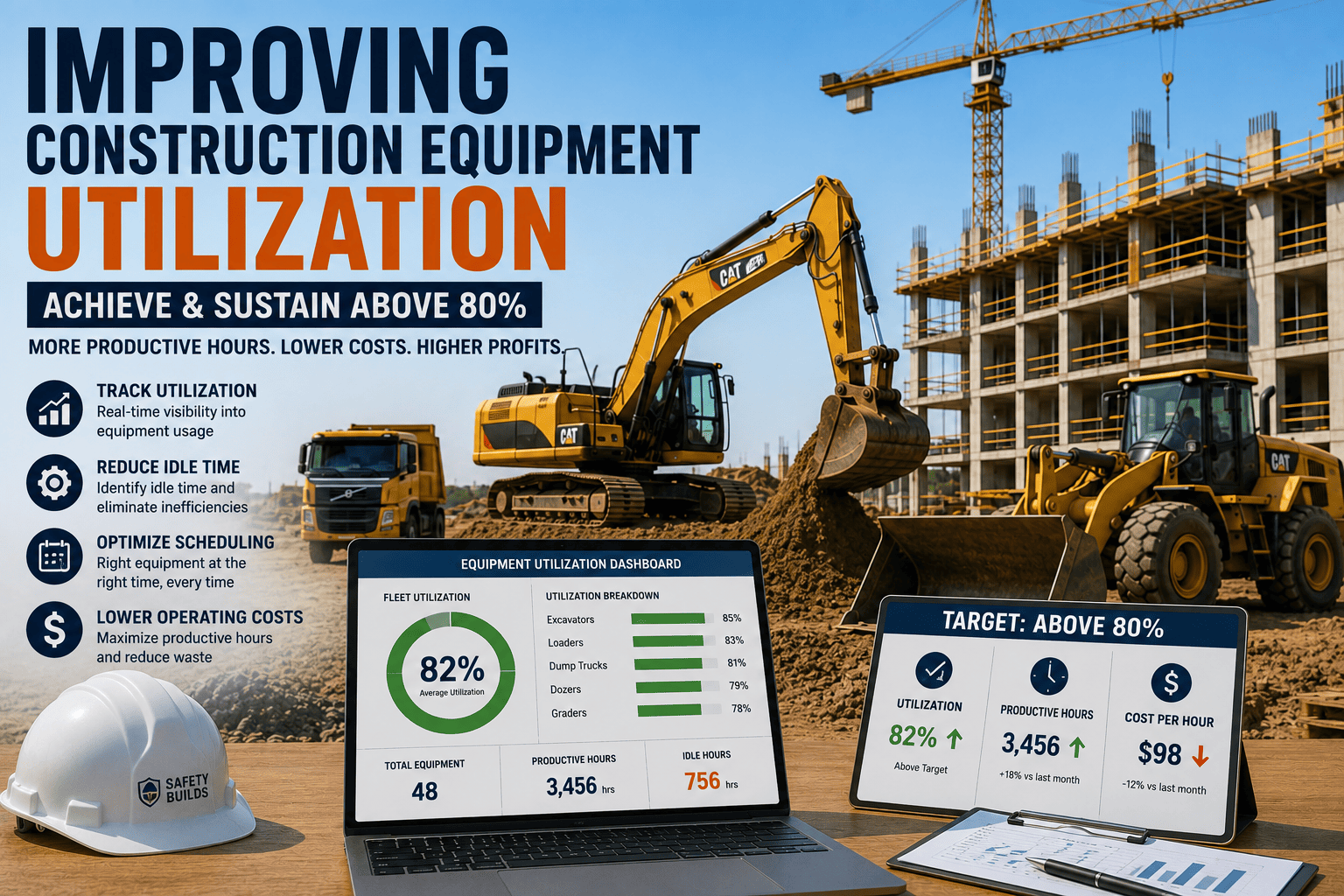
Core earthmoving and haul equipment can realistically sustain 75 to 85 percent time utilization when idle time is tracked and cross-site redeployment is systematic. Fleets that move from guesswork to telematics-driven tracking typically lift utilization from the 60 to 65 percent range to 75 to 80 percent within a few months, and commonly uncover 200,000 dollars or more in annual savings from machines that were chronically underused.
Why Most Fleets Plateau Below 65 Percent
Utilization doesn't stall because equipment is broken or crews are careless. It stalls because of a visibility gap. Fleet managers relying on operator timesheets and project schedules can tell you a machine was assigned to a job, but not how many of its hours were actually productive versus idling, waiting on a delivery, or parked between phases. Without engine-level data, an asset running at 40 percent productive time looks identical on paper to one running at 80 percent, right up until the year-end numbers come in short.
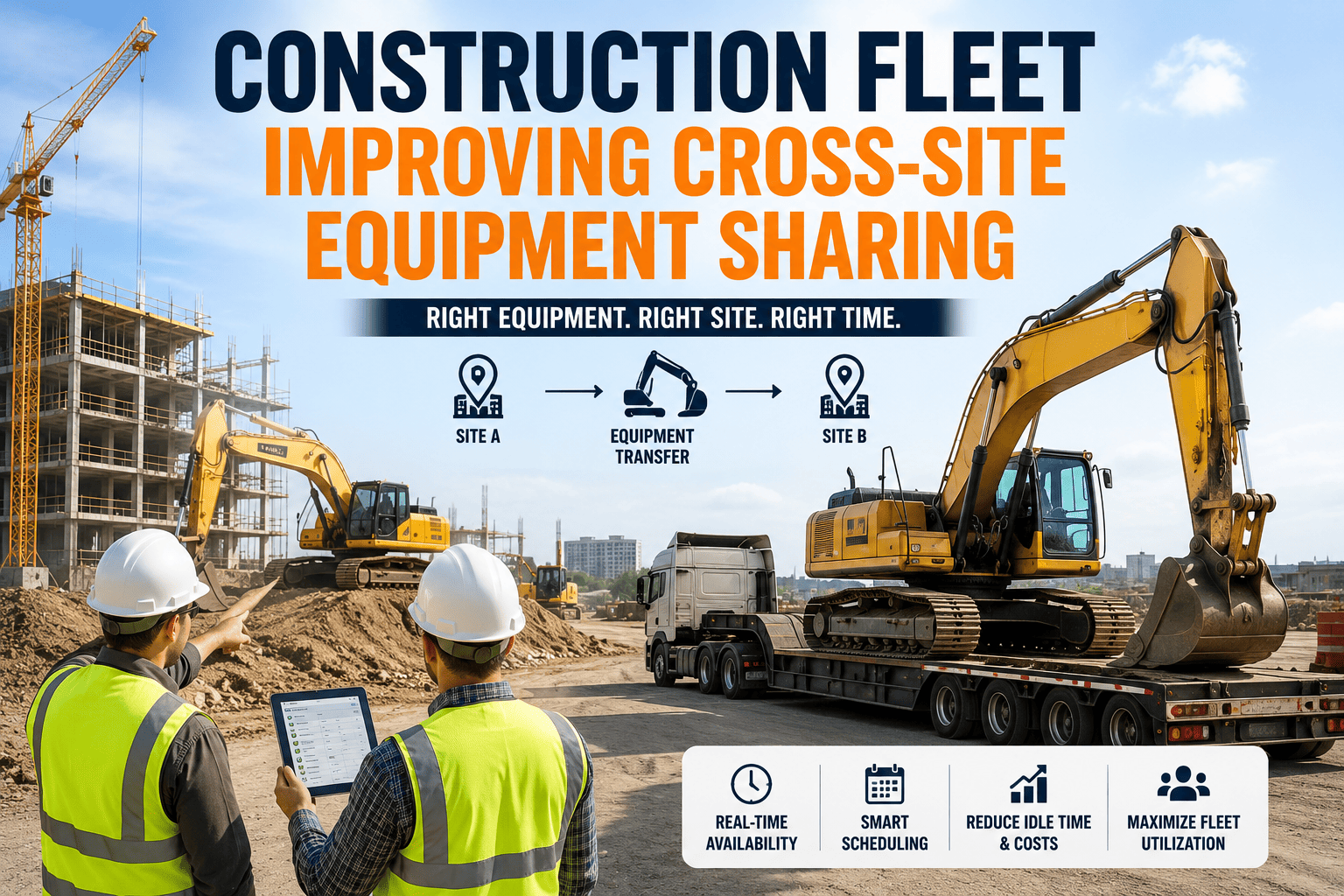
The second driver is scale. A single jobsite manager can usually tell you what their own equipment is doing. Almost nobody can tell you what's idle three sites over. That cross-site blind spot is where the most expensive mistake happens: paying for a rental on one site while the exact machine you need sits parked and billing depreciation on another.
The Utilization Ladder
See Every Machine's Idle Time in One Dashboard
FleetRabbit calculates productive hours, idle time, and utilization rate for every machine on every jobsite automatically, then flags redeployment opportunities before a rental request gets approved. You can start a free trial to see your fleet's real utilization spread, or book a demo to walk through a redeployment review with our team.
Four Tactics That Actually Move the Number
1. Track Productive Hours, Not Just Location
Knowing where a machine is parked tells you nothing about whether it's working. Engine-on productive hours, idle percentage, and off-time need to be measured separately, because a machine can sit on the right job and still barely be earning its cost if it's idling most of the shift.
2. Build a Cross-Site Redeployment Workflow
Visibility alone doesn't move equipment — someone needs the authority and the data to redirect an idle machine before a rental request gets approved elsewhere. This is the single highest-leverage utilization win available, and it's also the one most fleets skip because it requires a centralized view most don't have.
3. Flag Chronic Underperformers for Action
A machine consistently running below 40 to 50 percent utilization across multiple projects and multiple months is rarely a one-off scheduling issue. It's a candidate for redeployment to a different role, sale, or retirement, and leaving it in the fleet "just in case" keeps depreciation and insurance accruing against work it isn't doing.
What "Chronic" Actually Means
One slow week doesn't indicate a problem. A pattern across three or more months, and across more than one project, is the signal worth acting on.
4. Match Maintenance Scheduling to Real Usage
Fixed calendar-based maintenance intervals push high-utilization machines toward premature failure and waste service visits on machines barely being used. Condition and usage-based scheduling keeps high-demand equipment available during the hours it's actually needed, which protects the utilization gains from the first three tactics instead of undoing them with an unplanned breakdown.
What Moving From 65% to 80% Is Actually Worth
These are not abstract targets. Fleets that move from guesswork to telematics-based tracking commonly identify redeployment opportunities that reduce rental spend within the first few weeks, simply because idle assets finally show up somewhere someone is looking. The bigger, slower-building gain comes from the buy, sell, and rent decisions that get made with real usage data instead of memory and habit — decisions that compound every year the fleet stays right-sized.
Getting Started Without Overhauling Everything
The fastest path to 80 percent utilization isn't a full fleet replacement or a new tracking system for every asset overnight. Start with the equipment categories that carry the most capital and the widest utilization spread — core earthmoving and haul units are usually the biggest opportunity. Get real productive-hour data flowing for that group first, act on the obvious outliers, then expand tracking outward. Most fleet managers see measurable improvement within 30 to 60 days of putting real utilization data in front of the right people. If you'd like to see what that looks like against your own fleet, you can book a demo and bring your current equipment list.
Frequently Asked Questions
Turn Idle Machines Into Real Utilization Gains
Stop losing utilization to blind spots between jobsites. FleetRabbit gives you real-time productive-hour data and redeployment alerts for every machine in your fleet, so hitting 80 percent utilization becomes a system, not a guess. Sign up to see your fleet's utilization spread today, or book a demo to walk through a redeployment review with our team.