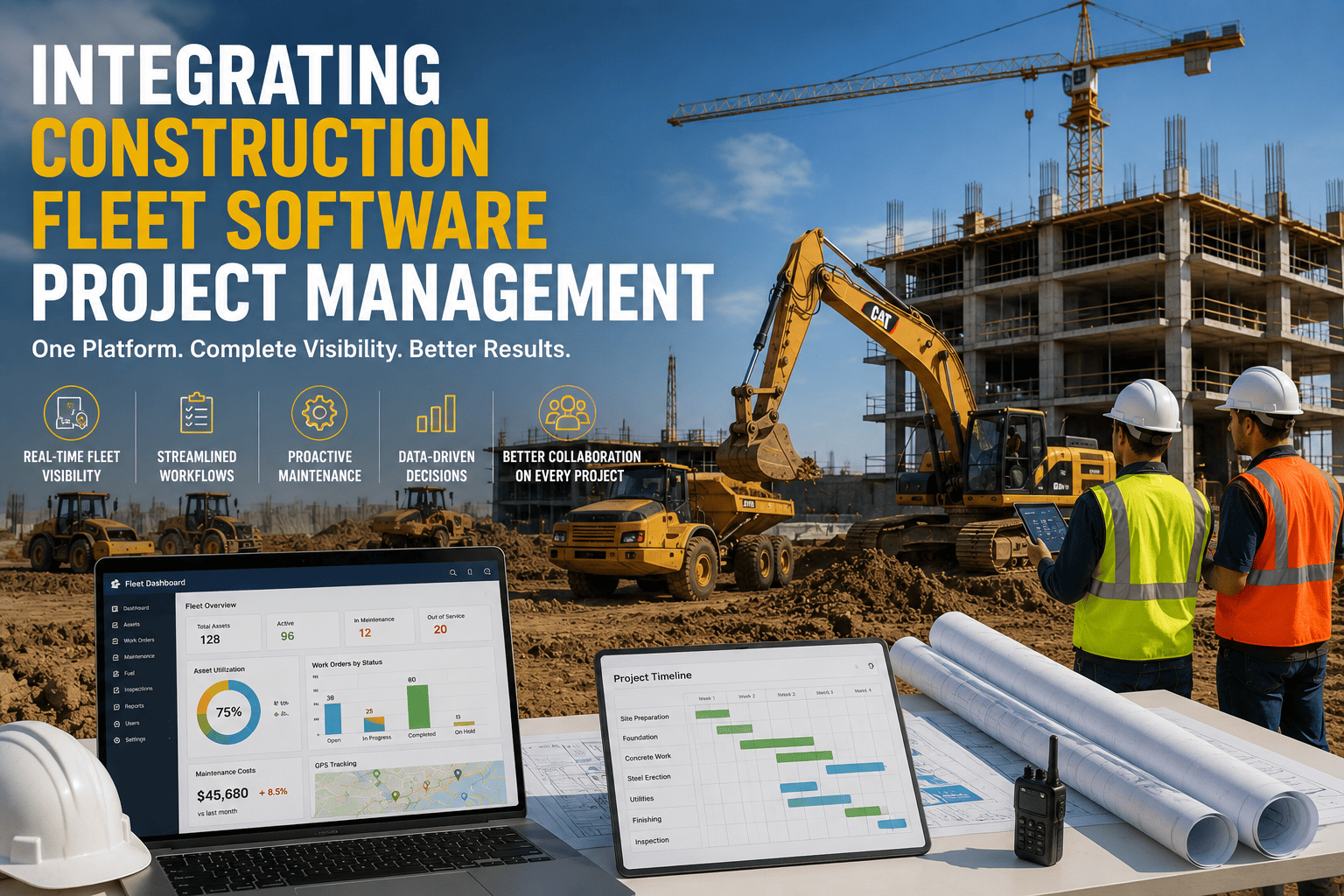
Somewhere between the scheduling board and the equipment yard, a lot of construction projects quietly lose money. A superintendent builds next week's plan in Procore or Buildertrend assuming an excavator will be free, except the fleet system tracking that excavator has never talked to the scheduling tool, so nobody notices the conflict until a crew shows up to an empty spot on the jobsite. Manual scheduling like this averages 2.8 conflicts per week, and idle time can eat up 22 to 39 percent of available equipment hours simply because the people planning the work and the people tracking the equipment are working from two different systems. Connecting fleet software directly to project management tools closes that gap, and the contractors who've done it are seeing measurably fewer surprises and better-utilized equipment. If you want to see what that connection looks like on your own projects, you can start a free trial or book a live demo anytime.
Construction companies routinely own 20 to 30 percent more equipment than they actively use, largely because scheduling and fleet data live in separate systems. Connecting fleet software to project management platforms like Procore and Buildertrend delivers 25 to 35 percent improvements in equipment utilization and, according to FMI research, generates 4.20 to 7.50 dollars in return for every dollar invested in scheduling automation.
Why Fleet Data and Project Schedules Keep Missing Each Other
Most contractors didn't set out to build disconnected systems. They adopted a project management platform for scheduling, RFIs, and client communication, then added fleet or telematics software separately to track equipment location and maintenance. Each tool does its job well in isolation, but the moment a project manager needs to schedule equipment for next week's pour, the two systems have no idea the other exists.
The Root Cause Is Almost Always a Baseline Gap
According to FMI research, 62 percent of failed construction technology implementations trace back to incomplete baseline data, meaning contractors try to connect systems before they've actually mapped what equipment they own, where it lives, and how project schedules currently reference it. Integration works far better once that foundation exists.
FleetRabbit feeds live equipment location, availability, and maintenance status directly into the project management tools you already use. Start your free trial and stop scheduling around guesswork.
What Changes Once Fleet and Project Management Tools Are Connected
Platforms like Procore already show the value of linking equipment data directly to project workflows. Contractors using Procore's equipment module, which connects assignments to projects, daily logs, and cost codes, report 38 percent fewer equipment-related daily log entries, meaning far fewer problems worth reporting in the first place. The same principle applies whether the project platform is Procore, Buildertrend, or another tool: connecting live equipment data to the schedule prevents the conflict instead of just documenting it afterward.
| Workflow Step | Disconnected Systems | Integrated Systems |
|---|---|---|
| Scheduling Equipment | Planner guesses availability or calls the yard to confirm | Live availability shows directly inside the project schedule |
| Assigning to Cost Codes | Hours copied manually into job cost spreadsheets | Engine hours and usage sync automatically to the right cost code |
| Maintenance Conflicts | Equipment gets scheduled for a job while due for service | Maintenance status blocks or flags conflicting assignments |
| Daily Logs | Field teams report problems after they've already caused delay | Fewer issues to log because conflicts are prevented upstream |
Why This Matters More As Fleets Grow
Contractors managing more than a handful of equipment assets consistently outgrow basic scheduling features built into general project management platforms. Survey data from JBKnowledge shows teams managing more than 15 equipment assets overwhelmingly end up supplementing their project management tool with a dedicated fleet solution, which only pays off if that fleet solution actually connects back into the project platform instead of becoming yet another silo.
The Financial Case Is Hard to Ignore
FMI's analysis puts the return on equipment scheduling automation at 4.20 to 7.50 dollars for every dollar invested. If a fleet audit uncovers 150,000 dollars in annual scheduling waste, a 20,000 to 35,000 dollar investment in integration sits comfortably inside that return range, and the utilization gains compound every year the systems stay connected.
The Broader ROI Behind Connected Fleet and Project Data
Beyond preventing scheduling conflicts, tying equipment data directly into project workflows delivers measurable gains across the whole operation. Data-driven equipment allocation improves utilization by 25 to 35 percent, labor productivity rises 10 to 15 percent from better scheduling and less downtime, and administrative overhead drops 15 to 20 percent once teams stop manually re-entering the same data into two systems.
FleetRabbit syncs equipment hours, availability, and maintenance status directly into your Procore, Buildertrend, or ERP workflows. Book your demo to see the integration mapped to your specific tech stack.
How to Connect Fleet Software With Your Project Management Stack
Integration doesn't have to mean ripping out tools your teams already know. A staged approach gets fleet and project data talking to each other without disrupting the workflows already in place.
A Realistic Timeline for Getting Connected
Contractors following this staged approach typically complete the full process in four to six weeks, and platforms built around live telematics and maintenance data often reach day-to-day adoption within about two weeks using the hardware teams already own, since the integration work happens behind the scenes rather than requiring new equipment on every machine.
Frequently Asked Questions
When fleet data and project schedules finally speak the same language, conflicts disappear before they cost you a day. FleetRabbit connects equipment availability, maintenance status, and job costs directly into the project management tools your team already relies on.