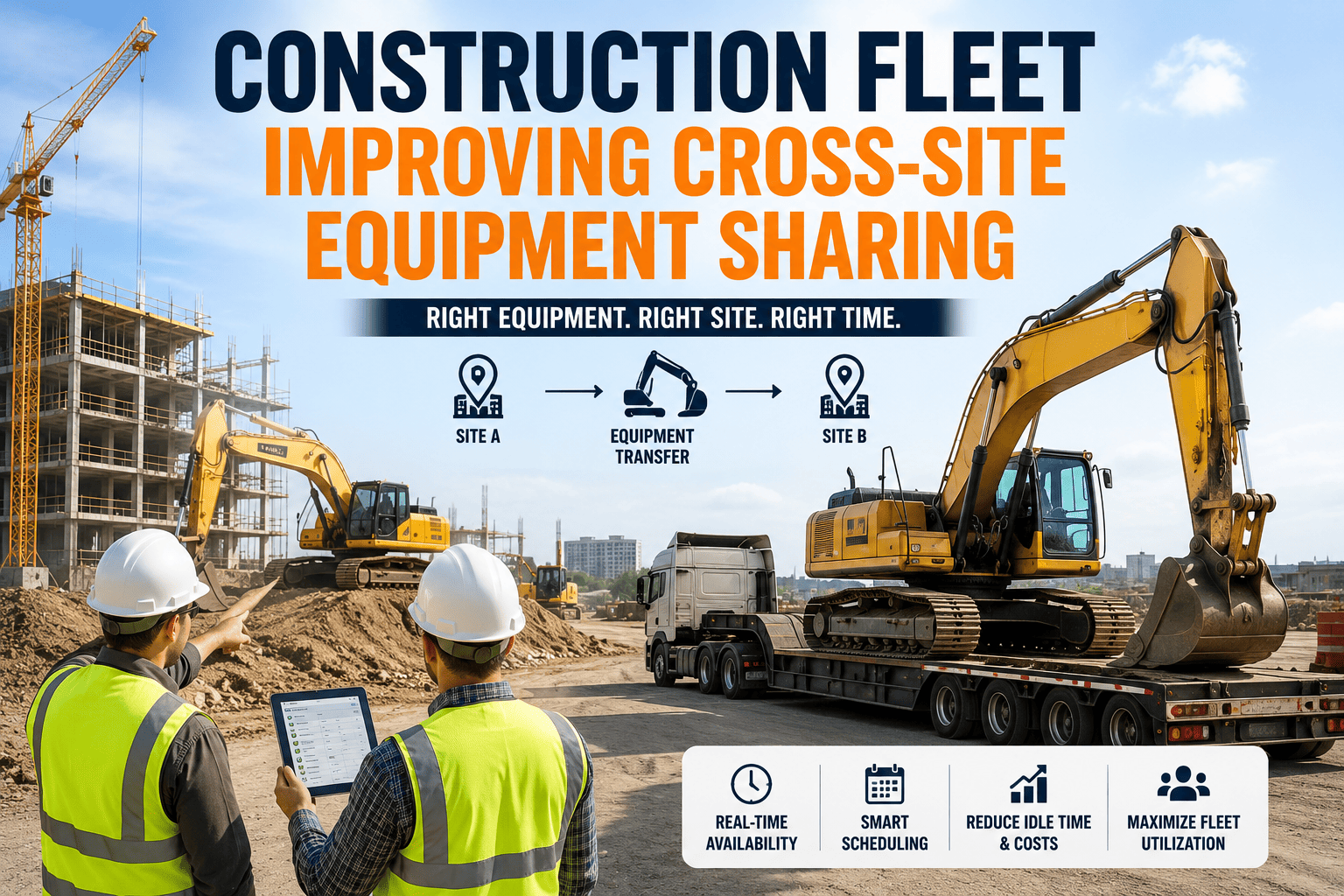
Managing construction equipment across remote job sites costs contractors $22,000–$68,000 annually in lost productivity per site — from equipment sitting idle at the wrong location, to maintenance failures discovered only after a machine breaks down 80 miles from the nearest service center, to operators running unauthorized hours without fleet manager visibility. When your excavators, loaders, and dozers are spread across 5–15 remote locations with limited cellular coverage and no centralized tracking, blind spots multiply: equipment utilization drops to 45–55% vs. the 75%+ industry benchmark, theft risk increases 340%, and maintenance windows are missed by an average of 22 days. Fleet Rabbit's offline-capable mobile fleet management platform eliminates remote site blind spots by synchronizing equipment location, runtime, operator logs, maintenance alerts, and utilization data — even from sites with zero cellular connectivity — giving fleet managers real-time control over every asset regardless of distance or terrain. Book a demo to see remote site management in action.
Quick Answer
Fleet Rabbit's mobile-first fleet management app works offline across remote construction sites — automatically syncing equipment GPS locations, engine runtime hours, operator check-in/check-out logs, inspection reports, and maintenance alerts the moment connectivity returns. Construction companies managing equipment across 5+ remote sites report 38% improvement in equipment utilization, 62% faster maintenance response, and $14,000–$28,000 monthly cost savings within 90 days of deploying Fleet Rabbit's remote site management capabilities.
38%
Equipment Utilization Improvement
62%
Faster Maintenance Response at Remote Sites
$28K
Monthly Cost Savings per Fleet
99.7%
Data Sync Accuracy — Even Offline
340%
Theft Risk Reduced via Geofencing
4.2 hrs
Avg Time Saved per Fleet Manager Daily
Remote Site Fleet Intelligence
See Every Machine, Every Site — Even Without Cell Service
Fleet Rabbit's offline-capable mobile app gives fleet managers full visibility into equipment location, utilization, and maintenance status across all remote job sites — syncing automatically when connectivity returns. No more blind spots, no more surprise breakdowns.
Why Remote Job Sites Destroy Fleet Visibility
Remote construction sites — pipeline corridors, wind farm installations, mining access roads, rural highway expansions — create five critical fleet management failures that compound equipment costs and erode project margins until proper digital infrastructure restores centralized control.
Challenge 01
No Cellular Coverage = No Real-Time Tracking
70% of remote construction sites have spotty or zero cellular signal. Traditional GPS trackers and cloud-based fleet platforms go dark — leaving fleet managers with no equipment location data, no runtime updates, and no operator status for hours or days. A $400,000 excavator disappears from your dashboard until someone physically drives to the site to check on it.
Impact: $8,200–$15,000/month in blind-spot losses
Challenge 02
Equipment Sits Idle at Wrong Locations
Without centralized visibility, equipment gets stranded at completed job phases while other sites urgently need the same machines. A loader sitting idle at Site A for 12 days while Site B rents an identical unit at $1,800/week because nobody knew it was available. Across a 10-site operation, misallocation wastes $6,000–$18,000 monthly in unnecessary rentals and idle asset depreciation.
Impact: 45–55% utilization vs. 75% benchmark
Challenge 03
Maintenance Failures Cascade at Remote Sites
Preventive maintenance windows are missed by 15–30 days at remote sites because paper-based hour meters aren't reported, and engine hour data doesn't reach the maintenance scheduler. A missed 500-hour service on a dozer becomes a $14,000 engine repair instead of a $800 filter and oil change. Service trucks driving 160+ miles round-trip to remote sites add $450–$800 per service call in mobilization costs alone.
Impact: 3.2x higher repair costs vs. on-schedule maintenance
Challenge 04
Theft & Unauthorized Use Spike at Isolated Sites
Remote sites with no surveillance, limited fencing, and minimal supervision see 340% higher theft rates than urban construction. Equipment left overnight at unsecured rural sites gets stolen, borrowed by neighboring contractors, or operated during off-hours without authorization. A single stolen skid steer ($45,000–$75,000 replacement) often isn't discovered for 24–72 hours at remote locations — long after recovery becomes impractical.
Impact: $12,000–$75,000 per theft incident
Challenge 05
Operator Accountability Disappears Beyond the Office
Without digital check-in/check-out, pre-operation inspection enforcement, and runtime logging, operators at remote sites operate equipment without proper documentation — skipping safety inspections, running unauthorized overtime, and creating liability exposure. Fleet managers have no way to verify who operated which machine, when, or whether required inspections were completed until someone physically audits paper logs days or weeks later.
Impact: 78% of OSHA violations at remote sites involve documentation gaps
Challenge 06
Fuel & Cost Tracking Goes Dark at Remote Locations
Without automated fuel monitoring, remote site equipment burns through diesel with zero accountability — operators refuel from bulk tanks without logging gallons, fuel theft goes undetected for weeks, and per-site cost allocation becomes guesswork. A 50-unit fleet spread across 8 remote sites can lose $6,000–$14,000 monthly in untracked fuel alone. End-of-month reconciliation reveals the damage but offers no actionable data to prevent it from repeating next month.
Impact: $6,000–$14,000/month in untracked fuel losses
How Fleet Rabbit Solves Remote Site Management
Fleet Rabbit deploys a three-layer technology architecture purpose-built for construction environments where traditional cloud-dependent platforms fail — combining offline-capable mobile apps, satellite-augmented GPS, and intelligent data synchronization to deliver fleet management without connectivity dependence.
Offline-First Mobile App
Full fleet management functionality without internet connection. Operators complete pre-trip inspections, log hours, report defects, and check equipment in/out — all stored locally on device until connectivity resumes. Data syncs automatically via WiFi, cellular, or satellite hotspot with zero data loss and conflict resolution for multi-device updates.
Features: Offline inspections, hour logging, defect reporting, photo capture, digital signatures
Satellite-Augmented GPS Tracking
Dual-mode GPS tracking combines cellular networks (when available) with satellite communication for locations beyond cell tower range. Equipment positions update every 5 minutes via cellular, falling back to 15-minute satellite updates in dead zones. Geofence alerts trigger regardless of connectivity mode — detecting unauthorized movement within minutes at any location.
Features: Dual-mode cellular/satellite, geofencing, movement alerts, breadcrumb trails
Intelligent Sync & Central Dashboard
Cloud-based command center aggregates data from all sites — online and offline — into a unified fleet dashboard. Machine learning prioritizes sync order (critical alerts first), resolves data conflicts from multiple offline devices, and generates automated maintenance scheduling based on actual runtime hours regardless of when data was transmitted. Fleet managers see live fleet status across all sites from a single screen.
Features: Real-time dashboard, automated maintenance scheduling, multi-site analytics, executive reports
Fleet Rabbit's Remote Site Management Pipeline
The five-stage pipeline below shows how Fleet Rabbit transforms disconnected remote job sites into fully visible, centrally managed fleet operations — from initial equipment deployment through continuous optimization across all locations.
1
Equipment Registration & Site Assignment
Every asset — excavators, loaders, dozers, trucks, trailers, attachments — registered in Fleet Rabbit with serial number, specifications, maintenance schedule, operator certifications required, and current site assignment. Equipment transfers between sites tracked with departure/arrival timestamps, transport documentation, and automatic site inventory updates.
48 Assets Registered
8 Remote Sites Active
Fleet Status: Online
2
Offline Data Collection at Remote Sites
Operators use the Fleet Rabbit mobile app to complete pre-operation inspections (21-point checklist with photo capture), log start/stop times, record fuel additions, report defects with severity rating, and document work completed — all stored locally on the device. No internet required. App enforces inspection completion before engine start authorization.
Operator logs: Pre-trip inspection completed 6:12 AM, engine start 6:18 AM, hydraulic pressure normal, 3.2 hours runtime, fuel added 15 gallons, minor track wear reported with photo.
3
Automatic Data Synchronization
When device encounters WiFi, cellular, or satellite hotspot connection, Fleet Rabbit syncs all queued data — prioritizing critical alerts (theft, breakdown, safety incident) over routine logs. Conflict resolution handles scenarios where multiple operators updated the same equipment record offline. Average sync time: 8 seconds for a full day of operator data across 6 machines.
Sync: 847 records queued
Priority: 2 critical alerts
ETA: 8 seconds
4
Centralized Fleet Intelligence Dashboard
All site data aggregated into single command center showing: equipment location map across all sites, utilization rates per machine and site, upcoming maintenance by priority, operator compliance scores, fuel consumption trends, and defect/repair queue. Fleet managers identify underutilized assets, schedule transfers between sites, and dispatch maintenance teams from one screen.
Avg Utilization: 72%
Maintenance Due: 4 units
Alerts: 1 geofence breach
5
Automated Optimization & Reporting
Fleet Rabbit's AI analyzes utilization patterns across all sites — recommending equipment transfers to maximize asset productivity, scheduling maintenance during low-utilization windows, identifying operators needing additional training, and generating executive reports showing cost savings, utilization improvements, and compliance rates per site and fleet-wide.
Monthly Report: Equipment utilization increased from 52% to 74%. 3 unnecessary rentals eliminated ($5,400/month saved). Maintenance compliance improved from 61% to 94%. Zero theft incidents across 8 remote sites (vs. 2 incidents/quarter previously).
Fleet Rabbit Remote Site Feature Set
The platform capabilities below represent the complete remote site management toolkit available to construction fleet managers — from offline inspections to satellite tracking to centralized multi-site dashboards designed for operations spanning hundreds of miles.
Offline-First Inspections & Operator Logs
21-point pre-operation inspection with photo capture, digital signature, and defect severity classification — all stored locally on device when offline. Operators cannot start equipment until inspection is completed and submitted. Inspection history maintained per machine with trend analysis identifying recurring defect patterns. Data syncs automatically when connection becomes available with zero manual intervention required.
Satellite GPS Tracking & Geofencing
Dual-mode cellular/satellite GPS tracking ensures equipment visibility regardless of cellular coverage. Customizable geofences per site with instant alerts for unauthorized movement — even when equipment enters a cellular dead zone. Breadcrumb trail history shows precise equipment movement patterns. After-hours motion detection triggers immediate SMS/email alerts to fleet managers and security personnel for rapid theft response.
Automated Maintenance Scheduling from Runtime Data
Engine runtime hours collected from telematics and operator logs — even offline — feed directly into Fleet Rabbit's maintenance scheduling engine. System calculates service intervals per machine, generates work orders with parts lists and labor estimates, and dispatches service teams to remote sites with optimized routing. Post-service verification ensures all maintenance items completed and logged before equipment returns to operation.
Multi-Site Fleet Dashboard & Analytics
Single command center displaying equipment status across all remote sites — with map view showing real-time positions, utilization heat maps by site, maintenance queue prioritized by urgency and service truck proximity, and operator compliance scorecards. Filter by site, equipment type, operator, or date range. Export executive reports showing fleet-wide KPIs, cost savings, and optimization recommendations for stakeholder presentations.
Operator Check-In/Check-Out & Certification Tracking
Digital operator assignment with certification verification — system blocks unauthorized operators from equipment requiring specific licenses or training. Check-in/check-out timestamps create complete operator accountability trail. Certification expiration alerts ensure no operator works with expired qualifications. Offline-capable: certification data cached locally on device for validation without internet access.
"We manage 52 pieces of equipment across 9 remote pipeline sites in West Texas — most with zero cell signal. Before Fleet Rabbit, we had no idea where half our equipment was until someone drove out to check. Maintenance was always reactive — we'd find out a dozer needed service after it broke down 90 miles from the shop. Since deploying Fleet Rabbit's offline app and satellite tracking, our utilization went from 48% to 73%, we've eliminated $8,400/month in unnecessary rentals, and our maintenance compliance jumped from 58% to 91%. The offline inspection feature alone paid for the platform — operators complete digital inspections every morning, data syncs when they hit the highway on the way home, and I have complete fleet status by 7 PM every night."
Fleet Operations Manager
Pipeline Infrastructure Contractor — 52 Equipment Units — West Texas
Implementation: From Setup to Remote Site Control
Fleet Rabbit delivers full remote site visibility within 14 days of deployment — with offline capabilities active from Day 1, satellite tracking operational by Day 7, and automated maintenance scheduling calibrated by Day 14. The intervention cards below outline the four deployment phases.
1
Day 1–3: Equipment Registration & App Deployment
All equipment registered with specifications, maintenance history, and current location. Fleet Rabbit mobile app installed on operator smartphones and tablets. Offline inspection templates configured for each equipment type. Operator training completed in 45-minute sessions — app designed for field workers, not tech specialists.
Outcome: Operators completing digital inspections and logging hours from Day 1 — even at sites with zero connectivity
2
Day 4–7: GPS Tracking & Geofence Activation
Cellular/satellite GPS devices installed on all tracked equipment. Site geofences configured with authorized operating boundaries and after-hours movement alerts. Theft detection protocols activated with escalation workflows to fleet managers and local law enforcement contacts. Equipment location map live on central dashboard.
Outcome: Real-time equipment location across all sites, geofence breach alerts active, 24/7 theft monitoring operational
3
Day 8–14: Maintenance Scheduling & Baseline Calibration
Runtime data from the first week calibrates maintenance scheduling engine — setting service intervals based on actual operating hours per machine. Utilization baselines established per site and equipment type. First automated maintenance work orders generated with parts lists and service truck routing. Dashboard KPIs configured for fleet managers and executives.
Outcome: Automated maintenance scheduling active, utilization tracking baseline established, executive reporting configured
4
Day 15–90: Optimization & Continuous Improvement
AI analyzes utilization patterns and recommends equipment transfers between sites to maximize productivity. Operator performance scorecards identify training needs. Maintenance history builds predictive models for component failure forecasting. Monthly reports quantify cost savings vs. pre-deployment baseline — typically $14,000–$28,000/month for 40–60 unit fleets across 5+ remote sites.
Outcome: Full optimization active, $14K–$28K monthly savings documented, equipment utilization at 70%+ fleet-wide
Proven Results Across Remote Sites
Stop Losing Equipment, Time, and Money at Remote Job Sites
Fleet Rabbit's offline-capable mobile platform turns disconnected remote sites into fully visible, centrally managed operations — with satellite tracking, automated maintenance, operator accountability, and multi-site analytics that work even when cell service doesn't.
14 days
To Full Deployment
Frequently Asked Questions
QHow does Fleet Rabbit work at sites with absolutely zero cellular signal?
The mobile app is built offline-first — all inspection forms, operator logs, hour tracking, defect reports, and equipment check-in/check-out functionality works without any internet connection. Data is stored locally on the device (encrypted) and syncs automatically when the operator encounters any connectivity — WiFi at a site trailer, cellular signal on the drive home, or a satellite hotspot. For GPS tracking, Fleet Rabbit supports satellite-based trackers that transmit equipment positions via Iridium or Globalstar networks — providing location updates every 15 minutes even in complete dead zones.
See offline capabilities in a live demo.
QWhat happens if two operators update the same equipment record while both offline?
Fleet Rabbit's sync engine includes intelligent conflict resolution. When two offline updates arrive for the same equipment record, the system applies timestamp-based priority — later updates take precedence for status fields (location, fuel level). For additive data (inspections, hour logs, defect reports), both records are preserved and appended. In rare cases where data conflicts require human review (e.g., two operators claim to have the same machine), fleet managers receive a conflict alert with both records displayed side-by-side for resolution. Conflict rate in practice: less than 0.3% of all synced records.
QHow quickly can geofence alerts notify fleet managers of unauthorized equipment movement?
With cellular GPS tracking, geofence breach alerts are delivered within 30–90 seconds of the equipment crossing the boundary. With satellite-based tracking in dead zones, alerts arrive within 15–20 minutes (satellite transmission interval). Alerts are delivered via SMS, email, and in-app push notification simultaneously. Fleet managers can configure escalation workflows — if no response within 15 minutes, alerts escalate to backup contacts and can trigger automated notifications to local law enforcement with equipment description and last known coordinates.
QCan Fleet Rabbit handle equipment transfers between remote sites?
Yes. When equipment is transferred between sites, fleet managers initiate the transfer in the dashboard — generating a digital transfer document with departure site, destination site, transport method, and estimated arrival. The receiving site operator confirms arrival via the mobile app (works offline). GPS tracking validates the equipment reached the correct destination. Site inventory automatically updates in both the departure and arrival site dashboards. Transfer history is maintained for every piece of equipment, creating a complete audit trail of asset movement across your operation.
Try equipment transfer tracking free.
QWhat is the typical ROI timeline for construction fleets using Fleet Rabbit at remote sites?
Most fleets see measurable cost reduction within 30 days — driven by elimination of unnecessary equipment rentals (when underutilized owned assets are identified and redeployed), theft prevention (geofencing catches unauthorized movement immediately), and maintenance cost avoidance (proactive service replaces emergency repairs). Typical ROI progression: Month 1 = $6,000–$12,000 savings (rental elimination + theft prevention). Month 2 = $10,000–$18,000 (plus maintenance savings). Month 3 = $14,000–$28,000 (full optimization). Platform cost is typically recovered within 3–4 weeks of deployment for fleets managing 30+ pieces of equipment across 3+ remote sites.
Manage Every Machine, Every Site — Even Without Cell Service
Fleet Rabbit's offline-capable mobile platform eliminates the blind spots destroying productivity at remote construction sites — with satellite GPS tracking, automated maintenance scheduling, operator accountability, and multi-site analytics that deliver $14K–$28K monthly savings within 90 days of deployment.
Offline-First Mobile App
Satellite GPS Tracking
Automated Maintenance
Multi-Site Dashboard
38% Utilization Gain
14-Day Deployment
April 14, 2026
By Michael
All Posts