Moving an excavator from one job site to another sounds like a simple errand until the invoice arrives. A lowboy sitting empty for half its route, a rush booking because nobody flagged the move two weeks out, or a machine that gets hauled across town when a smaller unit already sitting idle nearby could have done the job, all of it adds up fast. Heavy equipment transport is not a small line item on a construction budget, and most of the waste inside it has nothing to do with fuel prices or permit fees. It comes down to timing and visibility.
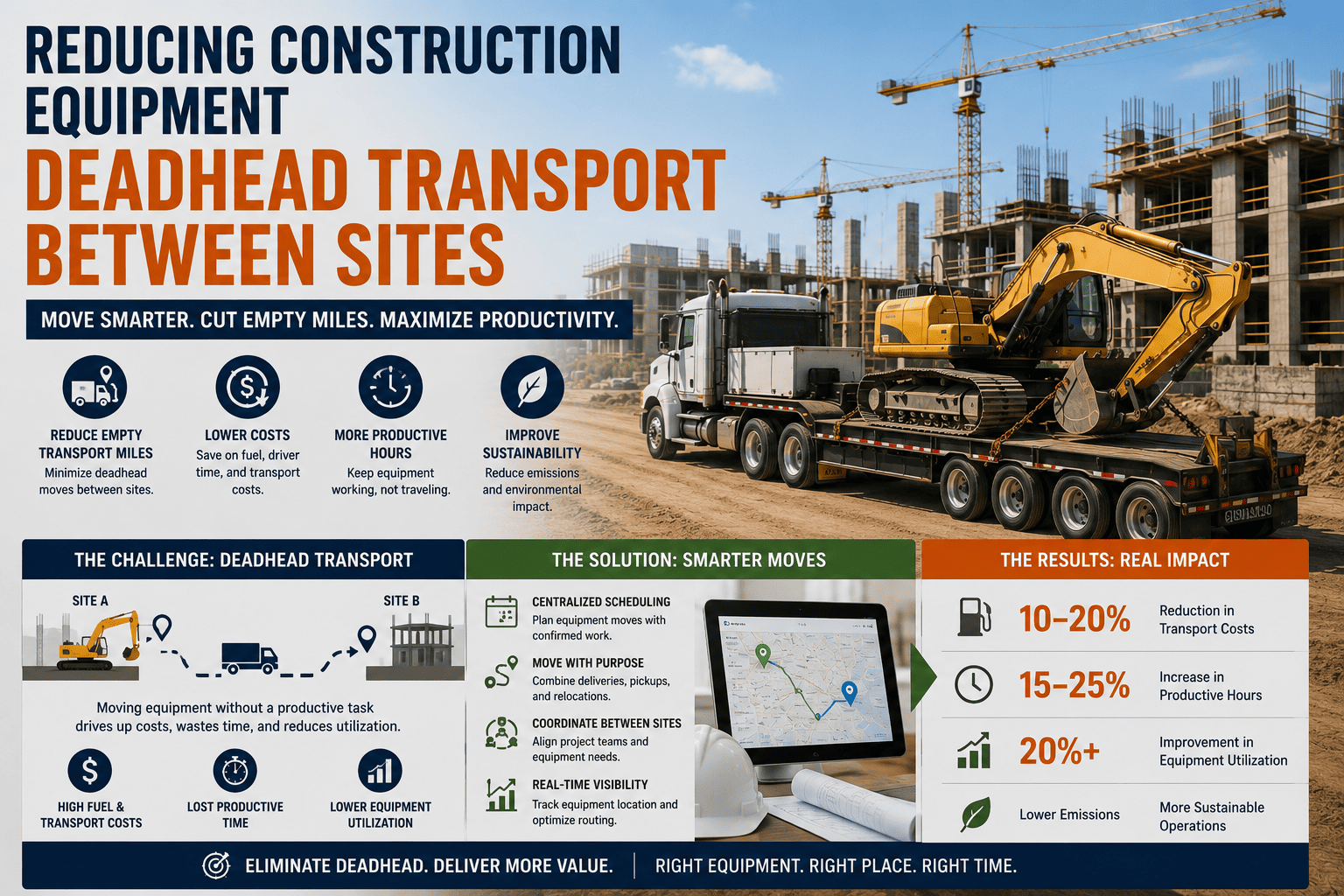
U.S. heavy equipment hauling runs 3 to 8 dollars per mile depending on route and load size, with lowboy and RGN rates commanding a premium due to specialized trailers and higher deadhead exposure. Last-minute bookings get hit with rates 40 to 60 percent above normal, while flexible scheduling that lets a carrier avoid empty return miles can save 10 to 20 percent on the same move.
Where Transport Budgets Actually Leak
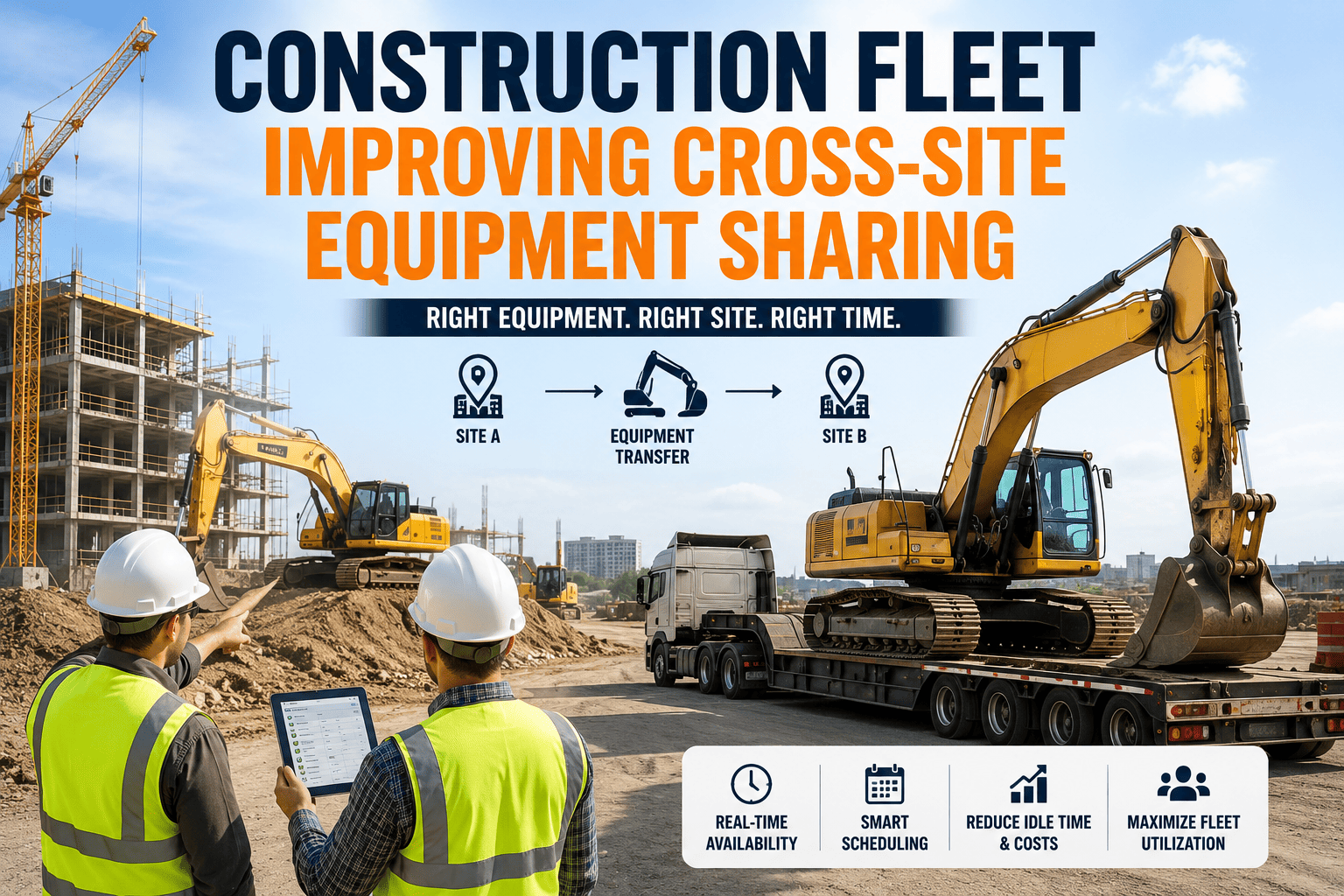
Ask most site managers what equipment transport costs and they will quote a per-mile rate. That number is real, but it is only part of the picture. The bigger leaks tend to hide in decisions made before the truck ever shows up: booking a move too late, choosing the wrong trailer for the job, or hauling a machine across a region when an idle unit at a nearer site could have covered the work instead.
Four Cost Drivers That Rarely Show Up on the Quote
Transport invoices show per-mile rates, permits, and fuel surcharges clearly. What they do not show is the decision-making upstream that determined whether those numbers were ever necessary in the first place.
What a Site-to-Site Move Actually Costs
Rates shift dramatically based on distance, trailer type, and how much lead time a carrier gets. The table below lays out realistic 2026 benchmarks so you can sanity-check your own transport invoices against what the market is actually charging.
| Move Type | Typical Rate | Why It Costs What It Does | Where Savings Come From |
|---|---|---|---|
| Local Move Under 50 Miles | 400 to 600 dollar minimum haul fee | Loading and securing take the same time regardless of distance | Bundling multiple short moves for the same carrier trip |
| Standard Flatbed, Legal Load | 2.00 to 3.50 dollars per mile | No permits or escort required for standard dimensions | Choosing flatbed over lowboy when equipment fits legally |
| Lowboy or RGN, Legal Load | 3.50 to 6.00 dollars per mile | Specialized trailer, higher insurance, more deadhead exposure | Booking 2 to 4 weeks ahead to access return-trip discounts |
| Permitted Oversize Load | 5.00 to 12.00 dollars per mile | State permits, pilot car escorts, and route surveys required | Removing attachments to drop below the permit threshold |
| Cross-Country Move (2,500+ Miles) | 1.00 to 1.50 dollars per mile | More highway cruising time relative to loading and unloading | Consolidating longer relocations instead of frequent short hauls |
FleetRabbit tracks where every piece of equipment sits and how much it is actually being used, so you can see whether a nearby idle machine can cover a job before booking an expensive long-distance haul. You can sign up free and see your equipment locations mapped today.
Turning Visibility Into Lower Transport Spend
Every one of the four cost drivers above has the same root cause: nobody had a clear enough picture of what equipment was where, how busy it already was, and how far in advance a move could realistically be planned. Closing that visibility gap is what turns transport from a reactive expense into a manageable, predictable line item.
Planning Moves Around What You Already Know
Booking a carrier two to four weeks ahead of a standard move, rather than the day before, routinely unlocks meaningful rate discounts, and carriers filling return trips or repositioning equipment will often offer a lower price specifically to avoid running empty. That kind of flexibility is only possible if the site schedule and equipment location data are visible far enough in advance to plan around them, rather than discovered the week a machine is suddenly needed.
Matching the Right Trailer to the Right Job
Not every move needs a lowboy. Equipment that fits within standard legal dimensions can often travel on a standard flatbed at a meaningfully lower per-mile rate, while only genuinely oversized or overweight loads need the specialized deck height and higher insurance costs that come with a lowboy or RGN. Reviewing equipment specs against trailer requirements before requesting a quote prevents paying a premium rate for a move that never needed one.
Why Utilization Tracking Pays for Itself Here
The single biggest lever most construction fleets are missing is simply knowing what is already sitting idle. A piece of equipment parked and unused at a nearby site is a transport cost avoided entirely if someone actually knows it is there. Utilization and location tracking across every asset turns that guesswork into a quick check before any transport request goes out, and for fleets managing dozens of machines across multiple active sites, that single habit routinely prevents duplicate hauls that never needed to happen.
Combined with advance scheduling and smarter trailer selection, the pattern becomes clear: most transport savings come from decisions made days or weeks before the truck arrives, not from negotiating harder on the day of the move.
FleetRabbit gives you the utilization and location visibility to plan equipment moves weeks ahead, choose the right trailer, and avoid unnecessary hauls entirely. Reach out and book a demo to see how this works across your active job sites.
Frequently Asked Questions
Key Takeaways
Reducing construction equipment transport costs rarely comes down to negotiating a better per-mile rate on the day of the move. It comes down to knowing what is already sitting idle nearby, choosing the right trailer for the actual load, and giving carriers enough advance notice to avoid the premium that comes with a last-minute booking. Fleets that build this visibility into their planning routinely avoid transport costs that never needed to exist in the first place.
FleetRabbit maps the location and utilization of every machine across your job sites, so you can plan moves weeks ahead, pick the right trailer, and skip hauls that a nearby idle unit could have covered instead. Start your free trial today with no credit card required, or book a demo to see your equipment mapped across every active site.