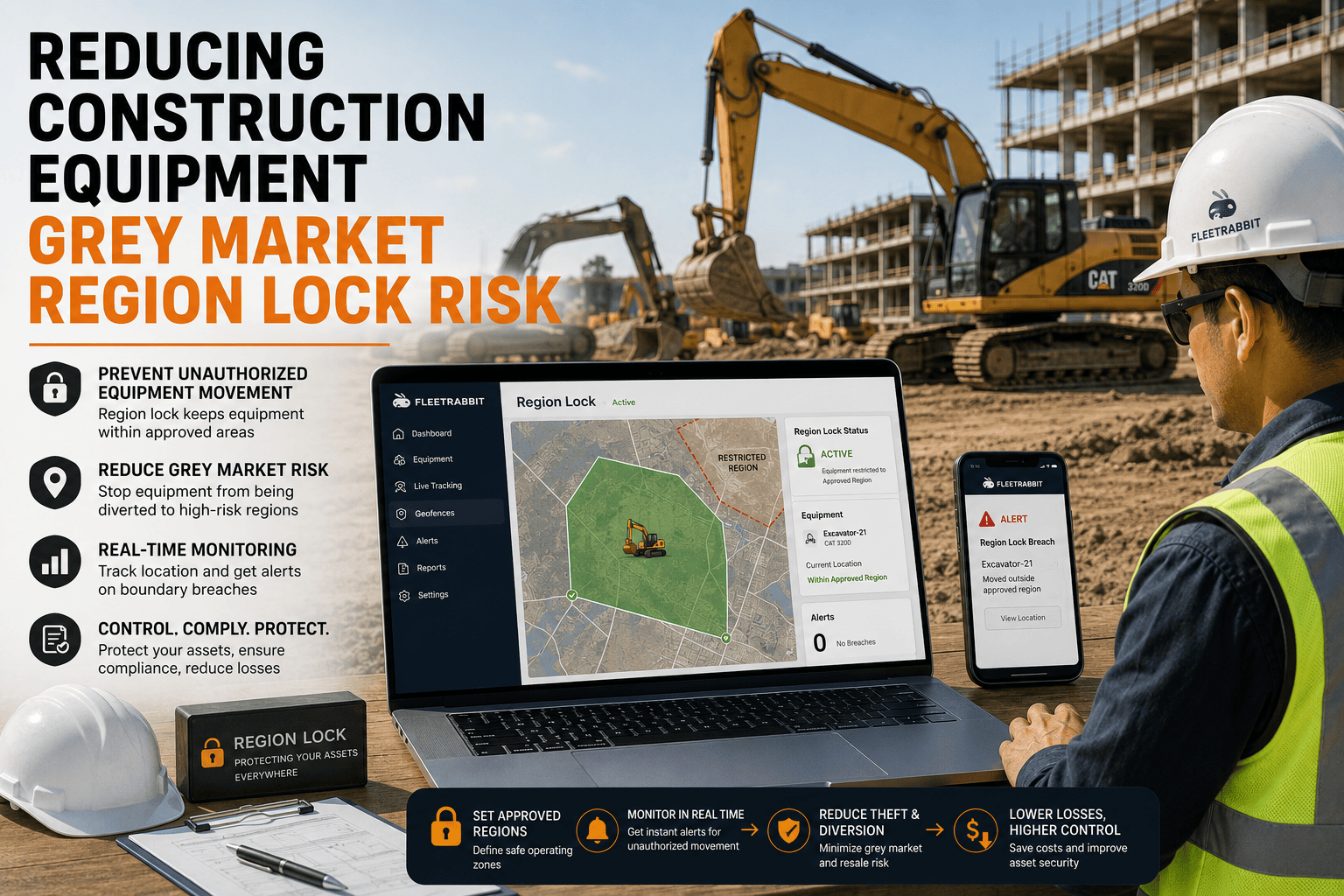
A used excavator listed well below market price is either a genuine bargain or a machine nobody local can service. Grey-market and region-locked equipment often looks identical to an authorized unit in a listing photo, and the difference only becomes obvious the day a warranty claim gets denied or a dealer refuses to touch the machine at all.
Grey-market construction equipment is machinery imported or resold outside a manufacturer's authorized distribution channel, often built to a different country's safety, emissions, or telematics specification than the one it now operates in. The risks include voided manufacturer warranties, limited or unavailable parts, non-English manuals and safety labels, and software or telematics systems that are region-locked and cannot be fully activated. Careful serial number verification and complete ownership documentation are the most reliable ways to identify this risk before it becomes an expensive surprise.
What Actually Makes a Machine Grey Market
A grey-market machine is not stolen or counterfeit. It is manufactured and sold legitimately, just for a different country's market, and then imported or resold into a region the manufacturer never intended it to reach. Original equipment manufacturers build multiple specification tiers for the same base model depending on destination, covering safety systems like rollover protective structures, emissions tiers, and even something as basic as which language the operator manual and safety labels are printed in.
Once that machine changes hands outside the authorized distributor network, the manufacturer has no record of where it is, who services it, or whether it meets the compliance standards of its new location. That gap in the paper trail is the root of nearly every problem grey-market equipment creates down the line.
Compliance Gaps Hide in the Details
A machine built for one country's emissions tier or safety standard may not meet the requirements of the region it now operates in, and modified or missing identification plates can make that gap difficult to spot without a careful inspection. An excavator missing a proper rollover protective structure compliance plate, for example, looks fine in a photo but represents a real safety and liability exposure on an active job site.
Documentation Rarely Survives the Journey
Manuals, safety labels, and service documentation are often written for the original destination market and never translated, which turns basic troubleshooting into guesswork for a crew that has never seen that configuration before.
| Risk Area | What Typically Happens | Operational Impact |
|---|---|---|
| Manufacturer Warranty | Declined once serial number is traced to an unauthorized channel | Full repair cost falls on the owner with no recourse |
| Parts Sourcing | Local dealers cannot supply region-specific components | Extended downtime waiting on overseas shipments |
| Service Support | Authorized dealers decline to work on the unit | Fewer qualified technicians willing to take the job |
| Telematics and Software | Region-locked systems fail to activate or update | Lost visibility into diagnostics, location, or usage data |
FleetRabbit centralizes serial numbers, ownership history, and documentation for your entire fleet, making it easier to spot a compliance gap before it becomes a costly surprise. Sign up free to organize your equipment records today, or book a demo to see how asset tracking supports risk management.
The Software Side Most Buyers Never Check
Region-lock risk has expanded well beyond mechanical specification. Modern construction equipment ships with onboard telematics, diagnostic software, and licensing systems tied to the region a manufacturer intended it for. A machine that runs mechanically fine can still lose access to the software layer that reports engine diagnostics, location, and usage data the moment it operates outside the network and licensing terms it was built for.
Why Telematics Region-Lock Is Easy to Miss at Purchase
A test drive or inspection rarely reveals a software licensing problem, since the machine still starts, moves, and digs normally. The gap only shows up once an owner tries to pull diagnostic data, update firmware, or connect the machine to a fleet management platform and finds the system will not fully activate.
What Gets Lost When Telematics Won't Activate
Engine hour tracking, fault code alerts, and remote diagnostics all depend on an active telematics connection. Without it, a fleet manager loses exactly the visibility that would otherwise catch a mechanical problem early.
Verifying Software Status Before It Becomes a Problem
Checking whether a machine's telematics system is fully licensed and active for its current operating region is a simple step that gets skipped constantly, usually because the issue never crosses a buyer's mind until after the purchase is already final.
A Quick Pre-Purchase Check Worth Running
Ask directly whether the onboard system reports live diagnostic data and confirm it with the seller before finalizing any deal, rather than discovering the answer weeks later during the first attempted software update.
FleetRabbit layers independent tracking and maintenance records on top of your existing equipment, so engine hours, service history, and location stay visible even if a machine's original telematics system is region-locked. Start your free trial now, or book a demo to see how it works alongside your current fleet.
A Practical Checklist Before You Buy or Diagnose What You Own
Whether evaluating a used machine before purchase or reviewing equipment already in the fleet, the same core checks apply. Confirm the serial number and identification plate match what the manufacturer has on file, ask the local authorized dealer directly whether they will service the unit, and verify that safety systems and emissions equipment match the standards required in the region where it will actually operate. A seller unwilling or unable to answer these questions clearly is itself a signal worth taking seriously.
For equipment already owned, a documentation review accomplishes the same goal in reverse: confirming exactly what is being operated, whether it carries any manufacturer support, and what the realistic parts and service situation looks like if something breaks on a job site far from the nearest dealer.
Frequently Asked Questions
Grey-market and region-locked equipment rarely announces itself until a warranty claim, parts order, or software update fails. FleetRabbit keeps serial numbers, ownership history, and service records organized so risk gets caught early, not after the fact.