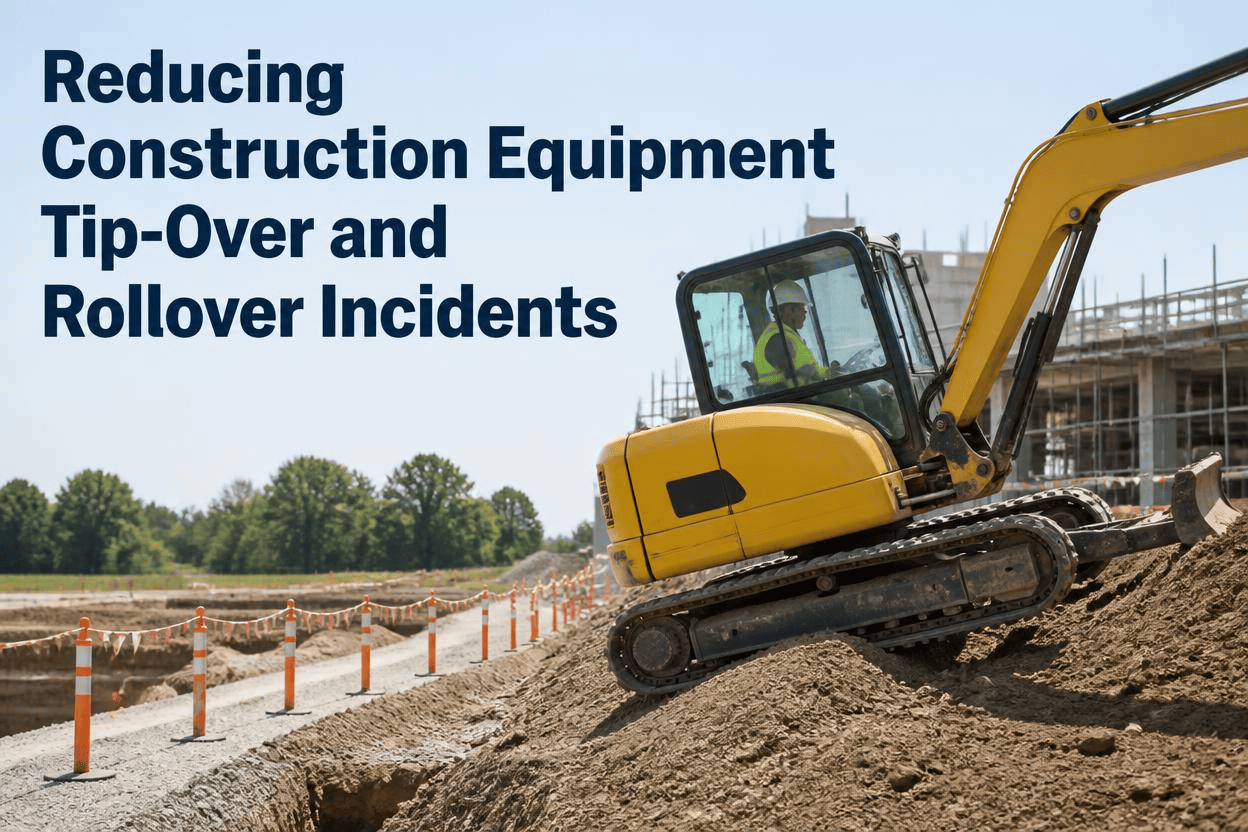
A compactor works its way along a roadway shoulder, one wheel drifting slightly off the paved edge onto a sloped embankment. The operator barely notices the grade change. Seconds later the machine is rolling, and by the time it stops upside down, it's already rolled past once. Tip-over and rollover incidents happen fast, often in conditions that looked perfectly normal moments before, and the difference between a close call and a fatality frequently comes down to two things that cost almost nothing: a rollover protective structure and a seatbelt that was actually buckled.
Most construction equipment tip-overs trace back to three conditions: steep or unmarked slopes, soft or uneven ground, and loading or unloading equipment onto trailers. Machines fitted with a rollover protective structure have been shown to limit an overturn to roughly 90 degrees, while machines without one can roll more than two full revolutions, and a seatbelt is what keeps an operator inside that protected space instead of being thrown clear. Tracking slope conditions, equipment inspection status, and operating patterns helps catch rollover risk before it happens. FleetRabbit brings that data together in one place.
The Three Conditions Behind Most Tip-Overs
Rollover investigations keep circling back to the same handful of site conditions. Recognizing them before equipment gets there is far more effective than reacting after a machine has already gone over.
Steep Or Unmarked Slopes
Soft Or Uneven Ground
Loading And Unloading
Why ROPS And A Seatbelt Both Have To Be In Play
A rollover protective structure and a seatbelt aren't redundant safety measures, they solve two different halves of the same problem, and skipping either one dramatically changes the outcome of an overturn.
Why Jumping Clear Rarely Works
The instinct to jump from a tipping machine is common, and it's almost always the wrong move. A rollover happens faster than a person can clear the equipment's path, and several documented fatalities involve an operator who attempted to jump and was struck by the rolling structure they were trying to escape. Staying belted inside a ROPS-equipped cab is consistently the safer outcome.
Track Ground Conditions And Equipment Status Together
FleetRabbit brings slope, inspection, and operating data into one view, so rollover risk gets flagged before equipment is put in the wrong position. Sign up free and see it across your fleet.
Warning Signs Worth Stopping For
Most rollovers aren't a complete surprise if the site conditions are read correctly beforehand. These are the signals that consistently show up in incident reports before things went wrong.
| Warning Sign | What It Usually Means | Recommended Response |
|---|---|---|
| Grade Steeper Than It Looks | Slopes near roadway shoulders and drainage areas are often underestimated from the operator's seat | Confirm slope angle before approaching and keep a wider buffer from the edge than feels necessary |
| Recently Disturbed Soil | Freshly filled or compacted ground can hide soft pockets that haven't fully settled | Treat recently worked ground as unverified and avoid operating directly along its edges |
| Narrow Or Damaged Ramps | A ramp too narrow for the machine, or one showing wear, significantly raises loading overturn risk | Verify ramp width and condition against equipment specs before every load or unload |
| Skipped Seatbelt Habit | An operator who doesn't consistently buckle in loses the protection a ROPS is designed to provide | Treat seatbelt use as a non-negotiable pre-start step, not a personal preference |
Building A Rollover Prevention Program That Sticks
Preventing tip-overs isn't about a single rule, it's about making the right conditions visible before equipment gets into them, and making the right habits automatic once it does.
Confirm ROPS And Seatbelt Condition Every Shift
Include the rollover protective structure and seatbelt function in the pre-start inspection, since a damaged ROPS or a seatbelt that doesn't latch offers no real protection when it's needed.
Map Known Slope And Soft Ground Areas
Flag steep grades, embankments, and recently disturbed soil on the site plan so operators know which zones need extra caution before they're in them.
Standardize Loading And Unloading Procedures
Require ramp width and condition checks before every load or unload, and remove improvised ramps like loose wood blocks from the process entirely.
Review Near-Miss And Terrain Reports Regularly
Look for repeated reports of unstable ground or steep approaches in the same site areas, since a pattern usually points to a spot that needs regrading, barricading, or rerouting.
Sites that build this into daily routine consistently find the same two or three locations account for most of their rollover close calls, which makes it clear where to invest in fixing the ground itself. You can book a demo to see how this maps onto your site conditions, or sign up free to start tracking equipment and terrain data today.
Slope, Inspection, And Operating Data In One View
FleetRabbit helps you find and fix the conditions behind rollovers, from ROPS inspection status to the terrain your equipment is working on.
Frequently Asked Questions
Don't Let A Slope Or Soft Patch Catch Your Crew Off Guard
FleetRabbit helps you track the ROPS condition, seatbelt checks, and terrain data behind every rollover before it happens, not after. Start free with three machines, no credit card required.