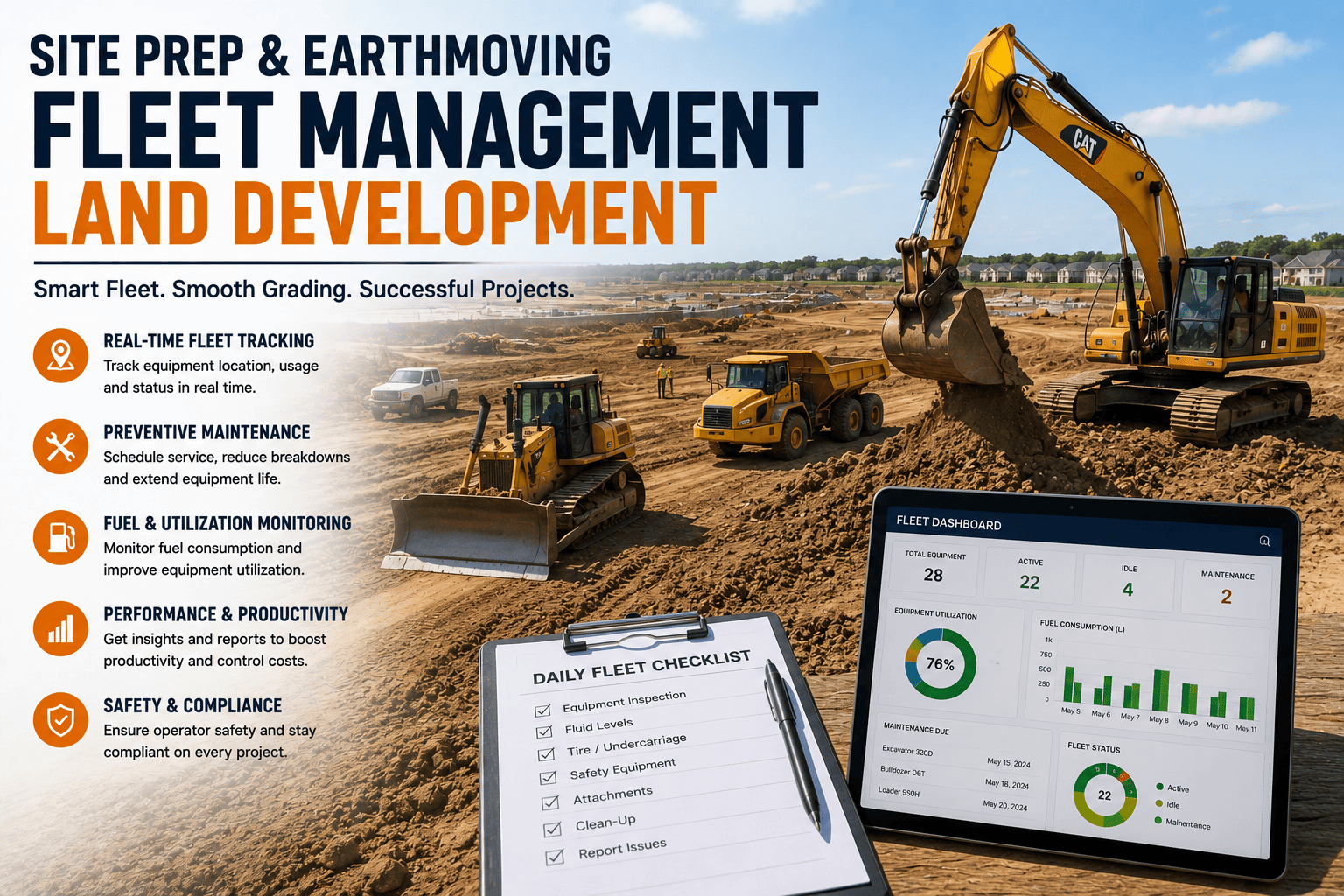
A land development site never runs on one type of machine. It runs on a sequence: dozers clear and push, scrapers cut and carry, graders shape the surface, and compactors lock it all down before the next phase even starts. When that sequence flows smoothly, the site moves fast. When one phase stalls, every machine scheduled for the next one sits parked and billing hours with nothing to show for it. Earthmoving fleet management isn't really about any single dozer or grader. It's about keeping that relay moving.
Earthmoving fleet management software tracks equipment utilization, maintenance status, and location across every phase of a land development project, so contractors know which dozer, scraper, grader, or compactor is available before the next phase begins. On a typical project, equipment and machinery represent 15 to 30 percent of total project cost, which makes idle time between phases a direct hit to the budget, not just a scheduling annoyance.
Site Prep Is a Relay, Not a Single-Machine Job
Every land development site moves through the same broad sequence, even though the mix of machines and the order can shift with soil conditions and site design.
Each phase depends on the one before it finishing on time and to grade. When any single link slips, the equipment scheduled for the next step has nowhere productive to go.
Why Equipment Sits Idle Between Phases
Phase Misalignment
Graders arrive on site before cut and fill work is actually complete, or compactors sit waiting because grading ran long, and nobody had visibility into the real progress upstream.
Weather and Soil Delays
A wet cut area or unstable soil can stall the schedule with little warning, and without a live view of which machines are affected, equipment keeps getting dispatched to a phase that isn't ready.
Wrong Equipment Mix on Site
Without utilization data from past phases, planners often size the fleet on rough estimates, leaving too many scrapers idle in one phase and not enough graders available in the next.
What Idle Time Between Phases Actually Costs
FleetRabbit tracks utilization, location, and maintenance status across your dozers, scrapers, graders, and compactors, so the next phase never waits on equipment nobody knew was ready. Sign up free to connect your fleet today, or book a demo to see it mapped to your project phases.
Without Fleet Visibility vs With Fleet Visibility
| Factor | Without Fleet Visibility | With Fleet Visibility |
|---|---|---|
| Phase Handoffs | Next phase's equipment dispatched on assumption | Dispatched once prior phase is confirmed complete |
| Equipment Sizing | Fleet mix estimated from past projects generally | Fleet mix based on this site's actual utilization data |
| Maintenance Timing | Serviced on a calendar regardless of hours worked | Serviced based on real usage and undercarriage wear |
| Delay Response | Discovered when a crew arrives to an unready site | Flagged in advance so equipment is redirected productively |
Undercarriage Wear Deserves Its Own Attention
Dozers and graders working land clearing and grading cycles put more stress on undercarriage components than almost any other application, because the combination of load, terrain, and constant directional changes accelerates wear well beyond typical duty cycles. Tracking hours and terrain conditions per machine lets a contractor schedule undercarriage service proactively instead of discovering a worn track system mid-phase.
Turning Utilization Data Into a Tighter Bid
Once a contractor has real utilization numbers from past land development jobs, the next bid stops relying on rough industry averages. Knowing exactly how many scraper hours a typical cut and fill phase actually requires, or how often a grader needs undercarriage attention on similar soil, turns equipment cost from an estimate into a number grounded in your own fleet's history.
Frequently Asked Questions
Idle equipment between phases is one of the most avoidable costs on a land development project. FleetRabbit gives you one live view across your entire earthmoving fleet. Create your free account to get started today, or book a 30-minute demo to see it built around your project phases.