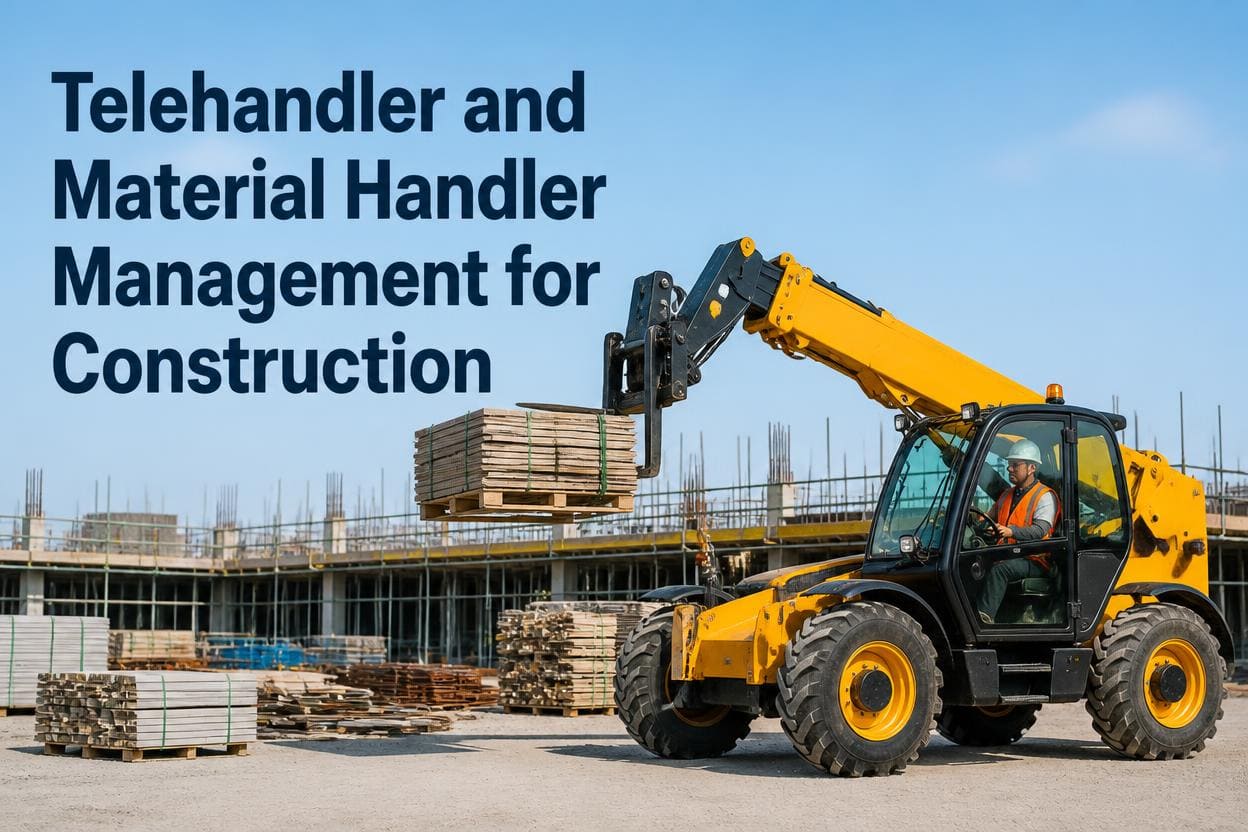
Walk any construction site and the telehandler is almost never idle. Masons borrow it to move block, roofers use it to lift shingles to the eave, the framing crew swings it over to set trusses. That constant demand is exactly why it is usually the least tracked machine on the lot. Everyone uses it, nobody owns it, and by the time someone notices the hydraulic drift or the worn boom pads, the machine has already quietly cost the project more than its rental rate in downtime. Getting ahead of that pattern is a utilization problem as much as a maintenance one.
Telehandlers and material handlers wear unevenly because multiple crews and operators share one machine across different tasks and attachments. The fix is tracking utilization by engine hours per task, not just total hours, so a fleet manager can see which machine is overworked, which attachment swap caused a spike in strain, and when a shop visit will cost less than another week of downtime. FleetRabbit builds that picture automatically from the data your telehandlers already generate.
The Machine Every Crew Borrows
A telehandler rarely belongs to one crew the way an excavator belongs to the grading team. It gets requested by whoever needs a lift that day, which means the wear on the boom, tires, and hydraulics comes from a mix of tasks nobody is tracking together. A machine that logs six hours moving pallets and four hours lifting trusses at full extension has a completely different strain profile than one that ran ten hours at low reach, even though the hour meter reads the same.
Shared Across Crews
Multiple operators with different habits and skill levels use the same machine in a single day, and none of them see the full pattern.
Swapped Between Tasks
Forks in the morning, a platform attachment in the afternoon, a bucket the next day. Each swap changes load, balance, and stress on the boom.
Run At The Extremes
Full boom extension and maximum rated load happen far more often on a shared machine than on one dedicated to a single, predictable task.
Why Total Hours Alone Miss The Problem
A total hour meter tells you the machine has run for a certain number of hours. It does not tell you how many of those hours were spent at full extension, how many involved the heavier attachment, or how many different operators were behind the controls. Two telehandlers with identical hour totals can have very different remaining service life once you account for how those hours were actually spent.
Building A Real Utilization Picture
FleetRabbit pulls engine hours, attachment change events, and operator assignment together into one utilization view per machine, so patterns that used to be invisible, like one telehandler consistently doing the heaviest lifts on site, become obvious well before a failure does. If your telehandlers move between crews the way most fleets' do, this is worth seeing against your own data. You can sign up for a free trial or book a short demo to walk through it.
FleetRabbit tracks engine hours, attachment swaps, and operator assignments per telehandler, so the machine quietly absorbing the heaviest workload gets flagged before it becomes the one that breaks down.
What Actually Fails, And What It Costs To Ignore
Shared, multi-attachment use concentrates wear on a predictable set of components. Knowing which ones matters more than knowing the machine's total hour count.
| Component | Why Shared Use Wears It Faster | Cost Of Waiting |
|---|---|---|
| Boom Wear Pads And Chains | Repeated full-extension cycles under varying loads accelerate wear unevenly | Boom binding or misalignment, a much larger repair than a pad swap |
| Hydraulic Cylinders | Different attachments change cylinder load patterns throughout the day | Seal failure and fluid leaks that take the machine out of service entirely |
| Tires | Mixed terrain and load conditions across tasks wear tread unevenly | Reduced stability exactly when full reach and full load matter most |
| Outrigger Locks | Frequent repositioning between tasks means more deploy and stow cycles | Compromised stability during elevated lifts, a direct safety exposure |
| Attachment Couplers | Daily swaps between forks, platforms, and buckets stress the coupling mechanism | A failed coupler mid-lift is one of the most dangerous failure modes on the machine |
Turning Wear Data Into A Maintenance Trigger
Once you know which components take the brunt of shared use, the maintenance schedule should trigger off actual usage patterns rather than a flat calendar interval. A telehandler that has done twenty attachment swaps this month needs its coupler and quick-connect points checked sooner than one that ran the same fork configuration all month, even if both machines show the same hour count.
Where FleetRabbit Fits
FleetRabbit's maintenance scheduling reads attachment swap frequency and extension-heavy usage alongside engine hours, and adjusts inspection triggers per machine instead of applying one flat schedule across the fleet. That is the difference between catching a worn coupler in the shop and catching it mid-lift on site. Sign up free to see how it maps to your telehandlers, or book a demo to walk through your specific fleet first.
Signs A Telehandler Needs Attention Now
Frequently Asked Questions
Shared crews, swapped attachments, and constant demand make telehandlers the hardest machine on site to track by hand. FleetRabbit turns that usage pattern into a clear maintenance schedule before it turns into downtime.